In a stunning development that has rattled the semiconductor industry, Chinese scientists have successfully constructed and tested a prototype extreme ultraviolet (EUV) lithography machine in a heavily guarded facility in Shenzhen.
This milestone, first revealed in a Reuters report on December 17, 2025, represents a major leap forward in Beijing’s drive for semiconductor independence, challenging the long-held assumption that Western export controls had effectively blocked China’s access to the world’s most advanced chipmaking technology.
Completed in early 2025, the prototype has achieved the critical feat of generating EUV light—the most difficult technical barrier in EUV engineering. Although it has not yet produced functional chips, its operational status indicates that China is progressing far faster than many Western analysts predicted.
The Strategic Importance of EUV Technology
EUV lithography machines are the pinnacle of semiconductor manufacturing complexity. They employ extreme ultraviolet light with a wavelength of just 13.5 nanometers to etch transistor patterns only a few nanometers wide onto silicon wafers. This precision enables the production of the most powerful chips driving artificial intelligence, advanced smartphones, supercomputers, and modern weaponry.
Until now, the Dutch company ASML has maintained a global monopoly on commercial EUV systems. Each machine costs approximately $250 million, weighs around 180 tons, and depends on an intricate international supply chain for thousands of specialized components. ASML invested nearly two decades and billions of euros to bring EUV to market in 2019.
Starting in 2018, under intense U.S. pressure, the Netherlands prohibited all EUV exports to China. These controls later extended to older-generation tools, with the explicit goal of keeping Chinese chipmakers at least one node behind leaders like TSMC, Samsung, and Intel. As recently as April 2025, ASML’s CEO Christophe Fouquet stated that China would require “many, many years” to develop its own EUV capability.
China’s Manhattan Project-Style Effort
Insiders have likened the Shenzhen project to the United States’ World War II Manhattan Project—a massive, secretive, state-orchestrated program mobilizing the nation’s best scientific and engineering talent to achieve a transformative technological breakthrough.
Key elements of the initiative include:
Central Coordination: Huawei serves as the primary coordinator, bringing together thousands of researchers from universities, state laboratories, and private firms.
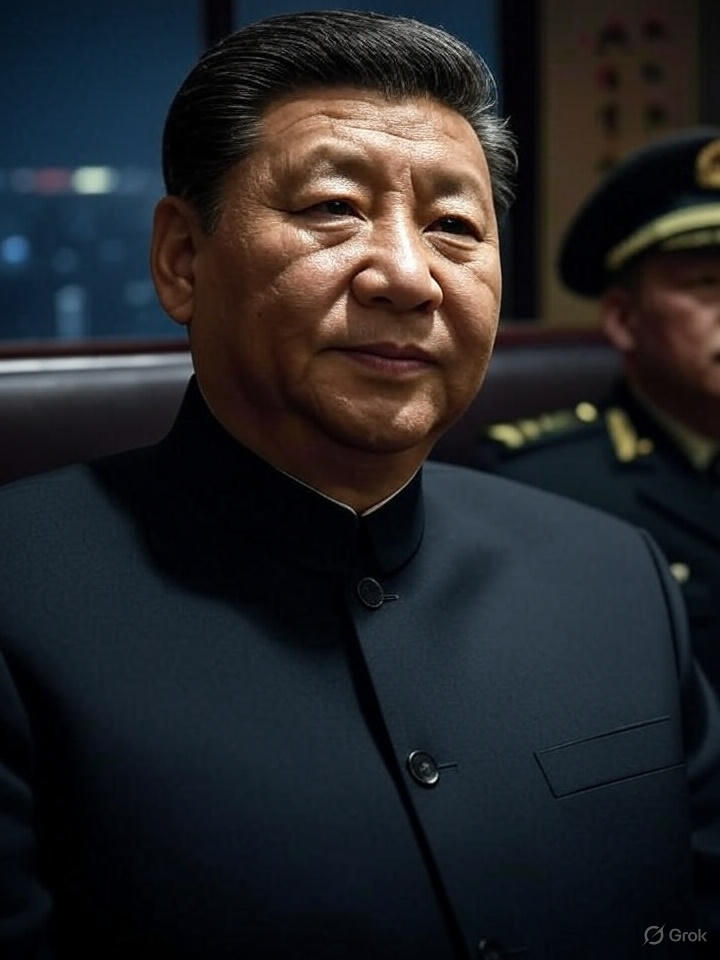
High-Level Oversight: The effort reportedly receives direct attention from senior Communist Party officials, including those close to President Xi Jinping.
Talent Recruitment: Critical expertise came from former ASML engineers, many of Chinese origin and recently retired, who were offered substantial incentives and required to work under false identities.
Reverse Engineering: Teams acquired older ASML equipment through legal secondary markets and auctions, disassembled components, and rebuilt subsystems. Restricted parts from Japanese suppliers like Nikon and Canon were obtained via intermediaries.
Extreme Secrecy: Participants live on-site during the week, use aliases, and operate in compartmentalized teams with no knowledge of the full project scope.
The prototype itself is significantly larger and cruder than ASML’s sleek commercial models, occupying nearly an entire factory floor. Its primary weakness lies in optical precision, where China still lags behind suppliers like Germany’s Carl Zeiss.
How China Overcame the West’s Blockade
Despite comprehensive export controls, China exploited several loopholes:
Human capital cannot be fully embargoed; experienced engineers provided invaluable know-how.
Second-hand markets and auctions allowed access to older but useful equipment.
Intermediary companies obscured the final destination of restricted components.
Massive state investment funded “uncapped” research grants and bonuses.
These strategies enabled the team to clear the EUV light generation hurdle far sooner than expected.
Shifting the Global Balance
The breakthrough carries profound strategic implications:
Compressed Timeline: Chinese planners now target production of working chips by 2028, with insiders viewing 2030 as more realistic—still dramatically ahead of prior decade-long estimates.
Eroding Leverage: EUV controls were the cornerstone of Western efforts to constrain China’s AI and military capabilities. A viable domestic alternative diminishes this tool’s effectiveness.
Technology Bifurcation: The world moves closer to two parallel semiconductor ecosystems—one dominated by the West, the other by China.
New Vulnerabilities Exposed: Controlling physical goods is easier than restricting knowledge transfer or talent movement.
China does not need to reinvent EUV from scratch; ASML’s existing designs provide a clear roadmap. The remaining challenge is one of iterative refinement, reliability, and scaling—tasks that vast resources and determination can accelerate.
For Beijing, semiconductor self-sufficiency is not merely an economic goal but a core issue of national security and sovereignty. Framed as essential for maintaining technological leadership in AI, quantum computing, and defense, this project underscores how sanctions can sometimes spur rather than stifle innovation.
While China remains years away from matching ASML’s precision and productivity, the successful EUV prototype marks a psychological and technical turning point. The era of absolute Western dominance over the most critical chipmaking technology may be ending, heralding a more contested and divided global semiconductor landscape in the years ahead.