
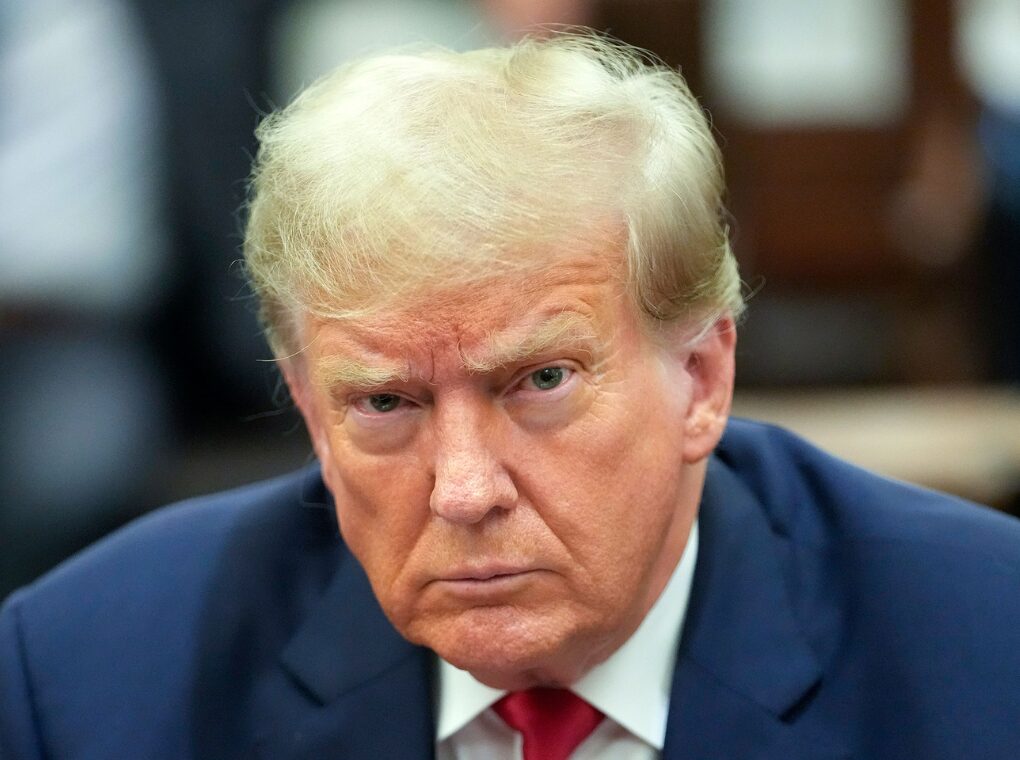
Belarusian President Alexander Lukashenko’s remark about a possible “Big Five” bloc—comprising the United States, Russia, China, India, and Japan has created curiosity about the group in the minds of people.
Although the idea was first proposed by the US President Donald Trump, there is no official framework that exists. The idea itself reflects bigger changes underway in global power politics. In essence, this proposed grouping, referred to as C5, represents not an alliance but a strategic imagination of a post-Western world order.
But before going to the new world order, let’s understand the concept of C-5 and why President Trump looks interested in the idea.
What is C5?
To begin with, C5 is not a formal institution like NATO or the G7. Rather, it is a conceptual bloc representing the five most consequential civilizational, military, and economic powers of the 21st century- China, Russia, India, and Japan, along with the US. Together, these states account for a majority of global GDP (PPP terms), military capabilities, population, and technological potential. Therefore, C5 symbolizes a power-centric rather than value-centric order, unlike Western-led institutions.
Why would Trump Initiate Such an idea?
If Donald Trump were to pursue this framework, the logic would be consistent with his long-standing worldview. First, Trump has repeatedly questioned the utility of traditional alliances, especially NATO and the European Union. Moreover, he views Europe as a strategic liability rather than an asset, particularly due to defense dependence and economic stagnation.
One more thing is very clear: Trump loves strong leaders, nations, and civilizations. However, in the Western-led world order, it lacks all these. They look weak, their short civilization disintegrating from within, and they are no longer a powerful state. Hence, Trump wants to change the boat with new emerging strong nations with strong leadership, such as PM Modi, President Putin, and President Xi.
At the same time, Trump understands that the future of global growth lies in Asia. Consequently, engaging directly with China, India, and Japan allows Washington to remain relevant in an Asia-centric world without being constrained by European institutional politics.
Till now, one must have got the Idea why Trump wants these nations and what his strategy is behind this. Now, let’s talk in a bit of detail about why these nations.
Why These Five Countries?
The selection of these five nations is not accidental. Each represents a pole of power:
US: Military supremacy and technological leadership
China: Manufacturing hub and emerging global rule-maker
Russia: Strategic depth, energy power, and military leverage
India: Demographic strength and future economic growth
Japan: Advanced technology and capital strength
Thus, instead of ideology, hard power, markets, and strategic geography define this grouping. Ultimately, Powers rules the norms, values, and the world.
A Shift Away from Europe
Notably, Europe is absent from this vision. This omission reflects a harsh reality: Europe’s strategic relevance is declining. Militarily, it remains dependent on the US. Economically, it faces slow growth and aging demographics. Politically, internal divisions due to immigration weaken its global voice.
As a result, major powers increasingly see Europe as a rule-taker, not a rule-maker. Therefore, delinking from Europe is less about hostility and more about strategic pragmatism.
How Do Asian Powers View Such a Grouping?
India, China, and Japan view this potential alignment with caution, not enthusiasm. India seeks strategic autonomy and will resist any bloc that limits its options. China may see C5 as a way to dilute Western pressure, but it will oppose US dominance. Meanwhile, Japan values US security guarantees but remains wary of China and Russia.
Hence, for Asian powers, C5 would be a balancing platform, not a binding alliance.
Is This a New World Order?
In many ways, yes—but not overnight. The world is clearly moving toward multipolarity, where no single power dominates. Institutions like BRICS, SCO, and G20 already reflect this shift. Importantly, the US cannot join BRICS, yet it also cannot afford to remain isolated from emerging economic centers.
Therefore, C5 could be seen as an American attempt to stay on the same boat as emerging powers, rather than sinking with declining Western dominance.
Europe’s Fading Reliability
Increasingly, global actors view Europe as strategically unreliable—strong in rhetoric but weak in action. Consequently, emerging powers prefer flexible coalitions over rigid Western institutions.
In geopolitical terms, this is a classic case of “don’t stay on a sinking ship.” Aligning with rising powers, even for the US, becomes a matter of survival.