Two cargo ships reportedly carrying materials linked to rocket fuel production have left China and are now heading toward Iran, sparking international concern and intense geopolitical debate. Security analysts say the vessels could be transporting chemicals essential for producing ballistic missile propellant, potentially strengthening Iran’s missile capabilities at a time of heightened regional tensions.
The ships—identified as Shabdis and Barzin—are operated by the Islamic Republic of Iran Shipping Lines (IRISL), a state-owned shipping company that has long been under U.S. sanctions due to alleged involvement in transporting materials connected to Iran’s missile and military programs.
According to ship-tracking data and security experts, the vessels departed from the Chinese port city of Zhuhai in early March 2026 and are currently believed to be sailing toward Iran’s major southern port of Bandar Abbas. Analysts say the cargo may include approximately 1,000 tons of sodium perchlorate, a chemical compound widely used in the production of solid rocket fuel.
Why the Cargo Is Raising Alarm
Sodium perchlorate has legitimate industrial uses, including applications in fireworks, airbags, and certain chemical manufacturing processes. However, it is also a critical precursor used to manufacture solid propellants for ballistic missiles.
Experts say that if the reported shipment reaches Iran, it could significantly boost Tehran’s ability to produce solid-fuel missiles—an important component of its military deterrence strategy.
Iran already possesses one of the largest missile arsenals in the Middle East. Missiles such as the Sejjil ballistic missile and the Khorramshahr missile rely on advanced propellant technology that allows for faster launch times and improved operational readiness.
Solid-fuel missiles are particularly difficult to detect before launch because they require minimal preparation compared to liquid-fueled systems. For this reason, any increase in Iran’s production capability is closely monitored by Western intelligence agencies.
China-Iran Strategic Cooperation
The shipment has also reignited debate about the growing strategic partnership between China and Iran under the leadership of Chinese President Xi Jinping.
In 2021, Beijing and Tehran signed a comprehensive 25-year cooperation agreement reportedly valued at around $400 billion. The deal includes Chinese investments in Iranian infrastructure, energy, and transportation projects while giving China long-term access to discounted Iranian oil supplies.
Despite international sanctions, China remains the largest buyer of Iranian crude oil. The economic relationship has helped Tehran mitigate the impact of Western financial restrictions.
Analysts say Beijing’s broader geopolitical strategy may also play a role. By strengthening economic and technological ties with Iran, China expands its influence in the Middle East while indirectly challenging U.S. influence in the region.
The Dual-Use Dilemma
One of the central issues surrounding the shipment is the classification of sodium perchlorate as a dual-use chemical.
Dual-use materials have both civilian and military applications. Because of their legitimate industrial uses, they are not always subject to the same strict export controls as weapons or dedicated military equipment.
China has repeatedly stated that it complies with international export regulations and denies transferring weapons technology to Iran. However, critics argue that large-scale shipments of certain dual-use chemicals may still contribute indirectly to military programs.
Security experts note that the reported volume of the shipment—about 1,000 tons—far exceeds typical civilian demand in many industries, raising questions about its intended use.
Could the United States Intercept the Ships?
The voyage of the two vessels has prompted speculation about whether the United States might attempt to intercept them before they reach Iran.
The ships are expected to pass through the Strait of Hormuz, one of the world’s most strategically important waterways. Roughly 20 percent of global oil shipments pass through this narrow corridor each day.
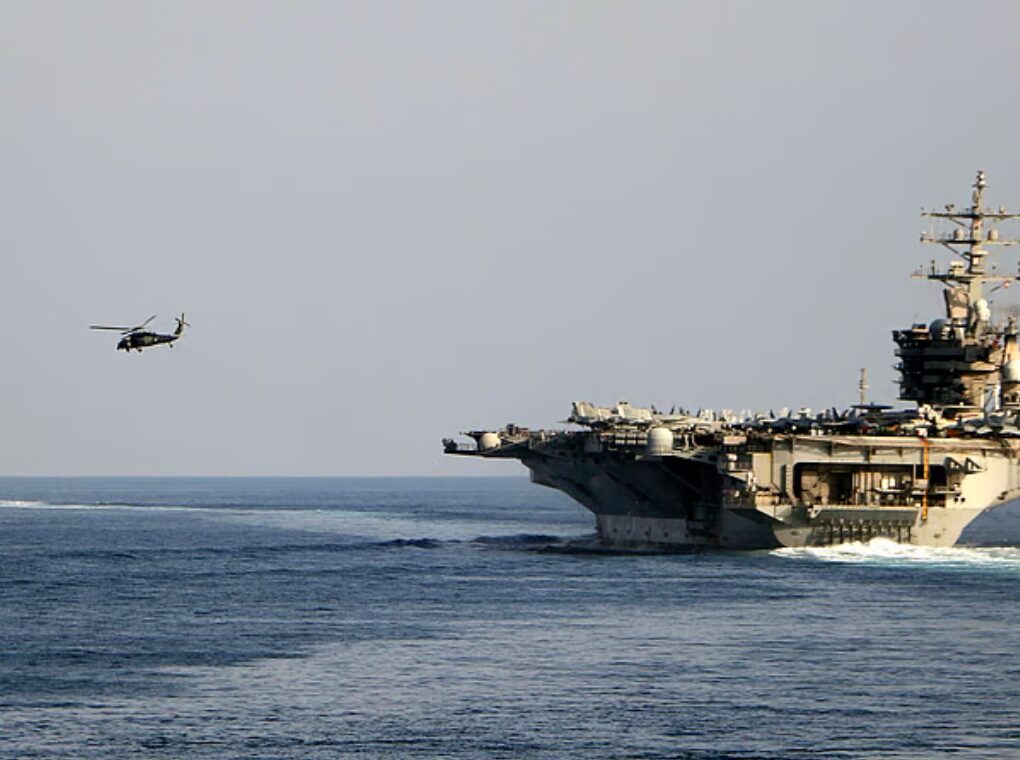
The area is closely monitored by the United States Fifth Fleet, which is headquartered in Bahrain and maintains a strong naval presence in the region.
Under certain international legal frameworks, including provisions connected to United Nations Security Council Resolution 2231, countries may inspect vessels suspected of transporting materials related to ballistic missile programs.
In previous incidents, U.S. naval forces have boarded ships suspected of carrying missile-related cargo bound for Iran and seized the materials without escalating into military confrontation.
However, experts say that destroying the ships outright would be extremely unlikely. Such an action could result in casualties among the crew and risk escalating tensions with both Iran and China.
Rising Geopolitical Tensions
The situation highlights the increasingly complex geopolitical landscape involving China, Iran, and the United States.
Iran has been strengthening its ties with major non-Western powers in recent years. In 2024, Tehran officially joined the BRICS economic bloc, further expanding its international partnerships.
Meanwhile, Washington and its allies remain concerned about Iran’s missile program and its potential implications for regional security.
A Voyage Under Global Watch
For now, the cargo ships continue their journey across the Indian Ocean toward Iranian waters. Satellite tracking systems and intelligence agencies are closely monitoring their movements.
Whether the shipment reaches Iran without interference or becomes the focus of a high-stakes maritime interception could have significant implications for global security and diplomatic relations.
As tensions in the region remain high, the voyage of these two ships illustrates how even a single shipment of chemical cargo can become a flashpoint in the broader struggle for geopolitical influence.