
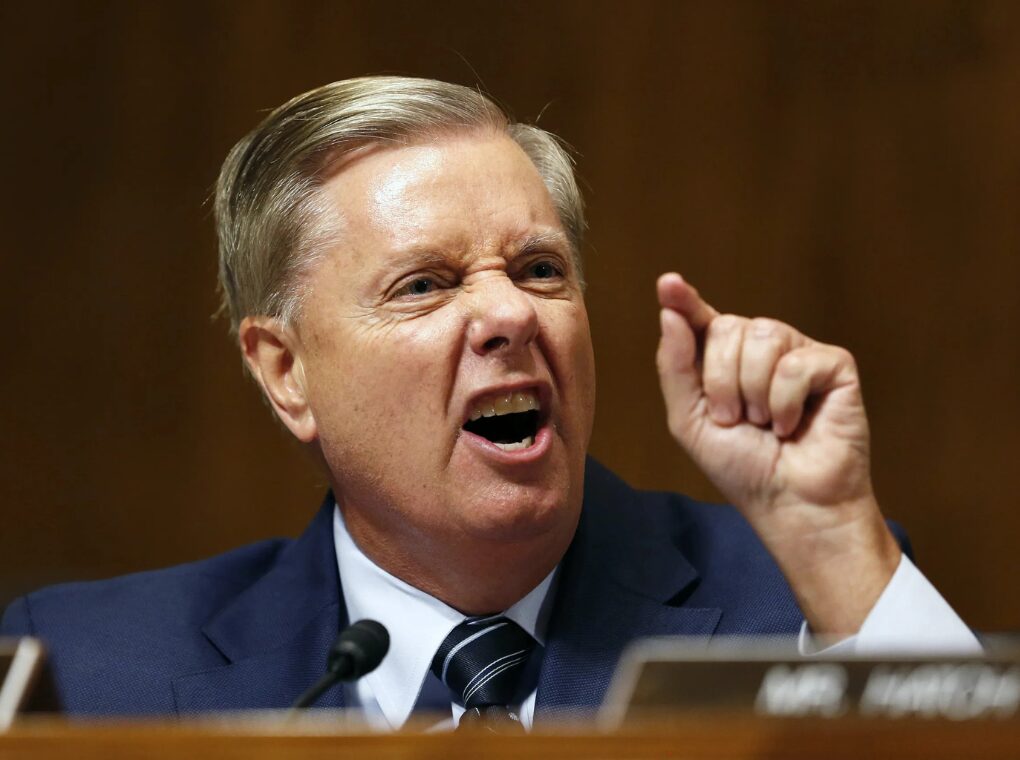
U.S. Senator Lindsey Graham (R-S.C.) has called for a dramatic escalation of pressure on Russia if President Vladimir Putin rejects the latest U.S.-backed peace initiatives for Ukraine, warning that continued diplomacy without consequences risks further Russian territorial gains.
Graham’s Appearance on Meet the Press
In a December 21 interview on NBC’s Meet the Press with host Kristen Welker, Graham, a longtime advocate for strong support of Ukraine and a key ally of President Donald Trump, expressed deep skepticism about Putin’s commitment to negotiations. He compared the situation to the Peanuts cartoon character Lucy repeatedly pulling away the football, suggesting that U.S. efforts to engage Russia are being repeatedly rebuffed.
“We keep engaging Russia… and he rebuffs all of our efforts,” Graham stated. “Putin is going to continue to take the Donbas by force until we increase pressure.”
Graham positioned his remarks as supportive of Trump’s diplomatic push, emphasizing that the president has significant “leverage” to end the war but must be prepared to use it aggressively if talks fail.
Proposed Escalation Measures
Graham outlined a multi-pronged strategy to ramp up pressure on Moscow:
Economic Sanctions: Urging Trump to sign a bipartisan bill with around 85 co-sponsors that would impose secondary tariffs on countries buying discounted Russian oil, specifically naming China and India as targets.
Terrorism Designation: Calling for Russia to be officially designated a state sponsor of terrorism, citing actions such as the forced deportation of Ukrainian children.
Maritime Enforcement: Advocating for the seizure of ships carrying sanctioned Russian oil, likening it to ongoing U.S. operations against Venezuelan vessels.
Most provocatively, Graham pushed for advanced military aid:
“If Putin says no, we need to dramatically change the game, including giving Tomahawk missiles to Ukraine to hit the drone and missile factories that exist in Russia,” he said. “I would go all in if Putin says no.”
Implications of Tomahawk Missiles
The Tomahawk cruise missile, with a range of up to 2,500 kilometers, would enable Ukraine to conduct precision strikes deep inside Russian territory—far beyond the capabilities of currently supplied Western weapons like ATACMS or Storm Shadow, which come with range limitations to avoid escalation.
Russian officials have repeatedly described such long-range strikes on their soil as crossing “red lines,” potentially inviting direct retaliation or broader conflict. Graham’s proposal thus represents a significant potential shift in U.S. policy, testing the boundaries of support for Ukraine under the Trump administration.
Context of Recent Diplomatic Talks
Graham’s comments followed a series of meetings in Florida (primarily Miami and West Palm Beach) from December 19–21. U.S. envoys, including Steve Witkoff and Jared Kushner, held separate discussions with Russian representative Kirill Dmitriev, while Ukrainian officials led by Rustem Umerov met with American and European partners.
U.S. and Ukrainian sides described the talks as “productive and constructive,” focusing on a revised 20-point peace plan, security guarantees (possibly involving U.S. commitments and European troops), and postwar economic recovery. However, no direct Russia-Ukraine negotiations took place, and Kremlin spokespeople downplayed prospects, criticizing proposed amendments.
President Volodymyr Zelenskyy reaffirmed Ukraine’s pursuit of a “just and sustainable peace,” while Russian aides indicated the changes “do not improve the prospects for achieving long-term peace.”
Broader Political Divide and Outlook
Graham’s hawkish stance highlights tensions within the Republican Party. While President Trump has prioritized a swift resolution to the nearly four-year conflict—recently claiming a deal is “closer than ever”—isolationist factions advocate minimizing U.S. involvement.
As a prominent pro-Ukraine voice, Graham argues that insufficient pressure allows Russian advances in the Donbas and risks emboldening global aggressors. He supports elements of the peace framework, such as robust security guarantees to deter future invasions.
As of December 22, the White House has not commented directly on Graham’s escalation ideas. With battlefield reports indicating ongoing Russian pressure and no immediate breakthrough in sight, the senator’s ultimatum adds urgency to the debate over America’s role in ending the war.