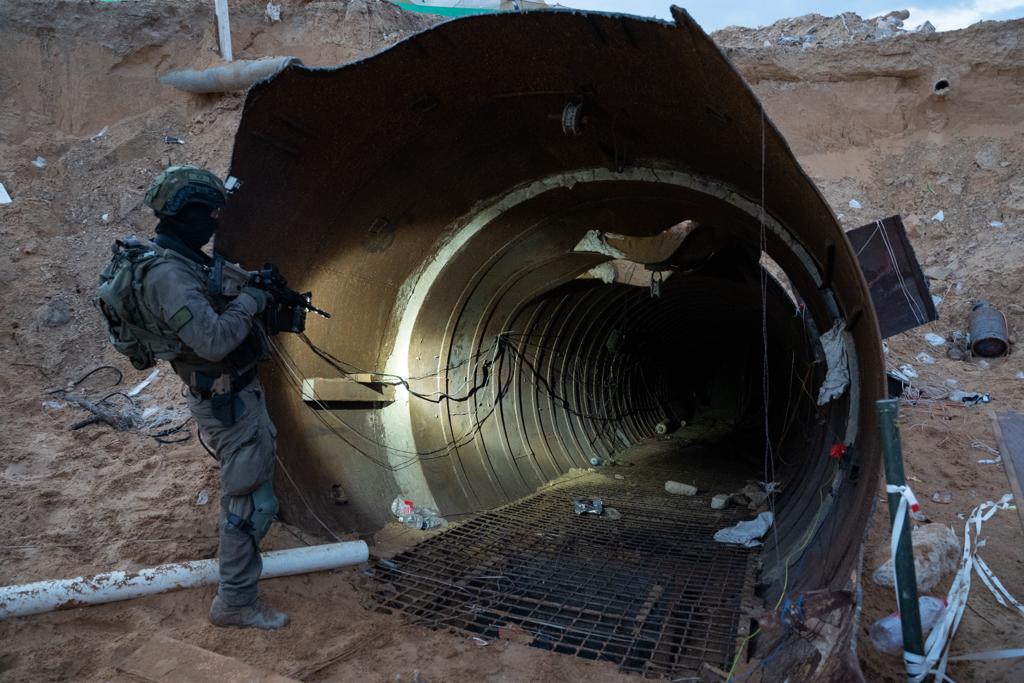
A major security concern has surfaced in the border regions of India after the Indian authorities uncover a secret underground tunnel inside the bedroom of a man identified as Saddam Sardar. The arrest was made in Kultali, a riverine and forested area close to the India–Bangladesh border. According to police officials, the tunnel was around 40 metres long and connected to a canal that ultimately links to the Makhal River in the Sundarbans. Crucially, this water network stretches beyond the Indian side and reaches close to the Bangladesh border.
Just imagine this layer of threat from Bangladesh, knowing the situation of Bangladesh. It can be used for anything from illegal movement to illegal trade to infiltration.
The discovery has raised alarms not just because of one tunnel, but due to fears that many more such structures may exist beneath the region’s porous terrain.
Why is this tunnel dangerous?
At first glance, a tunnel may appear to be a local crime or smuggling issue. However, the world has just seen how Hamas has used these tunnels against Israel. The underground routes change the nature of border threats entirely. Unlike fences, patrols, or river surveillance, tunnels can be used to bypass many such defence mdchanisms. They create a net of tunnels which allow repeated movement of people, goods, weapons, or cash without detection.
⚠️ SHOCKING: HAMAS style Secret Tunnel to Bangladesh 🇧🇩 found in Mamata’s West Bengal.
Numerous illegals were using the tunnel and smuggling as well. It is said there are hundreds of such tunnels.
Is this why Mamata isn’t allocating land for GOI to build border fence? pic.twitter.com/csPTVggZuC
— Arun Pudur (@arunpudur) December 23, 2025
These include human trafficking, drug and arms smuggling, fake currency circulation, and safe passage for extremists. In the wrong hands, such infrastructure becomes a long-term security risk rather than a one-time crime.
The concern is that tunnels create a permanent breach inside Indian territory. Unlike border crossings, they bypass checkpoints altogether. This makes them extremely difficult to track unless specific detection technology is used.
The Hamas parallel and ‘tunnel terrorism’
The term this “tunnel terrorism” has been used to better describe this threat. The reference comes from the way Hamas built an extensive tunnel network in Gaza. These tunnels were used not only for smuggling but also for hiding fighters, moving weapons, launching attacks, and radicalizing cadres away from surveillance.
The fear is real that it could also be used in South Asia. As Hamas fighters have visited Pak-Occupied Kashmir this year, where they met senior leaders of Jaish-e-Mohammed (JeM) and Lashkar-e-Taiba (LeT). These groups have long history of targeting India. The role of Pakistan and radical groups in the recent unrest in Bangladesh can not be ruled out, as Jamat-e-Islami share ideological similarities with groups like JeM and LeT. It’s possible that these meetings have motivated these people to make tunnels connecting India and Bangladesh.
Regional extremist linkages
Pakistan and Turkey have lately been joining hands to formulate a new adical axis. Bangladesh has joined the group after the July revolution last year, when radical Islamists have grown their roots in the nation. Groups such as Jaish-e-Mohammed (JeM) and Lashkar-e-Taiba (LeT) have long targeted India. The reports have also pointed to growing contacts between these groups and Hamas operatives.
These interactions raise concerns about shared tactics, funding channels, and operational ideas. Tunnel construction is seen as one such tactic that can travel across regions.
A possible ideological and logistical connection with Jamaat-e-Islami in Bangladesh. The radical organization has a long history in the region and has often been under scrutiny for its political and religious influence networks.
Now international authorities have to be very careful, and the region should be kept under an eagle eye on the borders to neutralize threats coming from the destabilized nation, knowing the intensity of the threat, or else there is a chance that a new international threat will take shape in Bangladesh that may threaten not just the region but nations all over the globe.