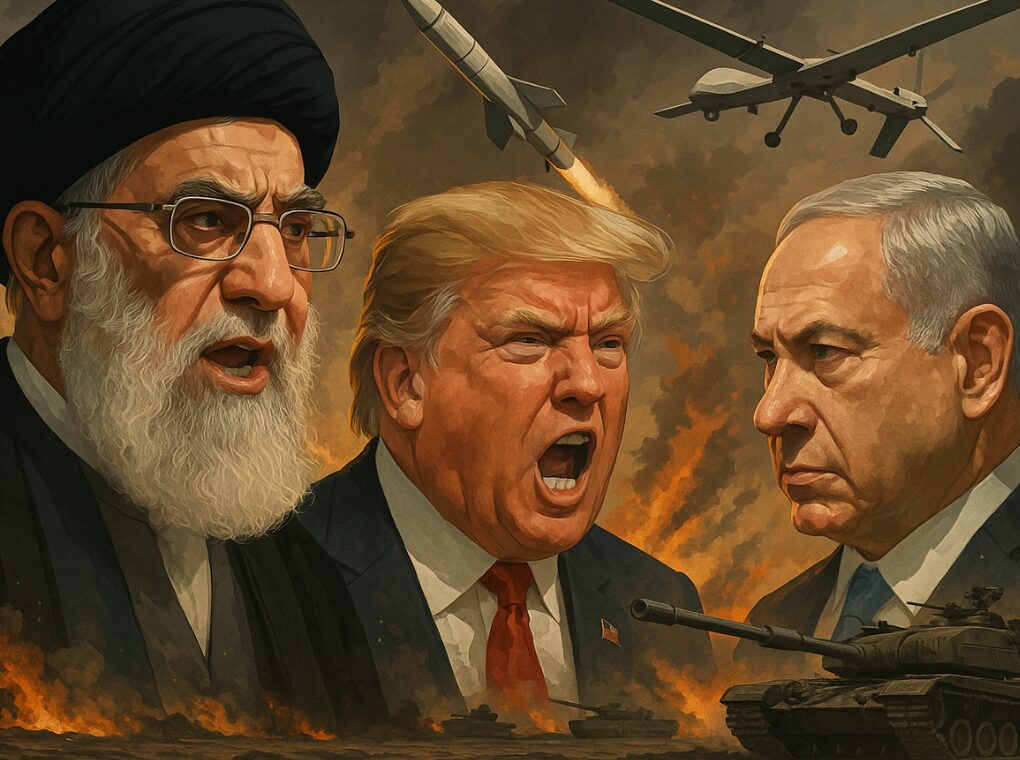
Tensions in West Asia are escalating rapidly as multiple military, political, and intelligence indicators suggest that the United States and Israel may be preparing for a new confrontation with Iran. From unusual U.S. Air Force movements and Israeli cabinet approvals to widespread protests inside Iran and intensified cyber warfare, the region is witnessing a convergence of warning signs that historically precede major conflicts. While no official declaration of war has been made, the strategic environment is becoming increasingly volatile.
Unusual U.S. Military Movements Raise Alarm
One of the most closely watched developments is the large-scale movement of U.S. military assets. Defense analysts tracking open-source data report a surge in U.S. Air Force C-17 transport aircraft arriving in Europe, with indications that some of these assets are being positioned toward the Middle East and Israel. Such aircraft are typically used to transport heavy equipment, missile systems, and large numbers of personnel—suggesting preparation rather than routine rotation.
Similar airlift patterns were observed just days before the 2025 Israel–Iran conflict, reinforcing speculation that contingency planning is underway. While U.S. officials have not publicly linked these movements to Iran, the timing has raised concerns among regional observers.
Israel Approves ‘Operation Iron Strike’
Adding to the tension are media reports that Israel’s Security Cabinet has approved a military plan referred to as “Operation Iron Strike.” Although Israeli authorities have not confirmed operational details, the name itself—widely interpreted as “strike while the iron is hot”—has fueled speculation that Israel sees Iran’s current situation as a strategic opportunity.
Israeli leaders have repeatedly stated that Iran’s missile and nuclear programs represent an existential threat. Following damage to Iranian military infrastructure during the 2025 conflict, Israeli strategists may believe that further delay would allow Tehran to rebuild air defenses and restore deterrence.
Iran’s Internal Unrest Weakens the Regime
Inside Iran, domestic instability is deepening. Protests that began over inflation, currency collapse, and shortages of basic utilities have spread across multiple provinces. Demonstrations have increasingly taken on a political tone, with protesters openly challenging the authority of the ruling establishment.
Iranian officials have accused the United States and Israel of fueling unrest through covert operations and information warfare. While independent verification remains difficult, the perception of foreign interference has hardened Tehran’s posture and intensified fears within the regime.
Reports circulating in Western media claim that Iran’s Supreme Leader, Ayatollah Ali Khamenei, has prepared emergency contingency plans should security forces fail to contain unrest. Whether accurate or exaggerated, such reports signal growing concern within Iran’s leadership about regime stability.
Cyberattacks and Information Warfare Intensify
Cyber warfare has emerged as another key dimension of the escalating standoff. Iranian authorities have acknowledged large-scale cyberattacks targeting government and ministerial systems, causing disruptions to communications and digital infrastructure. Iran has blamed foreign adversaries, primarily the U.S. and Israel, for conducting coordinated cyber operations.
Historically, cyber campaigns have often accompanied or preceded kinetic military action. As such, the recent spike in cyber activity is viewed by analysts as a potential precursor to broader escalation rather than an isolated phenomenon.
From Venezuela to the Middle East: A Broader U.S. Strategy?
The recent U.S. operation against Venezuelan President Nicolás Maduro has also been interpreted through the lens of Iran policy. Maduro was one of Tehran’s closest allies outside the Middle East, and his removal weakens Iran’s global strategic network. Some analysts argue that securing alternative energy routes and reducing reliance on Middle Eastern oil could give Washington greater flexibility in confronting Iran.
While geographically distant, the Venezuela operation signals a more assertive U.S. posture toward governments aligned with Tehran.
Is War with Iran Inevitable?
Despite the mounting indicators, a full-scale war is not guaranteed. Both Washington and Tel Aviv are aware of the risks involved. Iran retains the capability to retaliate through missile strikes, proxy forces such as Hezbollah, and potential disruption of shipping through the Strait of Hormuz—one of the world’s most critical energy chokepoints.
A broader conflict could rapidly draw in regional and global actors, destabilize oil markets, and trigger economic shockwaves worldwide. These risks act as a powerful deterrent against rash action.
However, proponents of military pressure argue that Iran’s current vulnerability—marked by economic collapse, internal unrest, and weakened defenses—represents a narrowing window of opportunity. From this perspective, postponing action could allow Iran to regain strength and advance strategic weapons programs.
A Region on the Brink
West Asia is entering one of its most dangerous phases in years. The combination of U.S. military mobilization, Israeli operational readiness, Iranian internal instability, and escalating cyber warfare has created a highly combustible environment. While diplomacy and deterrence could still prevent open conflict, history shows that wars often emerge not from clear declarations but from accumulated pressure and miscalculation.
For now, the signals remain ambiguous—but increasingly difficult to ignore. Whether the coming months bring de-escalation or confrontation will depend on decisions made behind closed doors in Washington, Tel Aviv, and Tehran. One thing is certain: the strategic balance in West Asia is shifting, and the world is watching closely.