
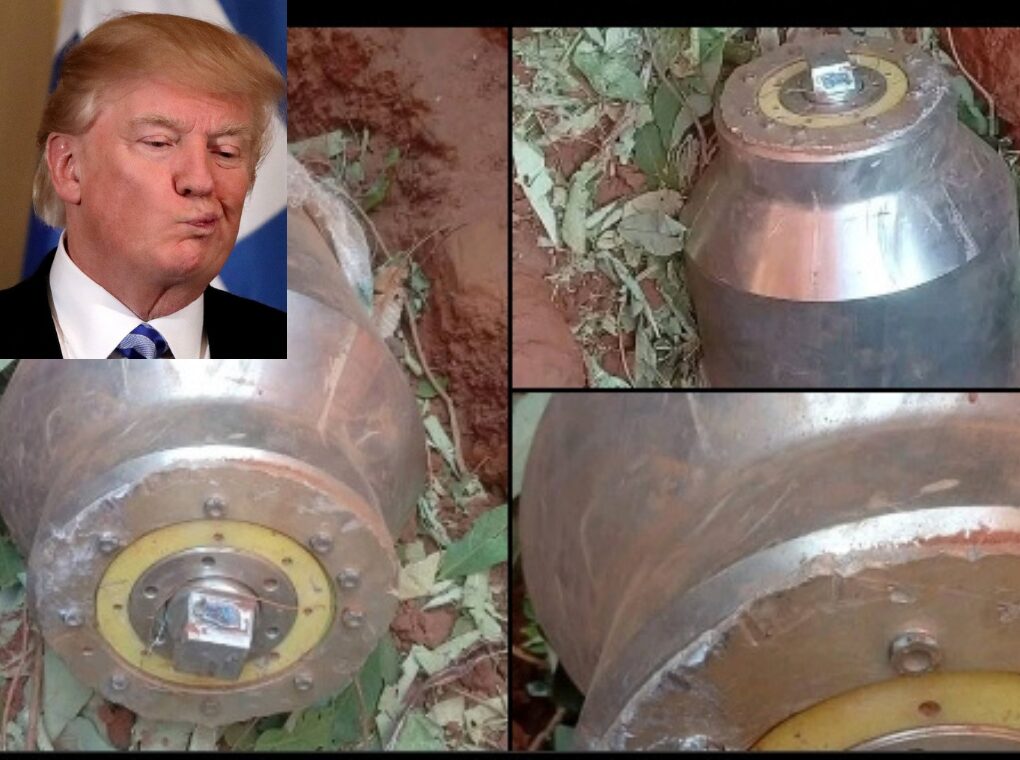
The discovery of four unexploded U.S. Tomahawk missile warheads in civilian areas of Nigeria has raised serious safety concerns and prompted renewed scrutiny of long-range precision strike weapons used in counterterrorism operations. The findings follow a U.S. military strike conducted on December 25, 2025, targeting Islamic State (ISIS)–affiliated camps in northwest Nigeria.
The strike marked one of Washington’s most significant direct military actions in West Africa in recent years, underscoring the expansion of U.S. counterterrorism operations beyond traditional theaters in the Middle East and the Horn of Africa. However, attention has increasingly shifted from the intended targets to the missiles that failed to detonate.
The December 25 Strike
According to U.S. Africa Command (AFRICOM), U.S. forces launched more than a dozen Tomahawk cruise missiles from a U.S. Navy vessel operating in the Gulf of Guinea. The missiles were aimed at two ISIS-linked camps in Sokoto State, a region that has seen rising militant activity amid Nigeria’s broader struggle with insurgency and banditry.
The operation was reportedly coordinated with Nigerian authorities, who provided intelligence support. AFRICOM stated that “multiple” ISIS fighters were killed in the strikes and that no civilian casualties were initially reported. Public reporting, however, has differed on the exact scale of the attack. While most outlets cited at least 12 Tomahawk missiles fired, some reports placed the number at more than 16.
Regardless of the precise number, the aftermath of the strike has drawn attention to an unexpected and troubling outcome: several missiles appear to have malfunctioned.
Discovery of Unexploded Warheads
By late December 2025, local reports and imagery began to surface showing intact missile components and unexploded warheads lying in open terrain. At least three unexploded WDU-36/B warheads were initially identified in civilian areas, including parts of Sokoto State and neighboring Kwara State.
Each WDU-36/B warhead is estimated to contain between 310 and 600 pounds of high explosive, making their presence in populated or accessible areas particularly dangerous. Photos and videos circulated locally showed large metallic objects, some partially buried, with no visible signs of detonation.
On January 6, 2026, a fourth unexploded Tomahawk warhead was confirmed. The object was found in the Ganaru area of Magama Local Government Area in Niger State, adjacent to the main strike zone. Nigerian open-source intelligence analyst @secmxx published images of the warhead on January 5–6, warning residents that the object was a “600 lb high-explosive warhead” and cautioning against attempts to dismantle it for scrap.
Independent Verification and Analysis
Much of the verification surrounding the unexploded warheads has come from independent analysts rather than official statements. Trevor Ball, a former U.S. Army explosive ordnance disposal (EOD) technician and researcher with Bellingcat, compared the Nigerian findings to documented Tomahawk failures in previous conflicts, including U.S. strikes on Syria in 2017.
On January 6, Ball confirmed the fourth discovery, stating that at least four unexploded Tomahawk warheads had now been identified following the December 25 strike.
Ball and other analysts noted that such failures are often linked not to simple mechanical defects but to built-in safety mechanisms. Tomahawk missiles are designed to disable their fuzes if the missile deviates significantly from its programmed flight path. When these safeguards are triggered, the missile does not detonate, leaving the warhead intact upon impact.
Failure Rates and Operational Implications
Based on estimates of 12 to 16 missiles launched and four confirmed unexploded warheads, the implied failure rate ranges from approximately 25% to 33%. While this figure may overstate technical unreliability—given the role of safety features—it is nonetheless notable for a weapon system often described as highly precise and reliable.
No accidental detonations from the unexploded warheads have been reported so far. However, the risks remain substantial. Large unexploded munitions pose a constant danger to civilians, particularly in regions where scrap metal scavenging is common and public awareness of explosive hazards is limited.
Official Silence and Ongoing Risks
As of January 6, 2026, neither the U.S. Department of Defense nor Nigerian authorities have publicly acknowledged the missile malfunctions or addressed the discovery of the fourth unexploded warhead. Calls have circulated locally and online for Nigerian police bomb squads and military engineers to secure and safely dispose of the ordnance.
The incident highlights a recurring dilemma in modern warfare: even precision strikes conducted far from U.S. borders can leave long-lasting risks on the ground. As the U.S. expands its counterterrorism footprint in Africa, the presence of unexploded high-explosive weapons in civilian areas underscores the operational, humanitarian, and political consequences that can follow such interventions long after the missiles stop flying.