
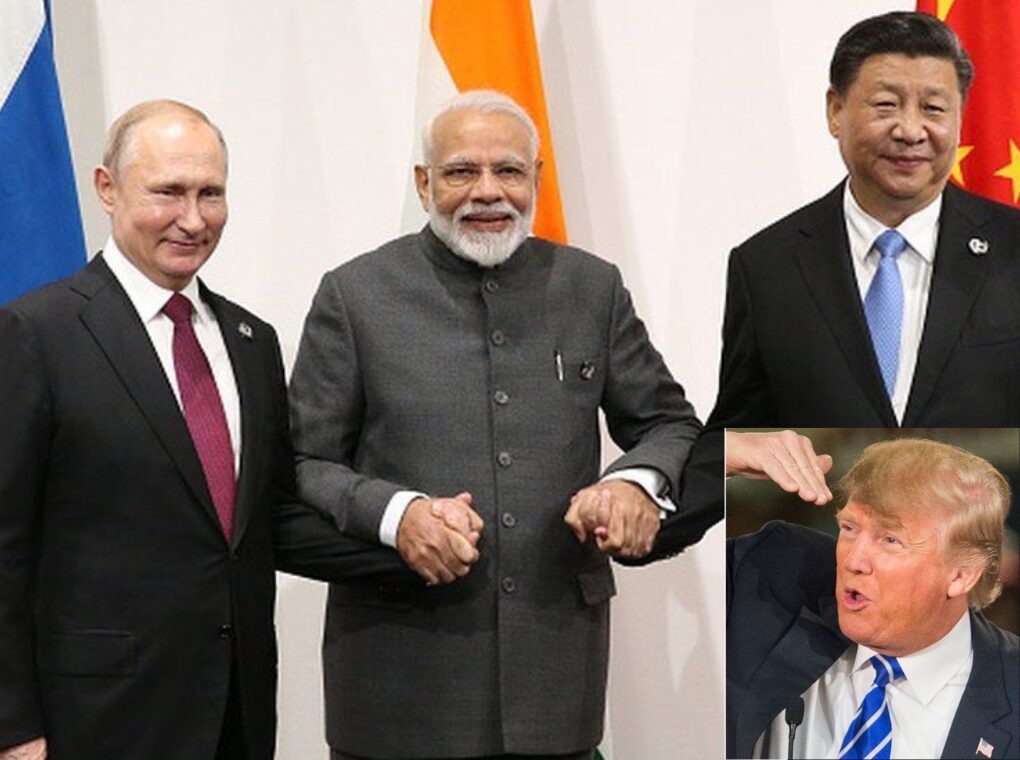
In early 2026, global geopolitics entered a more confrontational phase as the United States, under President Donald Trump, signaled support for a sweeping sanctions bill that could dramatically reshape international trade.
The proposed legislation authorizes the U.S. president to impose tariffs of up to 500 percent on countries that continue purchasing Russian energy, including oil, petroleum products, and uranium. While framed as a measure to weaken Moscow’s war-financed economy, the move is widely seen as a direct challenge to the BRICS bloc—particularly India, China, and Brazil.
What is unfolding is no longer a narrow debate over sanctions. It is a broader struggle over economic sovereignty, energy security, and the future architecture of global trade.
The Sanctions Bill and Its Strategic Intent
The bill empowers the U.S. executive to penalize nations that “knowingly engage” in transactions involving Russian energy exports. Supporters argue that Russia’s economy remains resilient because energy revenues continue to flow, largely due to increased purchases by Asian and emerging economies. By targeting buyers rather than sellers, Washington hopes to close what it sees as a critical sanctions loophole.
However, the scale of the proposed tariffs is unprecedented. A 500 percent tariff would effectively shut affected countries out of the U.S. market, turning trade into a geopolitical weapon. While the legislation is formally aimed at Russia, its real pressure points are the BRICS economies that have refused to align with Western sanctions.
Why BRICS Is the Primary Target?
India, China, and Brazil have each expanded energy ties with Russia since Western sanctions were imposed. India has benefited from discounted crude, which has helped control inflation and sustain economic growth. China has deepened long-term supply agreements to reduce exposure to Western-controlled energy markets. Brazil, though a smaller importer, aligns politically with BRICS’ push for strategic autonomy.
More importantly, these transactions are increasingly settled outside the U.S. dollar. Local currency settlements, bilateral swap arrangements, and alternative payment systems reduce reliance on dollar-based mechanisms and bypass sanction enforcement tools traditionally controlled by Washington.
This shift strikes at the core of U.S. economic power. Sanctions are most effective when trade flows through systems the United States dominates. As BRICS operationalizes trade beyond those systems, U.S. leverage weakens.
The Hypocrisy Dilemma
The sanctions push has also exposed contradictions in U.S. policy. While Washington threatens severe penalties for buying Russian oil, it continues to import Russian uranium for its own nuclear energy sector under existing waivers. American reactors remain dependent on foreign enrichment services, and alternatives are still years away from full-scale deployment.
This selective enforcement has fueled accusations of double standards. Critics argue that sanctions are applied not on principle but on convenience, undermining U.S. credibility and reinforcing BRICS narratives about the politicization of global trade rules.
The Venezuelan Front and Maritime Escalation
The confrontation has expanded beyond Russia. The U.S. has intensified pressure on Venezuelan energy exports, seizing or redirecting tankers and warning against sanctioned oil flows. These actions directly impact BRICS-linked supply chains, particularly those involving China.
Despite these measures, energy shipments continue. BRICS-aligned vessels have persisted in moving oil through alternative routes and payment systems, signaling that enforcement has limits. Each interception raises the risk of maritime incidents and further escalation.
Energy Security vs Economic Coercion
For BRICS nations, energy is not merely a commercial issue—it is a strategic necessity. Rapidly growing economies require stable, affordable supply. Russian oil offers both price advantages and long-term reliability at a time of global volatility.
India’s continued investments in Russian energy projects underscore this reality. China’s expanding pipeline and shipping infrastructure reinforces it. These are not short-term tactical decisions but long-term strategic calculations that cannot easily be reversed by external pressure.
The Dollar Question at the Center
At its core, this confrontation is about the future of the U.S. dollar. Washington’s ability to sanction rests on dollar dominance in trade and finance. As BRICS reduces dollar dependence, sanctions lose their bite.
The threat of extreme tariffs appears designed not only to punish energy trade with Russia but also to deter broader de-dollarization efforts. Yet coercion may produce the opposite effect, accelerating the creation of parallel financial systems and deepening divisions in the global economy.
A Fragmenting Global Order
If enforced, the proposed tariffs could trigger retaliation, disrupt supply chains, and intensify inflationary pressures worldwide. Rather than isolating Russia, the strategy risks isolating the United States from large segments of the Global South.
What is emerging is a fragmented world economy—one increasingly divided into rival blocs with separate trade rules, payment systems, and strategic alignments.
The proposed 500 percent tariff threat marks a turning point. It transforms sanctions from a diplomatic tool into an instrument of economic warfare. For BRICS nations, compliance would mean surrendering energy security and economic sovereignty. For the United States, enforcement risks accelerating the very multipolar shift it seeks to prevent.
As 2026 unfolds under India’s BRICS presidency, the question is no longer whether tensions will rise—but whether the global system can absorb this confrontation without tipping into a prolonged trade and financial conflict.