Poland has announced that it will formally withdraw from the Ottawa Convention next month, a global treaty that bans anti-personnel landmines. The move signals a major shift in Warsaw’s defense policy as tensions with Russia continue to rise across Eastern Europe.
Deputy Defense Minister Cezary Tomczyk confirmed that Poland will exit the treaty on February 20. Speaking to Radio Zet, he said the decision will allow Poland to possess and produce anti-personnel landmines once again. According to him, the move forms a core part of Poland’s broader border defense strategy.
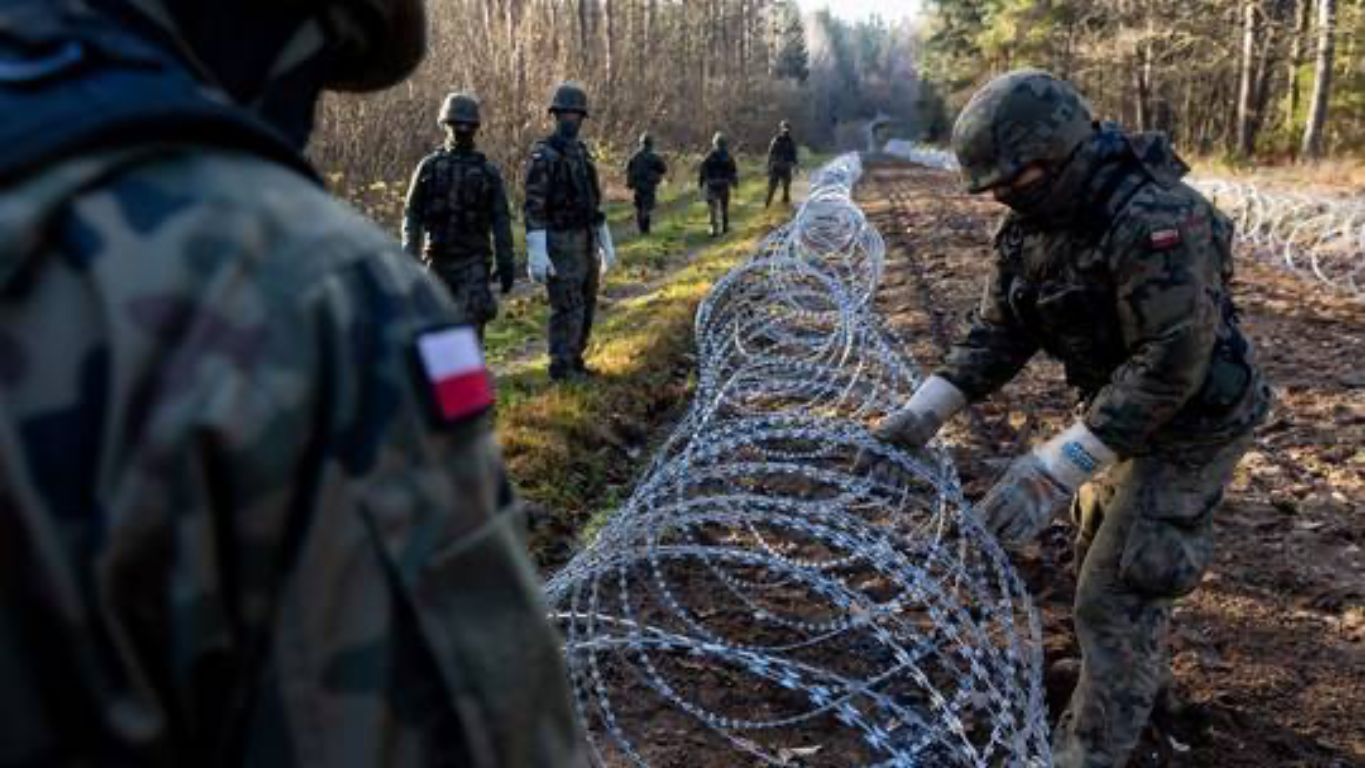
Importantly, Tomczyk linked the decision to Poland’s “East Shield” plan. This project focuses on strengthening defenses along Poland’s eastern frontier, especially near Russia’s Kaliningrad Region. He stated that Poland has already identified locations where it could place landmines if needed. Moreover, he claimed that Polish forces could deploy mines on any border within 48 hours if a “real threat of war” emerges.
Meanwhile, Poland has also begun expanding its military industrial capacity. Tomczyk announced that the state-owned BELMA plant in Bydgoszcz will sharply increase production of anti-tank mines. According to him, output will rise by 25 times in the coming period. This ramp-up reflects Warsaw’s push to build self-reliance in defense manufacturing.
In addition, Poland’s decision does not stand alone. Other NATO countries bordering Russia have taken similar steps in recent months. Finland’s withdrawal from the Ottawa Convention took effect last week. Earlier, Lithuania, Latvia, and Estonia completed their exits in late December. These countries argue that the treaty no longer fits the current security environment.
Together, these moves point to a wider rethink inside NATO’s eastern flank. Governments in the region increasingly see Russia as a long-term threat. They argue that landmines could slow or block a potential ground advance. For them, deterrence now outweighs earlier humanitarian commitments.
However, Moscow has strongly criticized these decisions. Russian officials have dismissed claims that Russia plans to attack NATO members. They describe such arguments as fear-driven and politically motivated. According to the Kremlin, European governments use these claims to justify higher military spending.
Reacting to Finland’s withdrawal, Russian Foreign Ministry spokeswoman Maria Zakharova warned of consequences. She said Russia “reserves the right to respond” to what it views as hostile actions. She added that Moscow could take “military-technical measures” if necessary. While she did not give details, the statement underlined rising tensions in the region.
At the same time, human rights groups continue to warn against the return of landmines. The Ottawa Convention, adopted in 1997, aimed to end the suffering caused by these weapons. Anti-personnel mines often remain active for decades. They do not distinguish between soldiers and civilians. As a result, they have killed or injured thousands of people long after wars ended.
Despite these concerns, Poland’s leadership believes the security situation has changed fundamentally. Officials argue that national survival must take priority. They insist that Poland will use any future mine deployment in a controlled and defensive manner.
In conclusion, Poland’s exit from the Ottawa Convention marks a significant moment for European security. It reflects growing anxiety along NATO’s eastern borders. At the same time, it highlights the deepening divide between security concerns and humanitarian norms. As tensions with Russia continue, Europe now faces hard choices that may reshape its defense posture for years to come.