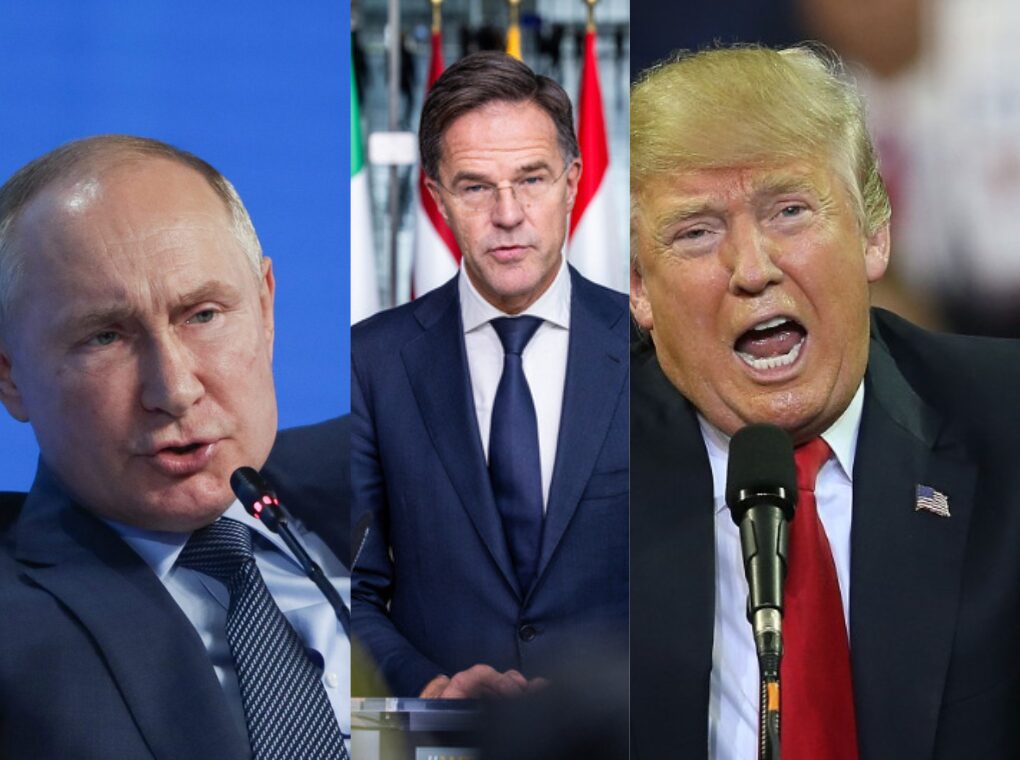
The Russia–Ukraine war, now stretching into its fifth year, has evolved far beyond a regional conflict. It has become a stress test for NATO, Western unity, and the post–Cold War security architecture of Europe. Recent remarks by U.S. President Donald Trump questioning NATO’s value—particularly his comments dismissing allied sacrifices in Afghanistan—have intensified concerns that the alliance itself may be approaching a breaking point.
Against this backdrop, a growing number of analysts argue that Ukraine may be forced to pursue a negotiated peace, not because the war’s causes have disappeared, but because the political foundations supporting Kyiv are increasingly unstable.
Ukraine, NATO Aspirations, and the Origins of the War
At the heart of the Russia–Ukraine conflict lies Ukraine’s long-standing desire to integrate with Western institutions, particularly NATO. Following Russia’s annexation of Crimea in 2014 and its backing of separatists in eastern Ukraine, Kyiv increasingly viewed NATO membership as the only credible security guarantee against future Russian aggression. President Volodymyr Zelenskyy made Euro-Atlantic integration a central pillar of Ukrainian policy.
Russia, however, framed this ambition as an existential threat. President Vladimir Putin repeatedly argued that NATO’s eastward expansion violated earlier understandings reached after the Cold War and left Russia strategically encircled. When diplomatic efforts failed, Moscow launched a full-scale invasion in February 2022, citing Ukraine’s NATO trajectory as a primary justification.
While NATO never offered Ukraine immediate membership, it provided extensive military aid, training, and intelligence. This ambiguous support—strong enough to sustain Ukraine’s resistance but insufficient to guarantee victory—has prolonged the war while avoiding direct NATO–Russia confrontation.
Trump’s NATO Skepticism and the Afghanistan Controversy
President Trump’s return to the White House has sharply intensified debates over NATO’s relevance. In a January 2026 interview with Fox News, Trump claimed that the United States has “never really needed” NATO and suggested that allied troops in Afghanistan stayed “a little off the front lines.” These remarks triggered outrage across Europe, particularly in the United Kingdom.
British politicians from across the political spectrum condemned the comments as an insult to the 457 UK service personnel who died in Afghanistan. Emily Thornberry, chair of the UK Foreign Affairs Committee, called the remarks “an absolute insult,” while Liberal Democrat leader Sir Ed Davey asked, “How dare he question their sacrifice?” Conservative MP and Afghanistan veteran Ben Obese-Jecty stressed that British troops fought and died alongside Americans in some of the war’s most dangerous operations.
Canada and other NATO allies echoed this sentiment. Canada lost 158 soldiers—one of the highest per-capita losses among coalition members—while Poland, Denmark, and other European states suffered significant casualties. Crucially, it was the United States itself that invoked NATO’s Article 5 after the 9/11 attacks, leading allies to join the Afghanistan mission in solidarity.
Trump’s remarks were therefore seen not merely as inaccurate, but as undermining the moral foundation of NATO: mutual sacrifice.
NATO Under Strain: Unity in Question
Trump’s broader approach to NATO—demanding higher defense spending, threatening troop withdrawals, and questioning automatic U.S. commitments—has fueled speculation that the alliance is entering its most fragile phase since its creation. Although many European countries have increased defense budgets to meet NATO’s 2% GDP target, Trump’s demand for 5% is viewed as politically and economically unrealistic.
European leaders argue that NATO has consistently protected U.S. interests, from Afghanistan to counterterrorism, maritime security, and Arctic defense. They also warn that public doubts about Article 5 embolden adversaries, particularly Russia.
For Moscow, NATO discord is a strategic gift. Any perception that the alliance may not respond collectively reduces deterrence and weakens Ukraine’s negotiating position.
Pressure Mounts on Ukraine to Seek Peace
As NATO unity wavers, analysts increasingly argue that Ukraine may need to explore peace negotiations. With U.S. support appearing less reliable under Trump and Europe struggling to fill the gap, Kyiv faces hard realities on the battlefield and in diplomacy.
Proposed peace frameworks—often discussed quietly in Western policy circles—include freezing current frontlines, accepting Ukrainian neutrality regarding NATO, and offering security guarantees short of Article 5, possibly backed by European states. Supporters argue this could preserve Ukrainian sovereignty, stop further bloodshed, and allow reconstruction and EU integration.
Critics strongly oppose this approach, warning that territorial concessions would reward aggression and set a dangerous precedent. Zelenskyy himself continues to reject any settlement that compromises Ukraine’s territorial integrity, arguing that peace without justice invites future wars.
A Conflict Bigger Than Ukraine
The Russia–Ukraine war is no longer just about territory—it is about the credibility of alliances and the future of global order. Trump’s rhetoric has exposed deep fractures within NATO, particularly over burden-sharing and historical memory. While allies insist that NATO remains vital, public disputes risk weakening deterrence at a critical moment.
For Ukraine, the dilemma is stark. A divided NATO reduces Kyiv’s leverage, increasing pressure to compromise. Yet such compromise risks legitimizing aggression. Whether through renewed alliance cohesion or pragmatic diplomacy, the path forward will shape not only Ukraine’s fate but the stability of Europe itself.
In the end, peace will require balancing realism with principle—an increasingly difficult task in a world where alliances themselves are under strain.