
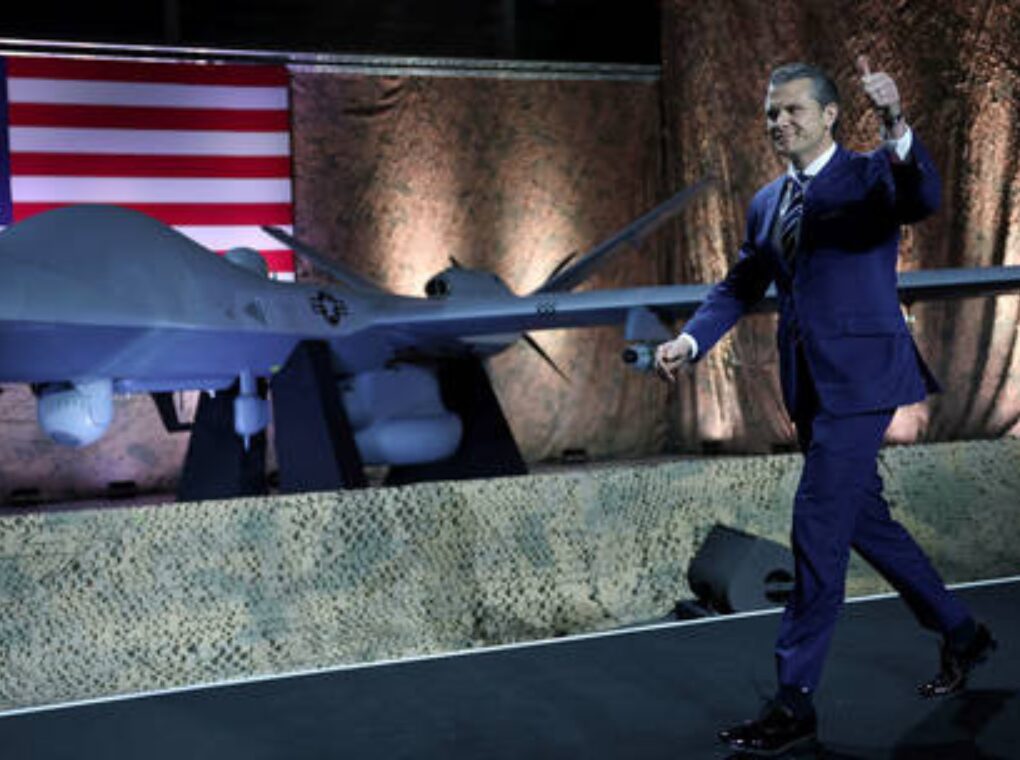
The U.S. Department of Defense is accelerating its push to integrate artificial intelligence into warfare and intelligence operations — but a growing dispute over ethical safeguards is exposing a deep divide between military priorities and AI industry caution.
At the heart of the controversy is whether advanced AI systems should operate with strict usage limitations or be fully deployable for national security missions, including combat targeting and surveillance. The disagreement reflects a broader global debate over how far automation should be allowed to go in matters of life, death, and civil liberties.
The Military’s AI Ambition
The Pentagon has made clear that artificial intelligence will play a central role in the future of warfare. Military planners see AI as essential for analyzing massive intelligence streams, coordinating autonomous systems, improving logistics, and accelerating battlefield decision-making.
Defense leaders argue that speed and adaptability are critical advantages in modern conflicts. In scenarios where seconds can determine outcomes, commanders want AI tools that can operate without excessive constraints. From predictive threat detection to drone coordination, AI is viewed as a force multiplier that could define the next era of military superiority.
Officials also maintain that as long as AI deployment complies with U.S. law and established rules of engagement, private companies should not impose additional restrictions that could limit operational effectiveness.
Industry Resistance to “Unrestricted” Use
Some AI developers, however, are uneasy with that approach. Leading firms in the artificial intelligence space have invested heavily in safety research and ethical frameworks designed to prevent misuse of their technology. These safeguards often include limits on autonomous lethal decision-making, mass surveillance, or applications that lack meaningful human oversight.
Executives in the AI sector worry that removing such guardrails could open the door to unintended consequences, ranging from civilian harm to erosion of democratic norms. Advanced AI systems can behave unpredictably in complex environments, and critics argue that turning them into fully autonomous weapons or surveillance tools raises serious accountability and moral questions.
The dispute is not simply about policy language — it’s about who ultimately controls how powerful AI systems are used once they leave the lab.
Autonomous Weapons and Human Oversight
One of the most contentious issues is the potential role of AI in lethal operations. Military researchers are exploring systems capable of identifying and engaging targets with minimal human input. Proponents say this could reduce risks to soldiers and improve precision. Skeptics counter that machines should never be given the authority to make life-and-death decisions without direct human judgment.
Human rights advocates warn that autonomous weapons could lower the threshold for conflict by making military action seem less costly. They also highlight the difficulty of assigning responsibility if an AI system makes a fatal mistake.
Even within defense circles, there is ongoing debate about how much autonomy is appropriate. Many experts support a “human-in-the-loop” or “human-on-the-loop” model, where people retain final authority or at least supervisory control over AI-driven actions.
Domestic Surveillance Concerns
Beyond the battlefield, there are fears about how military AI tools could be used for intelligence and monitoring activities. Advanced pattern-recognition systems can analyze communications, movement data, and online behavior at unprecedented scale.
Civil liberties groups argue that deploying such systems domestically could blur the line between national security and mass surveillance. The concern is that AI’s ability to process enormous datasets might outpace existing privacy protections, leading to intrusive monitoring without sufficient oversight.
Balancing national security needs with constitutional rights is not a new challenge, but AI dramatically amplifies the scope and speed of what governments can do.
The Strategic Stakes
This clash comes as global powers race to harness AI for defense. Nations investing heavily in military AI view it as a strategic necessity, not a luxury. Falling behind in AI-enabled warfare is seen as a potential national security risk.
For technology companies, however, association with controversial military uses can carry reputational, legal, and ethical consequences. Employees, investors, and the public are increasingly scrutinizing how AI is deployed. Companies must weigh lucrative defense contracts against long-term trust and brand integrity.
A Turning Point for AI Governance
The standoff highlights a fundamental question shaping the future of artificial intelligence: Should creators of powerful AI systems retain control over how their tools are used, or should governments have the final say in the name of national defense?
The answer will influence not only military strategy but also global norms around AI ethics, accountability, and human rights. As artificial intelligence becomes more capable, the pressure to define clear rules — both legal and moral — will only intensify.
What happens next could set a precedent for how democracies balance technological power with the principles they seek to defend.