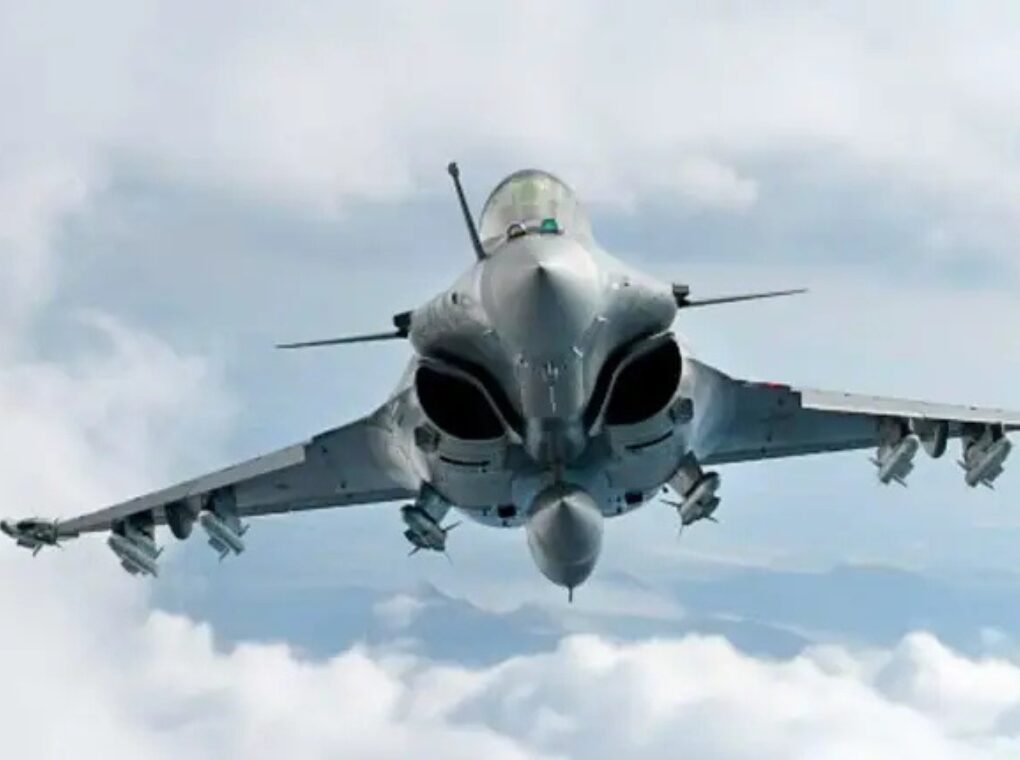
In a major setback for France’s next-generation combat aviation ambitions, the United Arab Emirates (UAE) has withdrawn from co-financing the advanced Rafale F5 fighter jet programme. The decision forces Paris to independently bear the estimated €5 billion development cost, raising serious concerns over defence funding, technological sovereignty, and the future of European fighter projects.
The Rafale F5—often described as a “Super Rafale”—is a critical component of France’s long-term military strategy. Designed to bridge the gap between current-generation fighters and future sixth-generation systems, the aircraft is expected to play a central role in maintaining France’s air superiority through the 2030s and 2040s.
A Strategic and Financial Blow to France
Initially, Abu Dhabi had indicated willingness to invest up to €3.5 billion in the Rafale F5 programme—covering a significant portion of the total development cost. However, negotiations between the two countries reportedly broke down over disagreements related to technology transfer and industrial participation.
The UAE, already the largest export customer of Rafale jets after signing a deal for 80 Rafale F4 aircraft, sought deeper access to sensitive technologies. These reportedly included advanced radar systems, electronic warfare capabilities, optronics, and mission software—technologies that are crucial for developing indigenous defence capabilities.
France, however, drew firm red lines. Officials in Paris were unwilling to share core technologies tied to national security, particularly those linked to nuclear deterrence and advanced combat systems. This refusal ultimately led to the collapse of the co-financing arrangement.
Sovereignty vs Strategic Partnerships
The breakdown highlights a growing global trend in defence procurement. Wealthy buyers like the UAE are no longer satisfied with simply purchasing advanced weapons; they increasingly demand co-development rights, technology transfer, and local manufacturing roles.
France’s decision reflects its commitment to preserving strategic autonomy. The Rafale platform is deeply integrated into the country’s defence doctrine, including its nuclear deterrence capabilities. The upcoming F5 variant is expected to carry the next-generation ASN4G hypersonic nuclear missile, making it a highly sensitive asset.
As a result, Paris prioritized sovereignty over financial relief—choosing to retain full control of the programme even at significant economic cost.
Rafale F5: A Hedge Against European Uncertainty
Beyond its immediate capabilities, the Rafale F5 also serves as a strategic fallback for France amid uncertainties surrounding the multinational Future Combat Air System (FCAS). The FCAS programme, involving France, Germany, and Spain, has faced repeated delays due to disputes over industrial roles, intellectual property, and leadership.
In this context, the Rafale F5 ensures that France retains an independent combat aviation capability regardless of FCAS’s future.
The aircraft is expected to feature major upgrades, including a new gallium-nitride (GaN) radar, enhanced SPECTRA electronic warfare suite, improved optronic sensors, and a more powerful engine delivering increased thrust. It will also integrate with unmanned “loyal wingman” drones, significantly expanding operational capabilities in contested environments.
Budget Pressures Mount
With the UAE stepping back, France now faces mounting financial pressure. The government is expected to fund the programme through an expanded Military Programming Law, which already increases defence spending to nearly €449 billion over the current planning cycle.
However, competing priorities—including nuclear modernization, ammunition replenishment, drone development, and air defence upgrades—are straining the budget. Defence analysts warn that absorbing the Rafale F5 cost alone could delay other critical projects.
Dassault Aviation has already secured over €4 billion in development contracts, making the programme difficult to scale back despite financial constraints.
Implications for Global Defence Markets
The fallout from the failed deal could reshape France’s global arms strategy. By refusing to share key technologies, Paris risks limiting its appeal to buyers seeking industrial partnerships rather than traditional procurement deals.
Countries such as South Korea, Türkiye, and China are increasingly offering defence exports with flexible technology-sharing arrangements, potentially gaining an edge in competitive markets.
At the same time, the UAE’s move signals a broader shift among Gulf nations toward building domestic defence industries, reducing reliance on foreign suppliers.
Impact on India and Future Deals
The development is also being closely watched by India, another major Rafale operator. New Delhi is reportedly considering additional Rafale purchases and may eventually look at the F5 variant.
While there is no confirmation of delays affecting India, increased financial strain on France could potentially impact timelines for future upgrades and deliveries.
A Defining Moment for European Defence
The Rafale F5 dispute underscores a deeper dilemma facing European defence industries: balancing technological sovereignty with the need for international collaboration and shared funding.
If France successfully develops the Rafale F5 independently, it will reinforce its position as a leader in sovereign defence manufacturing. However, any delays or cost overruns could strengthen arguments that future high-end military programmes require broader international cooperation.
For now, France stands alone committed to funding its most advanced fighter programme without external support, even as the global defence landscape becomes increasingly competitive and complex.