As Iran and the United States prepare for a second round of nuclear talks in Geneva, a parallel development is raising eyebrows in global security circles: the US Air Force is urgently restocking its most powerful non-nuclear bomb, the GBU-57 Massive Ordnance Penetrator (MOP).
The move comes months after several of the 30,000-pound bunker-buster bombs were deployed during Operation Midnight Hammer, a June 21 strike targeting three Iranian nuclear facilities. While diplomacy is back on the table, Washington’s military posture suggests contingency planning remains very much in play.
US Air Force Moves to Replenish GBU-57 Stockpile
A partially redacted federal notice confirms the Air Force has awarded Boeing a sole-source contract to replenish depleted GBU-57 inventory. According to the notice, the procurement is “critically needed” after stockpiles were reduced during Operation Midnight Hammer.
The Pentagon bypassed competitive bidding, citing Boeing’s unique expertise developed over 18 years in adapting the GBU-57 system from proof-of-concept to full operational capability. Boeing remains the sole manufacturer of the MOP, a specialized deep-penetration bomb designed to destroy hardened underground facilities.
The notice stressed urgency:
“No delay in award is acceptable for this effort. Delaying this requirement would undermine force readiness… jeopardize strategic deterrence, hinder nuclear proliferation prevention efforts, and could result in loss of life.”
Such language underscores the gravity with which US defense officials view the current situation.
What Is the GBU-57 Massive Ordnance Penetrator?
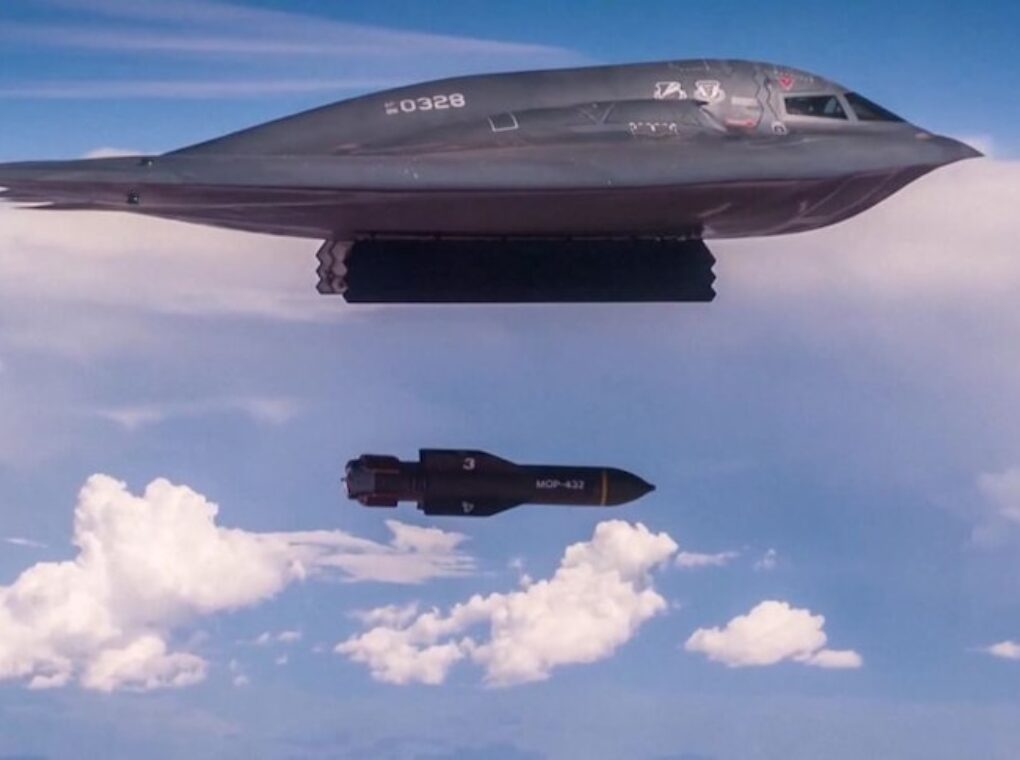
The GBU-57 Massive Ordnance Penetrator is one of the largest conventional bombs in the US arsenal. Weighing 30,000 pounds, it is specifically engineered to penetrate deeply buried and fortified targets before detonation.
Typically deployed by the B-2 Spirit, the MOP is capable of striking underground nuclear facilities, weapons storage sites, and reinforced bunkers. Its use signals a high-level strategic decision, as it is reserved for hardened, high-value targets.
During Operation Midnight Hammer, multiple MOPs were reportedly dropped on Iranian nuclear facilities believed to be involved in enrichment and advanced nuclear development.
Did Operation Midnight Hammer Cripple Iran’s Nuclear Program?
One of the most significant unresolved questions is whether the June strikes truly eliminated or severely degraded Iran’s nuclear capabilities.
Former President Donald Trump publicly declared that the strikes had “obliterated” key Iranian nuclear sites. However, subsequent warnings from Washington urging Tehran not to resume enrichment have raised doubts about the long-term effectiveness of the operation.
Independent verification remains difficult. Satellite imagery showed significant surface damage, but underground facilities are notoriously resilient. Analysts suggest that while infrastructure may have been damaged, Iran’s technical knowledge and dispersed capabilities make permanent elimination unlikely.
This ambiguity adds urgency to the Geneva negotiations.
Diplomacy and Deterrence Running in Parallel
The second round of talks in Geneva reflects a renewed diplomatic effort to prevent further escalation. However, the restocking of bunker-busters and continued US military buildup within United States Central Command (CENTCOM) territory signals that Washington is not relying on diplomacy alone.
The United States has increased air, naval, and missile defense deployments across the region. While Iran has not directly attacked US forces or bases, heightened tensions and mutual warnings have created a fragile security environment.
Defense analysts interpret the rapid MOP replenishment as part of a broader “Plan B” strategy — maintaining credible military options if negotiations collapse.
Strategic Messaging to Tehran
The timing of the Air Force contract sends a calculated message. Even as diplomats engage in dialogue, the Pentagon is signaling preparedness for further action if necessary.
By emphasizing “force readiness” and “strategic deterrence,” the federal notice appears aimed not only at logistical planning but also at deterrence messaging. In high-stakes negotiations, visible military preparedness can serve as leverage.
For Tehran, the signal is clear: any renewed nuclear acceleration could face swift consequences.
Global Implications
The restocking of one of America’s most powerful conventional weapons amid active negotiations highlights the complex interplay between diplomacy and military strategy.
If talks in Geneva succeed, the MOP replenishment may simply strengthen deterrence and ensure stability. If they fail, however, the rapid resupply ensures the United States retains the capability to conduct further deep-strike operations.
For now, the world watches as Iran and the United States navigate a narrow path between negotiation and confrontation. While Geneva hosts dialogue, the Pentagon is ensuring it is prepared for all outcomes.
In today’s geopolitical climate, peace talks and bunker-busters are no longer mutually exclusive — they are unfolding side by side.