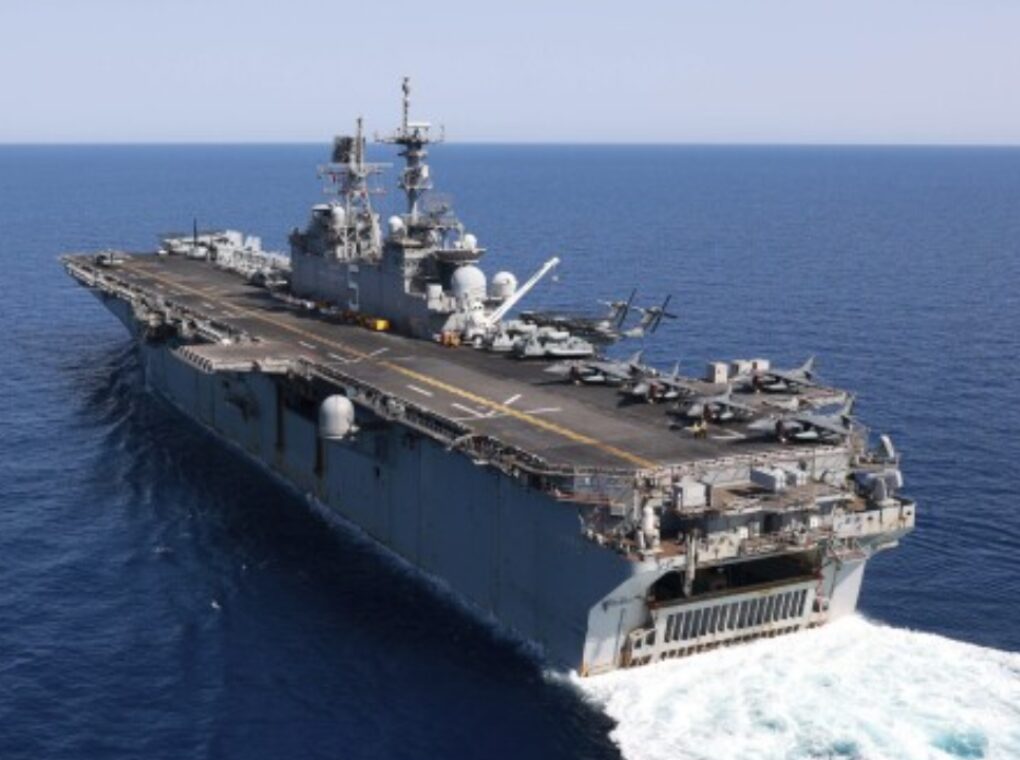
In a move that has sent shockwaves through global markets and geopolitical analysts, the USS Gerald R. Ford, the world’s most advanced aircraft carrier, has seemingly disappeared from public tracking systems. This 100,000-ton nuclear-powered behemoth, capable of carrying over 75 aircraft and a crew of 4,500, switched off its transponder while deployed in the Eastern Mediterranean. As of February 2026, the Ford’s exact location remains known only to US command, sparking intense speculation about escalating tensions with Iran. This isn’t mere evasion—experts say when a carrier goes dark, it’s preparing to strike.
The Ford’s deployment has already shattered records, marking 241 consecutive days at sea. If operations extend into April, it will surpass the longest carrier mission since the Vietnam War. But this isn’t about deterrence; it’s about positioning for potential war. Joining the Ford is the USS Abraham Lincoln, stationed in the Arabian Sea, forming a dual-carrier strike group with 16 warships, 150 aircraft, and the capacity for 800 daily sorties. Together, they represent 40-50% of deployable US airpower in the Middle East, bracketing Iran from the west and south.
Strategic Geometry: A “Kill Box” Around Iran
The positioning is no accident. The Ford, west of Iran, operates under Israel’s advanced air defense umbrella, forcing any Iranian missiles to navigate one of the planet’s most fortified networks. Meanwhile, the Lincoln in the Arabian Sea sits beyond most Iranian ballistic missile ranges but within striking distance of key targets like IRGC naval bases. This setup creates a “kill box,” where US forces can launch simultaneous attacks from multiple axes while minimizing retaliation risks.
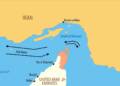
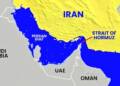
Recent events fuel the fire. F-22 stealth fighters have reportedly neutralized Iranian air defenses, and initial strikes targeted leadership. Iran’s IRGC fired retaliatory missiles, but they resulted in minimal damage—one civilian injured by debris. In response to Iran’s VHF radio announcement threatening to close the Strait of Hormuz, the US Fifth Fleet repositioned assets, rendering Iran’s naval capabilities obsolete. America has effectively parked two carriers on either side of the strait, daring Tehran to act.
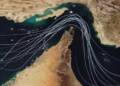
This military buildup comes amid Iran’s declaration of closing the 21-mile Hormuz Strait, a chokepoint for global oil supply. Yet, the US response isn’t diplomatic—it’s operational. The Ford’s blackout ensures Iran can’t predict launch points, setting the stage for what could be a sky filled with US aircraft.
Beyond War: Iran’s Seven Irreversible Crises and the Doom Loop
While markets price in a potential US-Iran war, analysts like Shanaka Anslem Perera argue that’s the wrong focus. Brent crude oil closed at $71.76 per barrel in late February 2026, with a $10 risk premium tied to fears of strikes on Iranian nuclear sites. However, this premium underestimates a deeper catastrophe: Iran’s internal collapse from seven interlocking structural crises.
Water Scarcity Crisis: Iran’s aquifers are depleted, with rivers drying up and lakes vanishing. Protests over water shortages have turned violent, eroding regime control.
Human Capital Flight: Brain drain is rampant; educated Iranians flee en masse, leaving a skills vacuum in critical sectors like oil production and engineering.
Currency Devaluation: The rial has plummeted, losing nearly all value against the dollar, fueling hyperinflation and making imports unaffordable.
Security Apparatus Fragility: The regime relies on 5,000 foreign mercenaries to quell unrest, a red flag for state failure akin to historical authoritarian collapses.
Economic Isolation: Sanctions have crippled oil exports, but even relief wouldn’t reverse entrenched damage from corruption and mismanagement.
Demographic Pressures: An aging population and youth unemployment exacerbate social tensions, with protests evolving into sustained uprisings.
Environmental Degradation: Soil erosion and desertification compound food insecurity, pushing millions toward famine.
These crises form a “doom loop,” where each accelerates the others. Sanctions relief can’t replenish vanished water or recall emigrated talent. Even without war, Iran’s state is decomposing, but military action could trigger a cascade, removing Iranian oil from markets for years, not weeks.
Market Mispricing: From War Premium to Collapse Trades
Options markets hint at this shift. On February 19, 2026, 10 million barrels equivalent of Brent June $100 calls traded, with call skew persisting for 14 sessions—the longest since October 2024 strikes. USO call-to-put ratios hit the 99th percentile, signaling bets on regime collapse amid conflict, not just temporary disruptions.
Senior Trump advisers peg kinetic action at 90% probability in coming weeks. Open-source data tracked over 50 F-35, F-22, and F-16 jets moving east on February 19, confirmed by US officials. The Ford’s Gibraltar transit on February 20 solidified the dual-carrier presence, just 700 km from Iran’s coast.
Traders should rethink positions. Conventional models assume Iran negotiates under pressure, but this ignores internal fragility. Implementable trades include long Brent calls above $100, short Iranian proxies like Hezbollah-linked assets, or diversified energy ETFs betting on prolonged supply shocks.
Evidence and Falsification: Weighing the Thesis
Pro-evidence: Satellite imagery and flight data corroborate US asset movements. Iran’s reliance on mercenaries, per regime admissions, underscores weakness. Oil market skews align with collapse pricing.
Counter-evidence: Iran has survived sanctions before, and diplomatic backchannels might de-escalate. If no strikes occur by March 2026 end, abandon the thesis.
Falsification criteria: De-escalation announcements, carrier withdrawals, or stabilizing economic indicators like rial rebound.
Global Implications: Oil, Geopolitics, and Beyond
A collapsing Iran could reshape global energy. As OPEC’s fourth-largest producer, prolonged outages might spike Brent to $120+, boosting US shale and renewables. Geopolitically, it weakens China’s influence in the region and bolsters Israel-Saudi alliances.
Yet, risks abound: Escalation could draw in Russia or spark refugee crises. Markets must price not just war, but a state’s irreversible decline.
The USS Gerald R. Ford’s disappearance isn’t a vanish—it’s a prelude. As carriers encircle Iran amid its seven crises, the world braces for a potential arithmetic of collapse. Investors ignoring this misprice the catastrophe at their peril.