
A series of earthquakes in southern Iran has sparked speculation online about whether the tremors could be linked to a secret nuclear test. The seismic activity comes at a time of rapidly escalating tensions in West Asia, as the confrontation between Iran and the United States intensifies.
According to the United States Geological Survey, Iran experienced earthquakes measuring around 4.1 to 4.3 on the Richter scale on March 3 and March 7. The tremors were recorded near the Khonj area in the Gerash region of southern Iran, close to the Persian Gulf.
While earthquakes are relatively common in Iran due to its position along several active fault lines, the timing of these tremors has triggered speculation in geopolitical circles and across social media. Some observers have questioned whether the seismic activity could be related to an underground nuclear test conducted by Tehran.
However, there is currently no evidence from international monitoring agencies to support the claim that the earthquake was caused by a nuclear explosion. Seismologists generally note that underground nuclear tests produce seismic signatures that differ from natural earthquakes, and such events are usually detected by global monitoring systems.
Iran sits on the Alpine–Himalayan seismic belt, one of the most active earthquake zones in the world. The country regularly experiences moderate earthquakes due to tectonic movements. Experts say tremors in the 4.0 magnitude range are not unusual for the region.
Nevertheless, the speculation reflects the heightened geopolitical tensions surrounding Iran’s nuclear program and the ongoing military confrontation in the Middle East.
War Escalation Raises Global Concerns
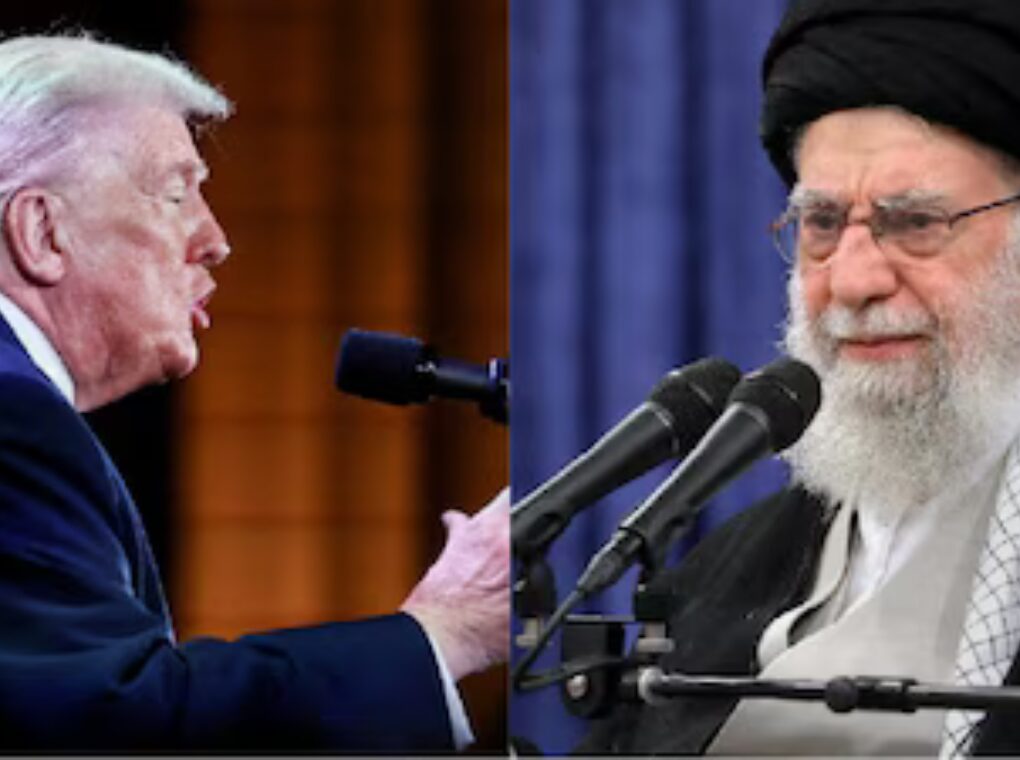
The earthquake reports come as the conflict between Iran and the United States has intensified dramatically in recent days. Former US President Donald Trump recently stated that only “unconditional surrender” from Iran would end the war, signaling a significant escalation in Washington’s demands.
Iranian officials quickly rejected the proposal, stating that Tehran is prepared for a prolonged conflict and will not capitulate under external pressure.
In interviews with regional media outlets, Iranian officials have argued that the country is ready to defend itself even if the conflict expands further. Some leaders in Tehran have warned that the arrival of foreign troops on Iranian soil would lead to a broader and more dangerous confrontation.
The war has already triggered missile exchanges and attacks across several parts of the Middle East, raising concerns about a wider regional conflict.
Missile Defense Under Pressure
One of the most significant developments in the conflict has been the intense use of ballistic missiles and missile defense systems.
Reports indicate that Iran launched hundreds of ballistic missiles during the first week of the conflict. This has placed significant pressure on American missile defense systems deployed across the region.
The Terminal High Altitude Area Defense (THAAD) system, manufactured by Lockheed Martin, is designed to intercept incoming ballistic missiles during their final phase of flight. The US military currently operates several THAAD batteries worldwide.
Each THAAD battery typically carries dozens of interceptors and often fires multiple missiles to ensure successful interception of incoming threats. However, analysts say large-scale missile barrages can rapidly deplete interceptor stockpiles.
The situation has drawn attention to production limitations within the US defense industry. Estimates suggest that approximately 96 THAAD interceptors are produced annually, although plans are underway to increase production significantly in the coming years.
Earlier this year, the US Department of Defense announced plans to expand interceptor production to as many as 400 units per year, but reaching that level of manufacturing could take several years due to complex supply chains and specialized components.
Damage to Strategic Radar Systems
Another concern for US defense planners has been the reported damage to advanced radar systems used to detect and track ballistic missiles.
Satellite imagery analyzed by international media outlets suggested that an AN/TPY-2 radar, a key component of the THAAD system, was damaged during early stages of the conflict at Muwaffaq Salti Air Base in Jordan.
These radar systems are critical for detecting incoming missile threats and guiding interceptor missiles toward their targets. Each radar unit can cost hundreds of millions of dollars and takes years to build.
Military analysts warn that damage to radar networks can create coverage gaps in missile defense systems, potentially allowing hostile missiles to evade detection or interception.
Strategic Implications
The rapid consumption of missile defense interceptors and damage to radar infrastructure has sparked wider strategic discussions among defense experts.
The United States deploys missile defense assets across multiple regions, including the Middle East, Europe, and the Indo-Pacific. These systems play a crucial role in protecting allies and military bases from ballistic missile threats.
However, some analysts argue that large-scale conflicts could strain existing missile defense inventories, particularly if multiple theaters of conflict emerge simultaneously.
Countries such as China and Russia are closely monitoring the developments in the Middle East conflict, as it offers insights into the operational limits of modern missile defense systems.
Nuclear Speculation Remains Unproven
Despite the widespread speculation surrounding the recent earthquakes in Iran, there is currently no scientific evidence linking the tremors to nuclear testing.
Global monitoring networks established under international nuclear test detection systems are specifically designed to identify underground nuclear detonations. Any such test would likely be detected and analyzed by multiple agencies worldwide.
For now, experts say the earthquakes recorded in southern Iran appear consistent with natural seismic activity common in the region.
However, the speculation highlights the tense atmosphere surrounding the ongoing war and the broader concerns about nuclear proliferation in one of the world’s most volatile regions.
As the conflict continues to evolve, the combination of military escalation, strategic vulnerabilities, and nuclear fears is keeping the international community on high alert.