
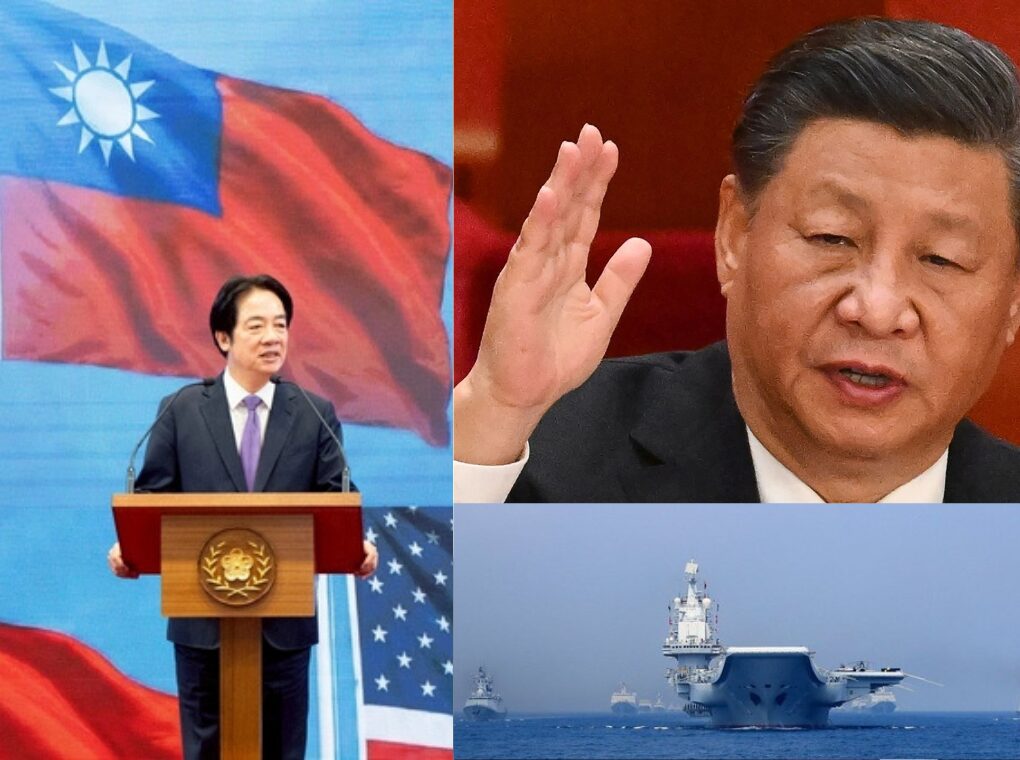
Tensions in the Taiwan Strait have surged once again after Taiwan’s defense authorities reported a large-scale deployment of Chinese military assets near the island. According to Taiwanese officials, 26 Chinese military aircraft and 7 naval warships were detected operating around Taiwan in a coordinated show of force.
Among those aircraft, 16 reportedly crossed into Taiwan’s Air Defense Identification Zone (ADIZ), prompting Taiwan’s military to scramble aircraft and activate defense monitoring systems. The latest maneuver has drawn global attention, with analysts noting that the timing coincides with multiple international crises that are stretching American military resources.
Chinese Military Activity Raises Alarm in Taiwan
Taiwan’s Ministry of National Defense confirmed that Chinese aircraft were operating across multiple sectors around the island, including northern, central, and southwestern zones. Military experts say such positioning can resemble rehearsal patterns used in blockade or encirclement scenarios.
Beijing has steadily increased military pressure around Taiwan over the past several years. China maintains that Taiwan is part of its sovereign territory and has repeatedly warned against what it calls “foreign interference” in the region.
Chinese President Xi Jinping has consistently emphasized that reunification with Taiwan is a historic mission that cannot be postponed indefinitely.
Although China describes these operations as routine patrols, Taiwan and several Western governments see them as coercive military signaling designed to pressure the island politically and militarily.
Timing Draws Global Attention
The latest Chinese activity comes at a moment when the United States is managing multiple security challenges around the world. Washington remains deeply involved in supporting Ukraine in its war against Russia while also focusing military resources on rising tensions in the Middle East.
Because of this global pressure, some geopolitical analysts believe Beijing may be closely observing the strategic environment.
The concern among security experts is that major powers sometimes act when rivals appear overstretched, creating what analysts call a “strategic window.”
However, defense officials stress that there is currently no confirmed indication that an invasion of Taiwan is imminent.
Taiwan Moves Forward with Major US Arms Deal
As military pressure grows, Taiwan has taken steps to strengthen its defense capabilities. On March 13, Taiwan’s parliament authorized the government to proceed with nearly $9 billion in U.S. arms purchases.
The deal reportedly includes dozens of advanced artillery rocket systems, along with other defense equipment aimed at strengthening Taiwan’s deterrence capabilities.
Among the systems expected to be included are High Mobility Artillery Rocket Systems (HIMARS), which have gained global attention due to their effectiveness in modern warfare.
Taiwanese officials say the purchase is part of a broader effort to improve the island’s ability to defend itself against potential military threats.
Taiwan’s Strategic Importance to the Global Economy
Beyond the military dimension, Taiwan occupies a crucial position in the global technology supply chain.
The island is home to Taiwan Semiconductor Manufacturing Company, widely known as TSMC, the world’s most advanced semiconductor manufacturer.
TSMC produces the majority of the most sophisticated microchips used in modern electronics, including smartphones, artificial intelligence processors, and advanced military systems.
Industry analysts estimate that the company manufactures around 90% of the world’s most advanced semiconductors.
Any disruption to Taiwan’s semiconductor industry could therefore have major consequences for global industries, from automotive manufacturing to consumer electronics and defense technology.
Regional Security Concerns Continue to Grow
At the same time, regional defense dynamics are evolving. Reports indicate that elements of the American missile defense system known as THAAD have been repositioned in response to developments in the Middle East.
Although the system remains operated by the United States, its redeployment has sparked debate among analysts about the balance of missile defense coverage in East Asia.
Another factor frequently mentioned by security experts is North Korea. In the event of a major crisis in the Taiwan Strait, analysts believe Pyongyang could potentially increase pressure on Japan or South Korea, further complicating regional security.
A Situation the World Is Closely Watching
Despite the heightened tensions, military activity around Taiwan occurs regularly. China frequently conducts patrols and exercises near the island, and Taiwan’s defense forces are accustomed to monitoring such movements.
Still, the scale and timing of this latest deployment have drawn significant international attention.
For now, Taiwan continues to monitor Chinese movements closely while strengthening its defenses. The United States and its allies are also watching developments carefully as geopolitical competition in the Indo-Pacific region intensifies.
Whether the recent surge in Chinese military activity represents a temporary show of force or part of a longer strategic buildup remains one of the key questions facing policymakers and analysts around the world.