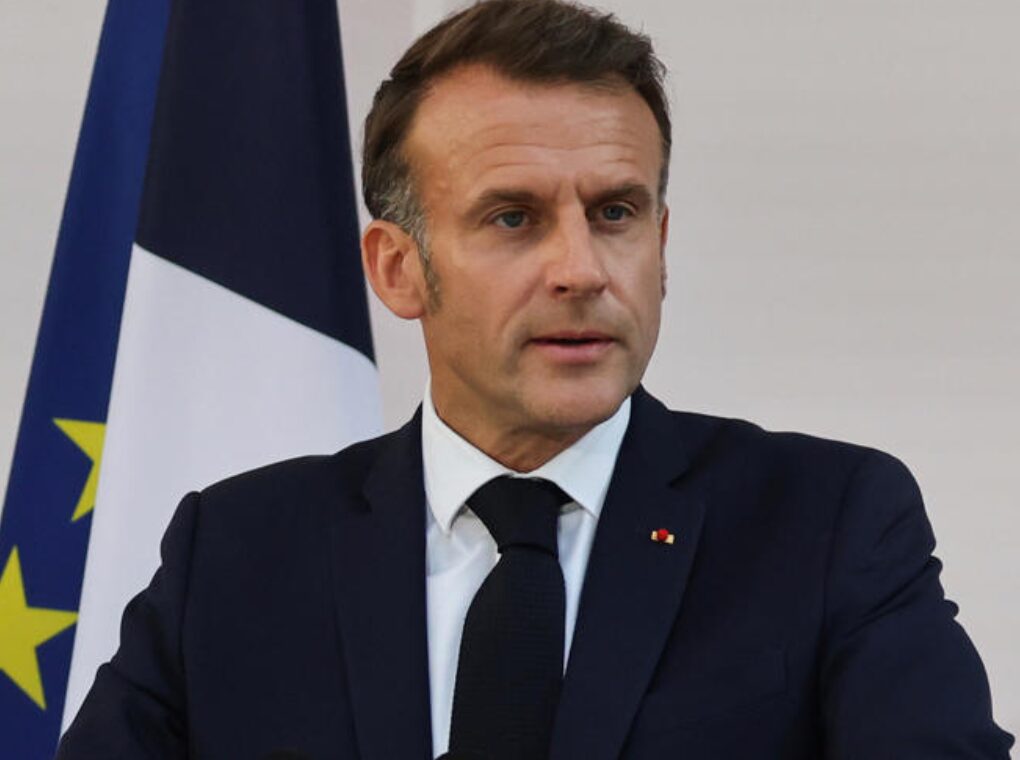
In a significant shift in global diplomatic tone, Emmanuel Macron has called on countries across the world to resist becoming “vassals” of either the United States or China, urging the formation of a new coalition of independent nations. His remarks come amid rising geopolitical tensions and a visible rift with Donald Trump over issues including Iran and the future of NATO.
Speaking during an official visit to Seoul, Macron addressed students and policymakers at Yonsei University, where he outlined his vision for a multipolar world order. He emphasized that the long-standing global system, once anchored by relative stability and predictable alliances, is now increasingly volatile.
“For decades, we had a so-called stability based on this international order and the few certainties we had. It’s up and down now,” Macron said. “We should not just be passive in this new disorder. We have to build a new order.”
A Call for Strategic Independence
Macron proposed the idea of a “coalition of independence,” bringing together nations such as India, Japan, South Korea, Brazil, Australia, and Canada. According to him, these countries share common commitments to democracy, international law, and climate responsibility, making them natural partners in shaping a new global framework.
“Our objective is not to be the vassals of two hegemonic powers,” Macron asserted. “We don’t want to depend on the dominance of China, and we don’t want to be too exposed to the unpredictability of the United States.”
The statement reflects growing unease among traditional US allies over Washington’s foreign policy direction, particularly under Trump’s leadership. Macron’s remarks suggest a broader effort by France to reposition itself—and potentially Europe—as a balancing force between global superpowers.
Rift Over Iran and NATO
The French president’s comments also come in the wake of escalating tensions over the ongoing crisis involving Iran. Macron has openly refused to support the US-Israeli military approach, advocating instead for diplomatic solutions.
“I don’t believe that we will fix the situation just by bombing or by military operations,” he said, referencing both current developments and past Western interventions in the Middle East.
The disagreement has widened into a broader dispute over NATO. Trump recently criticized the alliance as ineffective, reportedly calling it a “paper tiger” after several European members declined to participate in operations aimed at securing the Strait of Hormuz.
France’s position has further complicated matters at the international level. According to reports, Paris aligned with Russia and China in opposing a proposed United Nations resolution that would have authorized military action in the Hormuz region. The vote has since been postponed, reflecting deep divisions within the global community.
Strengthening Defense While Advocating Diplomacy
Despite advocating restraint, Macron has not shied away from strengthening France’s military capabilities. In recent years, Paris has significantly increased defense spending, focusing on advanced missile systems, drone warfare, and submarine fleets. The move is seen as part of a broader strategy to enhance European strategic autonomy.
In a notable development last month, Macron also suggested that France could extend its nuclear deterrence umbrella to protect other European nations, including Germany. The proposal underscores France’s ambition to take on a more prominent leadership role in European security, especially at a time when confidence in US commitments appears to be wavering.
A Vision for a Multipolar World
Macron’s remarks in Seoul signal a growing push toward a multipolar international order, where middle and regional powers play a more decisive role. His call for a coalition of independent nations reflects both a critique of existing power structures and a proactive attempt to reshape them.
As global tensions continue to rise—from the Middle East to the Indo-Pacific—Macron’s vision may resonate with countries seeking greater autonomy in their foreign policies. However, the success of such a coalition will depend on whether these nations can overcome their own differences and align on shared strategic goals.
For now, Macron’s message is clear: in an era defined by uncertainty and rivalry between great powers, neutrality is no longer enough—strategic independence is the new imperative.