
In a sharp escalation that could redefine modern aerial warfare, Iran has reportedly brought down multiple US military aircraft within just 24 hours. The incidents, involving some of America’s most battle-tested platforms, have triggered intense debate among defense analysts and raised serious questions about the future of air superiority.
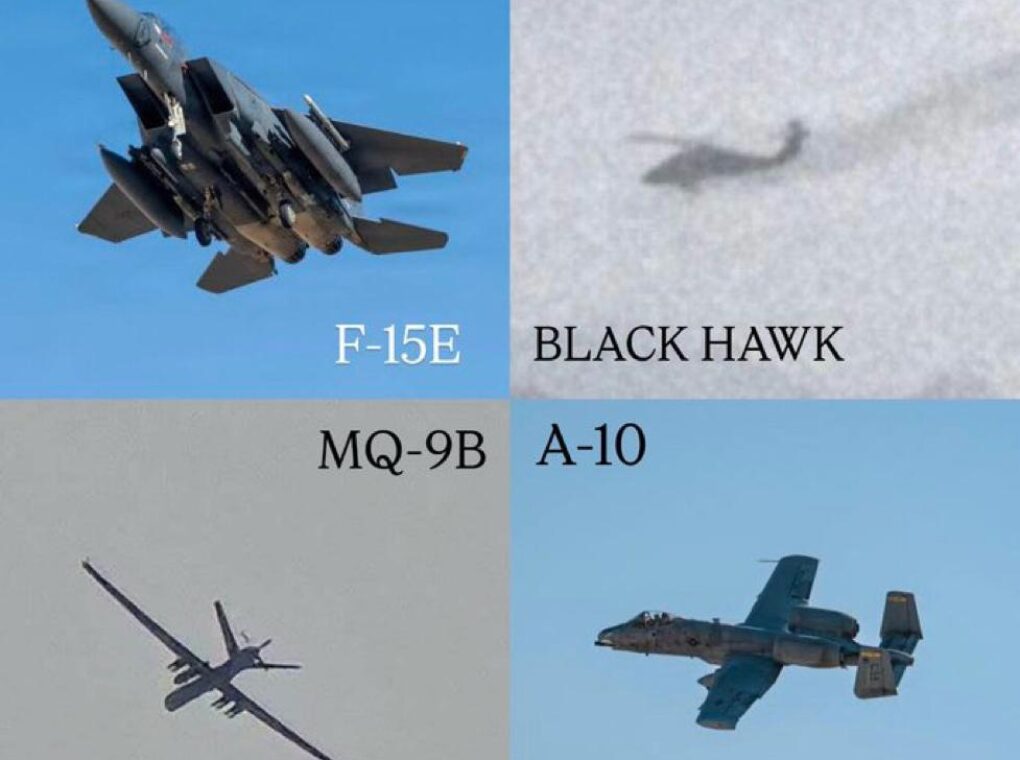
According to emerging reports, the aircraft allegedly hit include an F-15 Strike Eagle, an A-10 Thunderbolt II, a Black Hawk helicopter, and possibly an F-16 variant. While details remain contested, the scale and timing of these incidents have made them impossible to ignore.
Multiple Aircraft Incidents in a Short Span
Reports from US media indicate that an F-15E Strike Eagle was shot down over Iranian territory. The aircraft, which carries two crew members, saw one individual rescued, while efforts are ongoing to locate the second.
Around the same time, an A-10 Thunderbolt II—widely known for its durability and close air support role—was also reportedly hit. The pilot managed to eject safely and was later recovered.
There are additional claims that a Black Hawk helicopter involved in rescue operations may have been downed, and that an F-16CJ aircraft was also targeted during the same operational window.
Iran has further claimed that it successfully shot down an F-35 stealth fighter. However, Western analysts have disputed this assertion, suggesting that available wreckage and evidence are more consistent with an F-15 rather than a fifth-generation stealth jet.
Despite conflicting narratives, one fact stands out: multiple US aircraft were engaged within or near Iranian airspace in a very short period, marking a significant development in the ongoing conflict.
Passive Infrared Detection: A Key Factor?
One of the most discussed aspects of these incidents is the possible use of passive infrared detection systems by Iran.
Unlike traditional radar systems, which emit signals and can be detected or jammed, passive infrared systems work silently by detecting heat signatures. Every aircraft generates heat—from its engines, exhaust, and even friction with the air at high speeds.
These systems track that heat without emitting any signal, making them extremely difficult to detect or counter.
This creates what experts call a “detection asymmetry,” where one side can track a target without being detected in return. For aircraft relying on radar warning systems and electronic countermeasures, this poses a serious challenge.
Most US fighter jets, including the F-15E, are designed to counter radar-based threats using electronic warfare systems, chaff, and flares. However, these defenses are less effective against passive infrared tracking, potentially exposing vulnerabilities in even advanced platforms.
Layered Air Defense Strategy
Analysts believe the reported shootdowns were likely the result of a layered air defense approach, rather than a single system.
Such a strategy could involve multiple components working together, including passive infrared sensors for silent tracking, radar systems for broader detection, and surface-to-air missiles for engagement.
In this setup, an aircraft may first be tracked using infrared systems, then monitored and targeted through additional sensors before a missile is launched. This integrated approach significantly increases the chances of a successful interception.
If confirmed, this would indicate that Iran’s air defense capabilities have evolved beyond traditional systems into more complex and adaptive networks.
Russia, China, and the S-500 Debate
The incidents have also sparked speculation about possible foreign involvement. Some Israeli officials and media reports have suggested that Russia may have supplied Iran with advanced air defense systems, possibly even the S-500 air defense system.
However, many defense experts have rejected these claims as unrealistic. They argue that the S-500 is a large and sophisticated system that requires extensive infrastructure, including radar arrays and launch platforms. Such a system would be extremely difficult to deploy without being detected by US satellites and intelligence networks.
Experts also point out that if Iran had operational S-500 systems, ongoing US and Israeli air operations inside Iranian territory would likely face far greater resistance.
Some analysts suggest that these claims may be part of a broader narrative aimed at linking Russia more directly to the conflict or amplifying perceptions of Iran’s capabilities.
At the same time, there are discussions about potential Chinese technological support, particularly in areas like sensor fusion, artificial intelligence-driven tracking, and electronic warfare. While there is no confirmed evidence, some experts believe Iran’s rapid advancements may not be entirely domestic.
Is US Air Superiority Being Challenged?
For decades, the United States has operated under the assumption of air superiority—the ability to control and dominate airspace during conflict.
However, these recent developments raise questions about whether that dominance is being challenged.
If Iran is capable of detecting and engaging advanced aircraft using alternative methods like passive infrared tracking and layered defense systems, it suggests that modern air combat is becoming more contested.
This does not necessarily mean that the US has lost its advantage, but it does indicate that future conflicts may involve greater risks and fewer guarantees of uncontested skies.
The reported downing of multiple US aircraft within 24 hours represents more than just a tactical event—it may signal a shift in modern warfare.
With the emergence of new detection technologies and integrated defense systems, the battlefield is evolving rapidly. As nations adapt, one thing is becoming increasingly clear:
The era of uncontested air superiority is being seriously tested.