
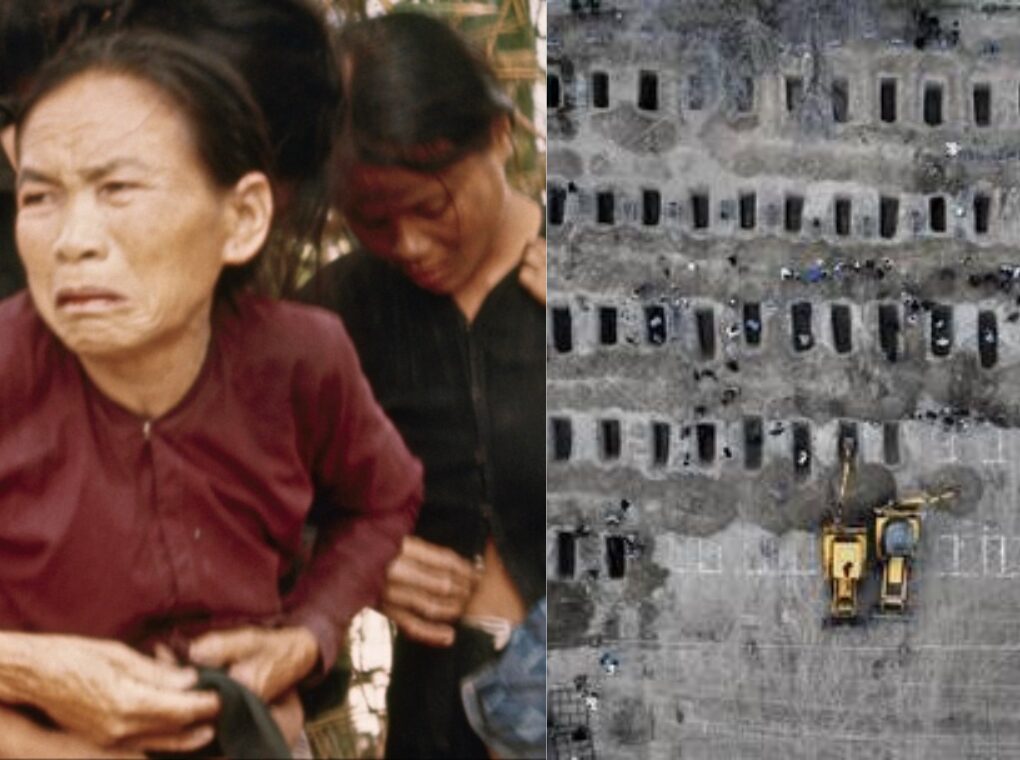
The shadow of wartime atrocities continues to haunt global politics as comparisons emerge between two devastating incidents separated by nearly six decades — the My Lai Massacre during the Vietnam War and the recent Minab School Bombing in southern Iran. While the geopolitical contexts differ, both events have sparked intense debate about military conduct, civilian safety, and the moral limits of modern warfare.
The My Lai Massacre: A Defining War Crime
On March 16, 1968, soldiers from Charlie Company of the U.S. Army entered the village of My Lai in South Vietnam expecting to encounter fighters from the Viet Cong. Instead, they found unarmed civilians — elderly villagers, women holding infants, and young children.
What followed became one of the darkest chapters in U.S. military history. Under the command of William Calley and Captain Ernest Medina, troops systematically killed hundreds of villagers.
By the end of the operation, 504 civilians were dead, including dozens of infants. Survivors and eyewitness accounts revealed harrowing details — families executed at close range, civilians forced into irrigation ditches and shot, homes burned, and reports of sexual violence against women and girls.
The massacre lasted several hours and was initially covered up by military authorities. It only became public after investigative reporting and whistleblower testimony brought the events to light. The scandal shook American society and intensified anti-war sentiment across the United States.
Despite the scale of the killings, Lieutenant Calley was the only officer convicted. His life sentence was later reduced, and he served just over three years under house arrest.
A New Controversy: The Minab School Bombing
Fifty-eight years later, another tragic incident involving civilian deaths has sparked global outrage — the Minab School Bombing in Iran’s southern Hormozgan Province.
According to reports from Iranian authorities and local media, a U.S. strike on February 28, 2026, hit the Shajareh Tayyebeh girls’ elementary school in the city of Minab. The attack reportedly killed around 175 people, including students and teachers.
Images from the aftermath showed rescue workers searching through rubble while families clutched backpacks and personal belongings recovered from the debris. Iranian officials condemned the strike as a deliberate attack on civilians, while critics abroad have demanded an independent investigation into what happened.
Washington has not publicly confirmed details of the strike but has indicated that military operations in the region are targeting threats linked to escalating tensions in the Middle East.
A Wider Debate Over Civilian Casualties
The Minab incident comes amid growing concerns about civilian casualties in modern warfare. Analysts note that the increasing use of drones, precision strikes, and AI-assisted targeting systems has not eliminated the risk to civilians.
Commentators such as Nicholas Kristof have warned that global powers may be drifting toward a more permissive approach to wartime rules. Critics argue that military doctrines emphasizing “maximum lethality” risk undermining decades of international humanitarian law.
The debate echoes many of the same questions raised during the Vietnam era. At that time, revelations about My Lai forced the United States and its allies to confront the realities of counterinsurgency warfare and the dangers of dehumanizing civilian populations in conflict zones.
The Enduring Lessons of War
Historians say the legacy of the My Lai Massacre remains relevant today precisely because it exposed how easily military operations can spiral into atrocities when oversight, accountability, and discipline break down.
Whether the Minab School Bombing ultimately proves to be a tragic accident, a targeting failure, or something more deliberate will likely depend on future investigations and international scrutiny.
But the emotional resonance between the two events — both involving large numbers of civilian deaths — has already sparked global reflection.
For many observers, the comparison underscores a sobering reality: despite advances in military technology and decades of legal frameworks designed to protect civilians, the human cost of war remains devastatingly high.
As conflicts intensify in multiple regions around the world, the memory of My Lai — and the images emerging from Minab — serve as stark reminders of the urgent need to enforce humanitarian laws and prevent civilian tragedies from repeating across generations.