
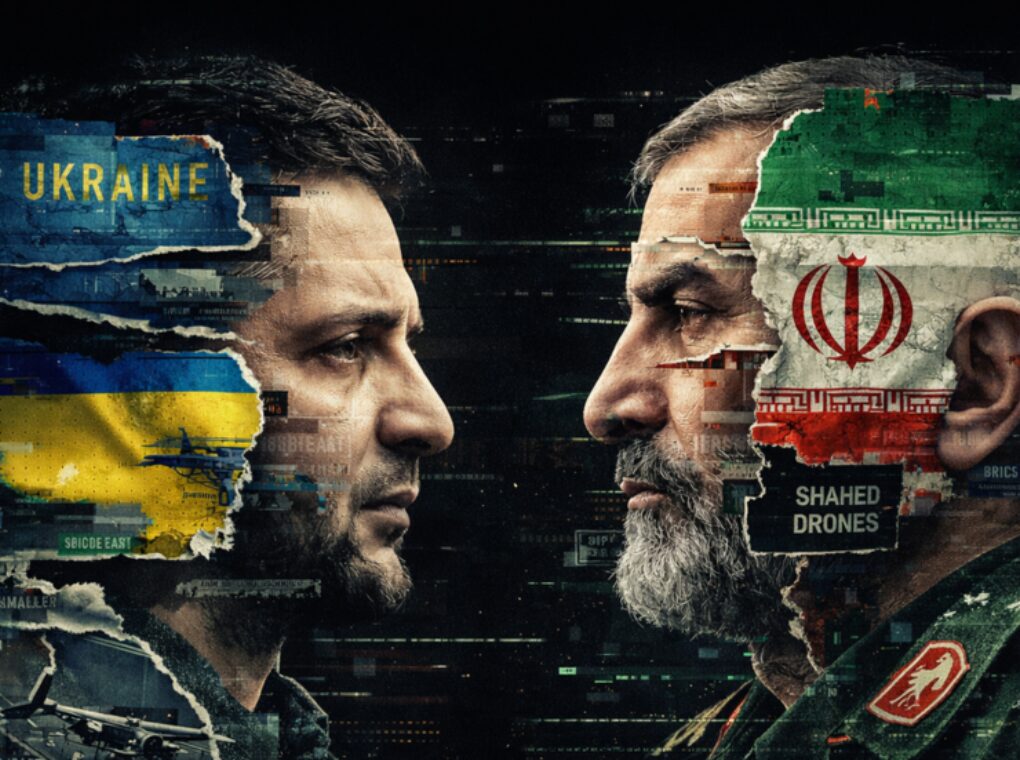
The relationship between Iran and Ukraine has undergone a dramatic transformation in recent years, shifting from distant neutrality to growing hostility. What was once a low-profile bilateral relationship is now edging toward open confrontation, as Tehran increasingly views Kyiv as part of a broader anti-Iran coalition aligned with the United States and Israel.
From Neutrality to Distrust
Historically, Iran and Ukraine never shared deep political or strategic ties. Their engagement was largely limited to modest trade and diplomatic exchanges, with annual trade volumes remaining under $500 million. For years, both countries maintained a neutral stance toward one another, avoiding direct conflict despite differing geopolitical alignments.
However, this fragile neutrality began to unravel in January 2020, following the tragic downing of Ukraine International Airlines Flight PS752 near Tehran. The aircraft was mistakenly shot down by Iranian air defenses during heightened tensions after the killing of Iranian General Qassem Soleimani by the United States.
While Iran admitted responsibility and issued apologies, Ukraine, led by President Volodymyr Zelensky, demanded a full international investigation, compensation, and accountability. Tehran perceived Kyiv’s firm stance as being influenced by Western pressure, marking the beginning of a deterioration in trust between the two nations.
The Russia Factor and Strategic Divide
Tensions escalated significantly after the outbreak of the Russia-Ukraine war in 2022. Iran adopted what it described as a neutral position, refraining from condemning Moscow and instead criticizing NATO’s expansion as a contributing factor to the conflict.
Ukraine, however, interpreted Iran’s position as tacit support for Russia. The situation worsened when Kyiv and Western nations accused Tehran of supplying Russia with Shahed drones for use in the war. Iran consistently denied these allegations, but the claims further damaged bilateral relations.
As geopolitical alignments hardened, Iran deepened its ties with non-Western blocs such as BRICS and the Shanghai Cooperation Organization, while Ukraine strengthened its partnerships with the United States and European allies. This divergence placed the two countries on opposite sides of an increasingly polarized global landscape.
Middle East Conflicts Add Fuel to Fire
The deterioration in relations intensified further following the escalation of conflict in the Middle East after October 2023. Ukraine openly supported Israel’s military actions, a stance that drew criticism from Iran, which considers Israel a primary adversary.
From Tehran’s perspective, Ukraine’s pro-Israel position signaled a clear alignment with forces hostile to Iran. This perception was reinforced by Kyiv’s backing of US-led sanctions against Iran and its political support for Western strategies aimed at containing Tehran.
Iran also grew wary of Ukraine’s statements about assisting countries in countering drone threats, interpreting them as indirect signals of potential military cooperation against Iranian capabilities.
Escalation in Rhetoric
By 2026, tensions had reached a critical point. Iranian officials began openly labeling Ukraine as a hostile actor. Notably, Ibrahim Azizi, head of the Iranian Parliament’s National Security Commission, declared that Tehran could consider Ukraine a legitimate military target.
Such statements mark a significant escalation in rhetoric and reflect a broader shift in Iran’s foreign policy posture. What was once a peripheral relationship has now become a strategic concern for Tehran.
Iranian lawmakers have increasingly called for severing diplomatic ties with Ukraine, arguing that Kyiv has effectively aligned itself with Iran’s adversaries. The possibility of retaliatory measures—ranging from political pressure to asymmetric responses—has also been raised if Iran perceives direct threats to its national security.
A New Front in Global Geopolitics?
The growing hostility between Iran and Ukraine highlights how modern conflicts are no longer confined to regional boundaries. The war in Ukraine and tensions in the Middle East are becoming interconnected, creating new fault lines in global geopolitics.
For Ukraine, Iran is seen as a supporter of Russia and a destabilizing force. For Iran, Ukraine represents an extension of Western and Israeli influence. This mutual perception has transformed indifference into antagonism.
While a direct military confrontation between the two countries remains unlikely in the immediate future, the risk of indirect conflict—through cyber operations, proxy engagements, or strategic partnerships—is rising.
The shift in Iran-Ukraine relations is a clear example of how rapidly geopolitical dynamics can change. A combination of tragic incidents, opposing alliances, and global conflicts has pushed the two nations toward a dangerous trajectory.
As tensions continue to build, the international community will be watching closely. Whether this rivalry escalates into direct confrontation or remains a war of rhetoric will depend on how both sides navigate an increasingly complex and volatile geopolitical environment.