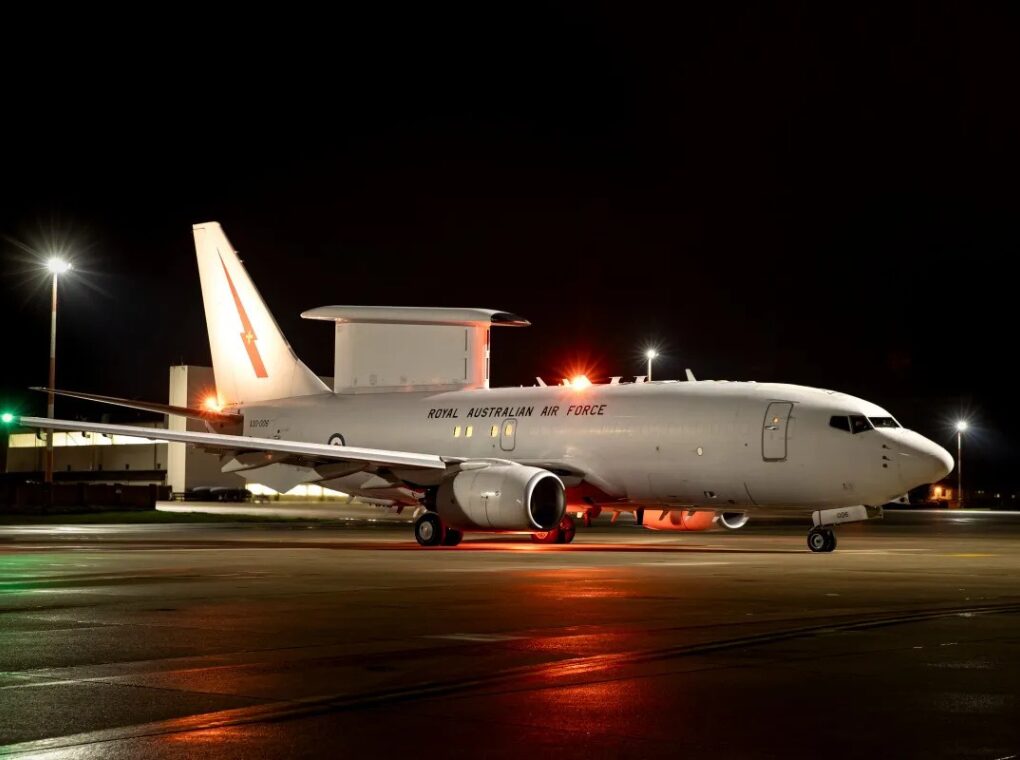
Australia’s recent deployment of the advanced Boeing E-7 Wedgetail to the Middle East has sparked growing debate over whether Canberra is playing a more active role in the ongoing conflict involving the United States, Israel, and Iran than officially acknowledged.
Initially presented as a defensive move, the Royal Australian Air Force’s (RAAF) decision to send the aircraft to the Gulf region was aimed at strengthening airspace monitoring and protecting critical infrastructure, including shipping routes. The deployment came amid heightened tensions, as Iran retaliated against U.S. and Israeli strikes by targeting military assets and allied positions across the region.
However, recent statements from Australian Defence Minister Richard Marles have added a new dimension to the mission. Marles confirmed that intelligence gathered by the Wedgetail is transmitted to the Combined Air Operations Centre (CAOC) in Qatar—a key hub for U.S.-led air operations in the Middle East.
This revelation has intensified scrutiny, as it suggests that surveillance data collected by Australia could be indirectly supporting U.S. military actions, including strikes inside Iran.
Intelligence Sharing and Operational Impact
The E-7 Wedgetail is not a conventional reconnaissance aircraft. Built on a Boeing 737 platform, it is equipped with advanced radar and battle management systems that allow it to detect, track, and coordinate responses to airborne threats in real time. Its Multi-role Electronically Scanned Array (MESA) radar provides 360-degree coverage and can monitor thousands of targets simultaneously.
In modern warfare, such capabilities are critical. The aircraft can identify drone launches, missile trajectories, and potential threats long before they reach their targets. This information, when shared with allied forces, significantly enhances the precision and effectiveness of military operations.
By routing this intelligence through the CAOC, where U.S. forces are deeply integrated, the data becomes part of a broader operational network. This has led analysts to argue that even if Australia’s mission is officially defensive, its contributions may be enabling offensive actions under the U.S.-led campaign, often referred to as Operation Epic Fury.
Political and Strategic Debate
The situation has triggered political debate within Australia. Critics argue that intelligence sharing in an active conflict zone effectively makes Australia a participant, even if it has not formally declared involvement in combat operations.
Some lawmakers and analysts contend that providing real-time targeting data could blur the line between defensive support and direct engagement. They warn that such involvement could expose Australia to geopolitical risks, including potential retaliation or diplomatic fallout.
On the other hand, government officials maintain that the deployment is part of a coordinated effort to ensure regional stability and protect allied nations. According to Marles, sharing intelligence through joint command structures is essential for collective defense and the safety of Australian personnel and citizens in the region.
Capability Gap and U.S. Dependence
The deployment also highlights a capability gap within the United States military. The U.S. Air Force continues to rely on the aging Boeing E-3 Sentry, an airborne warning and control system that has been in service for decades.
Although the U.S. had planned to replace the E-3 with the more advanced Wedgetail, the program has faced delays due to cost concerns and debates over its survivability in high-threat environments. As a result, the U.S. is currently dependent on allied assets, including Australia’s E-7, to enhance situational awareness in complex operational theaters.
This reliance underscores the growing importance of allied interoperability in modern warfare, where data sharing and integrated command systems are as critical as traditional military assets.
Broader Implications for the Conflict
The controversy surrounding the Wedgetail deployment comes at a time when the Iran conflict is expanding both in scale and cost. Estimates suggest that a prolonged military campaign could run into hundreds of billions of dollars, with long-term expenses potentially reaching trillions—mirroring past conflicts such as the Iraq War.
Additionally, concerns are mounting over the sustainability of military resources, including munitions stockpiles and operational readiness. In this context, advanced surveillance platforms like the E-7 play a crucial role in maximizing efficiency and minimizing risks.
However, their use also raises complex legal and ethical questions about indirect participation in warfare.
A Blurred Line in Modern Warfare
The deployment of the E-7 Wedgetail illustrates how modern conflicts are increasingly defined by networks of shared intelligence and technological integration rather than traditional troop deployments alone.
While Australia maintains that its mission is defensive, the flow of real-time intelligence into U.S. command systems complicates that narrative. For observers and policymakers alike, the key question remains whether such support constitutes indirect involvement in active combat.
As tensions continue to escalate in the Middle East, the role of allied nations like Australia will likely remain under close scrutiny—highlighting the evolving nature of warfare in the 21st century, where information itself has become a decisive weapon.