A fragile ceasefire between the United States and Iran is facing renewed uncertainty after fresh intelligence reports and a rapid American military build-up signaled that tensions in West Asia remain far from resolved. As diplomatic efforts intensify ahead of high-stakes talks in Islamabad, new allegations involving China have added another layer of geopolitical complexity.
US Intelligence Flags Possible Chinese Weapons Transfer
According to recent US intelligence assessments, China may be preparing to supply Iran with advanced air defense systems in the coming weeks. These systems reportedly include shoulder-fired missiles, commonly known as MANPADS (Man-Portable Air Defense Systems), which are capable of targeting low-flying aircraft.
Such a move, if confirmed, would mark a significant escalation. It comes at a sensitive time when Beijing has publicly positioned itself as a mediator that helped broker the current ceasefire. The development raises questions about China’s dual-track approach—balancing diplomatic engagement while allegedly maintaining covert strategic ties with Tehran.
However, Chinese officials have firmly denied the allegations, calling them “baseless” and reiterating that Beijing does not supply weapons to parties involved in active conflicts. China has instead emphasized its role in promoting de-escalation and stability in the region.
Strategic Implications of MANPADS Supply
Military experts note that MANPADS can significantly alter battlefield dynamics despite being considered defensive weapons. During the recent five-week conflict, similar systems reportedly posed a serious threat to US aircraft operating in Iranian airspace.
Former US President Donald Trump recently indicated that a US fighter jet shot down over Iran may have been hit by a heat-seeking, shoulder-fired missile. While the origin of that system remains unclear, any new supply of such weapons could embolden Iran’s defensive capabilities if hostilities resume.
Analysts believe that routing such shipments through third countries could allow China plausible deniability while maintaining its strategic partnership with Iran—particularly given its heavy dependence on Iranian oil imports.
US Deploys Over 50,000 Troops to the Region
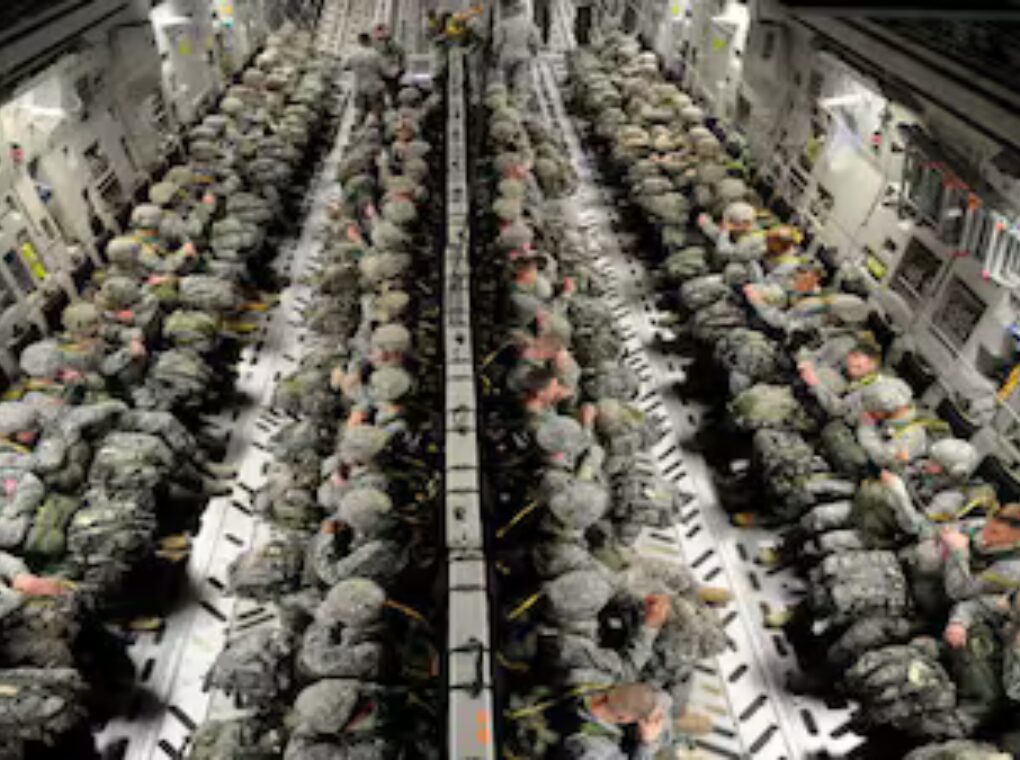
Simultaneously, the United States is significantly expanding its military presence in West Asia. Reports indicate that American troop levels in the region have surged past 50,000, up from a typical deployment of around 40,000.
Key deployments include:
Elements of the US Army’s 82nd Airborne Division
Carrier strike group led by the USS George H.W. Bush
Amphibious readiness group centered on the USS Boxer
The 11th Marine Expeditionary Unit
These movements reflect a broader strategy of maintaining military readiness while pursuing diplomatic engagement.
The troop surge includes fighter jets, naval assets, and thousands of additional personnel, indicating that Washington is preparing for multiple scenarios—from sustained peace to renewed conflict.
Islamabad Talks: Diplomacy Under Pressure
Amid rising tensions, critical peace talks between US and Iranian officials are set to take place in Islamabad, Pakistan. The negotiations are being closely watched as a potential turning point in the conflict.
The US delegation is expected to be led by Vice President JD Vance, while Iran has sent a high-level team including senior political and diplomatic figures. Tehran has expressed cautious willingness to engage but remains deeply skeptical of US intentions.
Iranian officials have made it clear that certain conditions must be met before meaningful progress can occur, including the continuation of ceasefire arrangements in Lebanon. They have also warned against what they describe as “deceptive diplomacy.”
Dual Strategy: Talks and Tactical Pressure
The United States appears to be pursuing a dual-track strategy—engaging in negotiations while simultaneously strengthening its military posture. This approach aims to increase leverage at the negotiating table while ensuring preparedness if talks collapse.
Statements from Donald Trump reinforce this stance. He has indicated that military action remains an option if diplomacy fails, noting that US warships are being positioned and could be deployed quickly if needed.
Defense analysts suggest that while 50,000 troops represent a substantial force, it may still be insufficient for a full-scale ground invasion of Iran, given the country’s size, terrain, and population. Instead, the current deployment is likely focused on deterrence, rapid response, and limited strategic operations.
Broader Geopolitical Context
The situation underscores the increasingly complex alliances shaping the conflict. Iran maintains long-standing military and economic ties with both China and Russia. While Beijing is accused of potentially supplying defensive systems, Moscow has reportedly supported Iran through intelligence sharing during the conflict.
In return, Iran has strengthened its strategic partnerships by supplying drones and energy resources to its allies. This interconnected web of relationships makes the conflict not just a regional issue but a broader geopolitical contest involving major global powers.
Uncertain Path Ahead
As the Islamabad talks approach, the situation remains highly volatile. The combination of alleged arms transfers, military mobilization, and fragile diplomacy suggests that the ceasefire could either evolve into a longer-term agreement or collapse into renewed confrontation.
For now, both sides appear to be preparing for all possibilities—peace or escalation. The coming days will be critical in determining whether diplomacy can prevail or whether the region is headed toward another phase of conflict.