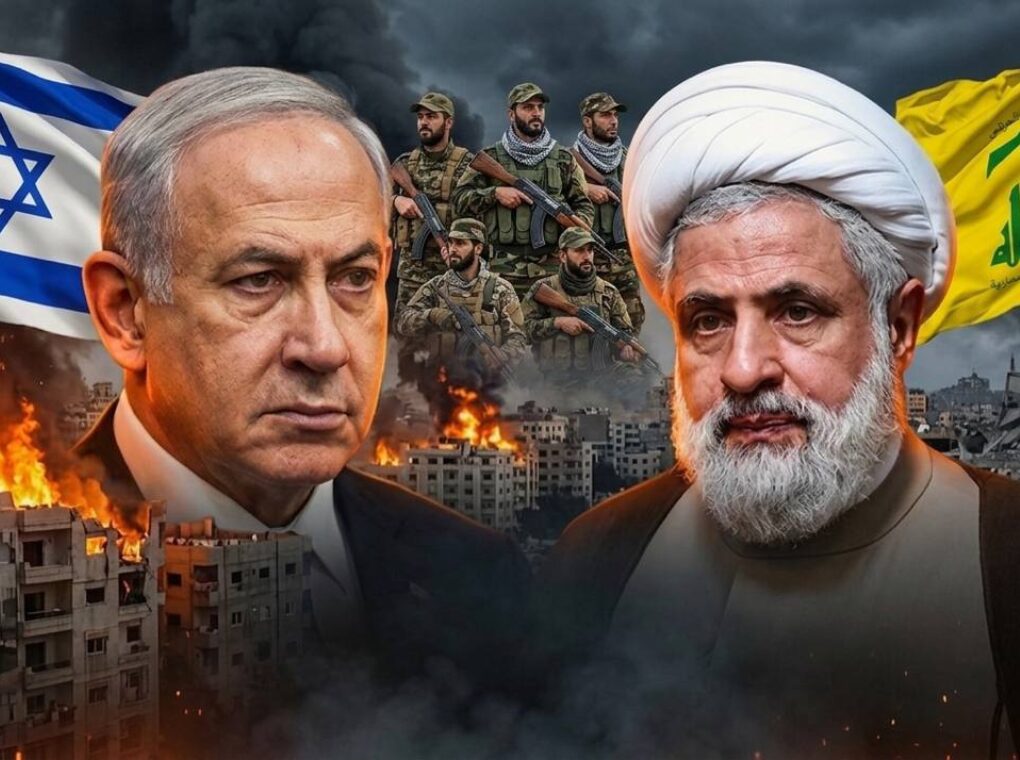
In one of the most significant escalations in the ongoing Middle East conflict, the Israel Defense Forces (IDF) launched a massive, coordinated strike across Lebanon under the codename Operation Eternal Darkness, targeting the militant group Hezbollah. The operation, executed on April 8, 2026, is being widely viewed by analysts as a defining moment in the evolution of modern, technology-driven warfare.
According to official statements, the operation involved approximately 50 fighter jets deploying 160 precision-guided munitions against nearly 100 targets spread across a 170-kilometer stretch of Lebanese territory. The strikes hit multiple strategic locations, including Beirut’s southern suburbs, the Beqaa Valley, and southern Lebanon—all within a span of just ten minutes.
Israeli Defense Minister Israel Katz described the offensive as the “largest concentrated blow” against Hezbollah since the covert “pager operation” in September 2024, which had targeted the group’s communication infrastructure through embedded explosive devices.
From Physical Infiltration to Data-Driven Warfare
Unlike the 2024 pager operation, which relied on supply chain infiltration and physical sabotage, Operation Eternal Darkness appears to mark a shift toward intelligence-led, real-time targeting. Military analysts note that executing simultaneous strikes on such a large number of geographically dispersed targets within minutes would require highly precise, continuously updated intelligence.
Experts suggest that Israel has increasingly relied on advanced data integration systems—often described as a “data factory”—to fuse inputs from multiple intelligence sources. These include satellite imagery, drone surveillance, signals intelligence, and human intelligence networks. The system is reportedly driven by artificial intelligence tools developed by elite units such as Unit 8200, enabling rapid identification and tracking of targets.
This approach allows for real-time mapping of adversary positions, significantly compressing the time between intelligence gathering and operational execution. Analysts argue that such capabilities make it possible to conduct simultaneous, high-impact strikes before targets have any opportunity to relocate or communicate warnings.
Strategic Impact on Hezbollah’s Operations
The immediate impact of the operation appears to be a substantial disruption of Hezbollah’s command-and-control infrastructure. Targets reportedly included intelligence hubs, missile coordination facilities, and assets linked to the group’s elite Radwan Force and drone operations.
Security experts note that the effectiveness of the strike lies not only in the physical damage inflicted but also in its broader strategic implications. By targeting multiple command nodes simultaneously, the operation may have significantly degraded Hezbollah’s ability to coordinate its forces across different regions.
This creates a critical dilemma for the group. Continued reliance on digital communication channels increases vulnerability to surveillance and targeting, while shifting to offline methods such as couriers and in-person meetings can slow operational decision-making and reduce responsiveness.
Unverified Claims and Information Warfare
In the aftermath of the strikes, unverified reports circulated on pro-Hezbollah platforms suggesting that Israeli intelligence may have tracked the IP addresses of operatives during an online meeting to determine their locations. However, no official confirmation or independent verification of such claims has emerged.
Analysts caution that, regardless of their accuracy, such narratives can have a psychological impact. The perception that communication systems are compromised may force adversaries to alter their behavior, potentially weakening their operational effectiveness.
Regional Context and Ceasefire Tensions
The strikes took place amid a fragile ceasefire arrangement involving the United States and Iran, which notably does not extend to Hezbollah. Benjamin Netanyahu has indicated that Israeli operations against the group will continue despite broader diplomatic efforts.
At the same time, Donald Trump has issued warnings of economic measures against countries supplying military support to Iran, signaling a wider strategic framework that combines military, economic, and diplomatic pressure.
The situation has raised concerns among international actors. Western leaders, including Emmanuel Macron, have called for expanding ceasefire terms to include Lebanon in order to prevent further escalation.
A Turning Point in Modern Warfare
Operation Eternal Darkness is increasingly being viewed as a case study in the future of warfare, where dominance is achieved not only through firepower but through control of information. The ability to identify, track, and strike multiple targets simultaneously reflects a level of intelligence integration that could redefine military doctrines globally.
As conflicts become more technologically sophisticated, experts argue that the distinction between physical and digital battlefields is rapidly disappearing. In this evolving landscape, the control of data—and the ability to act on it instantly—may prove to be the decisive factor.
While the long-term consequences of the operation remain uncertain, its immediate message is clear: modern warfare is entering a new phase, where information superiority can translate directly into battlefield dominance.