The United States’ newly signed defence cooperation agreement with Indonesia is being seen as a significant geopolitical move with far-reaching implications for global energy security and China’s strategic vulnerabilities. The partnership comes at a time of rising tensions in the Middle East and increasing competition between Washington and Beijing over critical trade and energy routes.
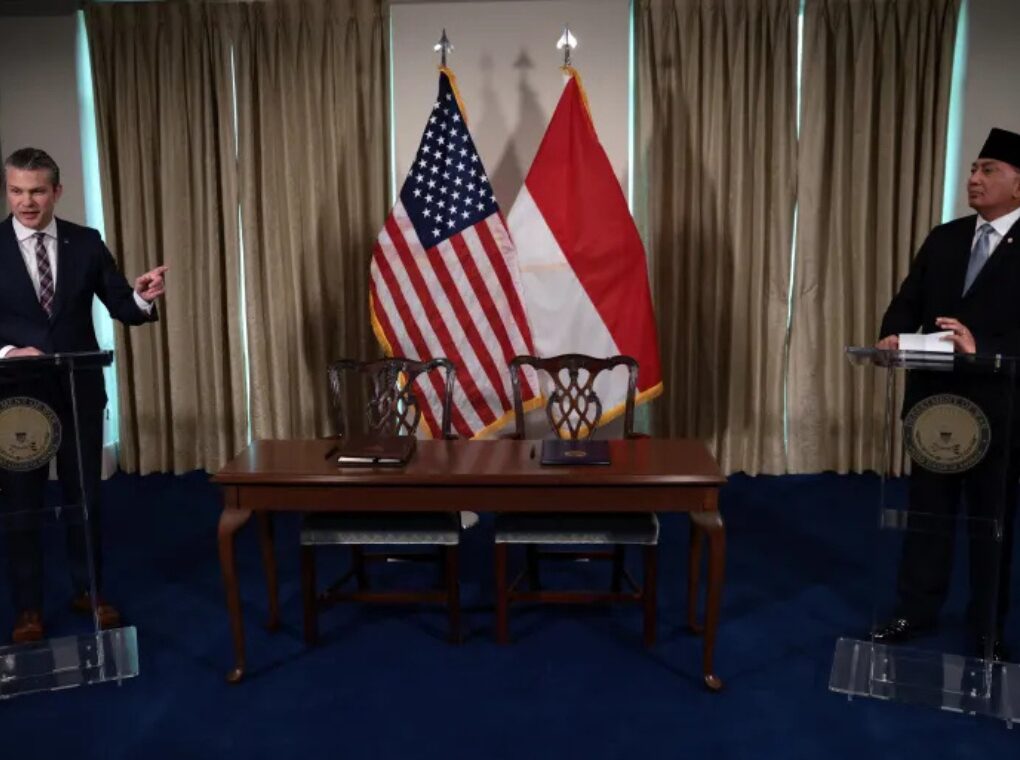
Announced by U.S. Defence Secretary Pete Hegseth after talks at the Pentagon, the agreement underscores what officials described as a “major defence cooperation partnership.” The deal aims to expand military collaboration, including co-development of advanced defence technologies in maritime, subsurface, and autonomous systems, while boosting joint operational readiness.
However, beyond its official framework, analysts suggest the agreement carries deeper strategic intent—particularly in relation to the Strait of Malacca, one of the world’s most vital shipping lanes. The narrow waterway handles a substantial portion of global trade and energy shipments, including a majority of China’s oil imports.
Strategic Importance of the Malacca Chokepoint
The Strait of Malacca is widely considered a critical artery for China’s economy, often referred to in strategic circles as part of Beijing’s “Malacca dilemma.” A disruption in this corridor could severely impact China’s energy security and industrial output.
Recent reports indicating that Washington is seeking expanded overflight access through Indonesian airspace have further amplified speculation about the United States strengthening its strategic footprint in the region. While Indonesian authorities have clarified that discussions remain preliminary and non-binding, even limited access could significantly enhance U.S. military mobility across Southeast Asia.
Jakarta has emphasized that any such arrangement would fully respect national sovereignty, with final authority over its airspace remaining firmly under Indonesian control. President Prabowo Subianto has also maintained a balanced diplomatic approach, engaging with multiple global powers even as ties with Washington deepen.
Parallel Developments in the Middle East
The Indo-Pacific developments coincide with heightened tensions in the Middle East, particularly around the Strait of Hormuz, another crucial global energy corridor through which a significant share of the world’s oil supply passes.
Amid escalating friction involving Iran, there have been increasing concerns about potential disruptions in the Strait of Hormuz. While no formal blockade has been announced, the situation has raised fears of supply instability that could ripple across global markets.
In this context, the United States’ strategic positioning near key maritime chokepoints—from Southeast Asia to the Persian Gulf—has drawn attention from geopolitical observers who see a broader pattern emerging in Washington’s approach to global energy security.
Pakistan-Saudi Defence Coordination Adds Another Layer
Further complicating the regional landscape is the recent deployment of troops and fighter jets by Pakistan to Saudi Arabia under a bilateral defence agreement.
Pakistani military assets have been stationed at the King Abdulaziz Air Base, with officials stating that the move is intended to enhance operational readiness and strengthen joint security mechanisms. The deployment follows recent attacks on Saudi energy infrastructure, which have heightened concerns about regional stability.
Islamabad has described the cooperation as part of its commitment to collective security, particularly in light of growing threats to critical energy infrastructure. Given Saudi Arabia’s role as one of the world’s largest oil exporters, ensuring its stability is widely viewed as essential to maintaining global energy flows.
Implications for China’s Energy Security
Taken together, these developments highlight a complex and evolving geopolitical landscape in which control over strategic chokepoints plays an increasingly central role.
China remains heavily dependent on energy imports from the Middle East, much of which travels through the Strait of Hormuz before passing via the Strait of Malacca en route to Chinese ports. Any disruption or increased monitoring of these routes could pose significant challenges for Beijing.
While there is no official indication of coordinated action aimed directly at China, the alignment of military and strategic initiatives across these regions has fueled speculation about a broader effort to counterbalance Beijing’s growing influence.
Balancing Alliances and Sovereignty
For Indonesia, the defence pact represents both an opportunity and a challenge. While enhanced cooperation with the United States could strengthen its defence capabilities, Jakarta continues to stress its commitment to an independent foreign policy.
President Prabowo is expected to engage with multiple global leaders, including Emmanuel Macron and Vladimir Putin, reflecting Indonesia’s intent to maintain strategic autonomy amid intensifying global rivalries.
A New Phase of Global Competition
The convergence of developments in Southeast Asia and the Middle East points to a broader shift in global geopolitics, where control over supply chains and energy routes is becoming as critical as traditional military alliances.
As the United States deepens its engagement with key regional partners and reinforces its presence near vital maritime corridors, the implications for global trade, energy security, and great-power competition are likely to grow.
In an increasingly interconnected world, the stability of chokepoints like the Strait of Malacca and the Strait of Hormuz will remain central to the global economy—and to the strategic calculations of major powers navigating a rapidly changing international order.