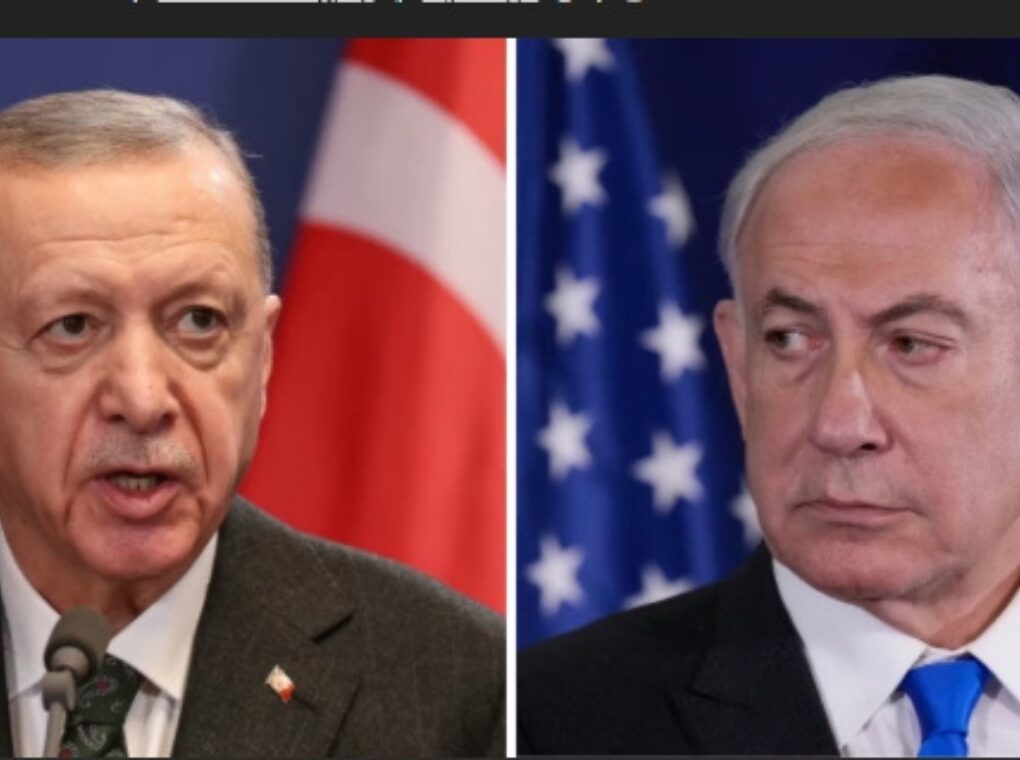
Tensions between Türkiye and Israel are once again under intense global scrutiny after a wave of media reports suggested Turkish President Recep Tayyip Erdogan had threatened military action. While Ankara has since dismissed those claims as misinterpretations of older remarks, the episode has exposed a far deeper and more concerning reality: relations between the two regional powers are steadily deteriorating toward long-term strategic rivalry.
Media Controversy Sparks Global Attention
The latest diplomatic storm began when reports circulated claiming Erdogan had hinted at a possible invasion of Israel. Turkish officials quickly pushed back, clarifying that the remarks were taken out of context and did not represent a formal threat. However, the rapid escalation of reactions across political and media circles highlighted how fragile relations have become.
Even ambiguous rhetoric is now interpreted as a potential signal of military intent—an indication that both nations increasingly perceive each other through a lens of suspicion.
From Tactical Disputes to Strategic Rivalry
Analysts argue that the current situation goes far beyond routine diplomatic friction. Türkiye and Israel are no longer just disagreeing over isolated issues—they are beginning to see each other as long-term competitors for regional influence.
Both nations view themselves as key power centers in the Middle East. Türkiye, under Erdogan’s leadership, has pursued a more assertive foreign policy, positioning itself as a leader in the Muslim world. Israel, meanwhile, continues to prioritize military superiority and strategic alliances to maintain its dominance in regional security affairs.
This convergence of ambitions is creating structural tensions. Competition over influence, alliances, trade routes, and geopolitical narratives is intensifying, increasing the likelihood of confrontation—even if neither side actively seeks war.
A Relationship That Once Thrived
The current hostility marks a dramatic shift from the past. Türkiye was the first Muslim-majority country to recognize Israel in 1949, and the two nations enjoyed decades of pragmatic cooperation.
Relations peaked in the 1990s, when military and intelligence ties flourished. Joint defense projects, intelligence sharing, and strategic coordination made Türkiye one of Israel’s closest regional partners. This cooperation helped modernize Türkiye’s military while offering Israel a valuable ally in a volatile region.
However, this partnership began to unravel in the 2000s as Ankara’s foreign policy priorities evolved.
The Turning Point: Mavi Marmara Incident
A major rupture came in 2010 during the Mavi Marmara incident, when Israeli forces intercepted a Turkish-led aid flotilla heading to Gaza. The raid resulted in the deaths of nine activists, most of them Turkish citizens.
The incident triggered a sharp breakdown in diplomatic ties and fueled widespread public anger in Türkiye. Although both sides later attempted normalization, trust was never fully restored.
Gaza War and Renewed Breakdown
Recent developments, particularly the ongoing conflict in Gaza, have once again strained ties. Erdogan has intensified his criticism of Israeli policies, even comparing Israeli Prime Minister Benjamin Netanyahu to historical figures like Hitler—remarks that have further deepened tensions.
For Türkiye, the Palestinian issue remains a powerful political and ideological driver. For Israel, such rhetoric reinforces concerns about Ankara’s shifting stance and regional ambitions.
Multiple Flashpoints Driving Conflict Risk
The growing divide is not limited to Gaza. Several geopolitical arenas are increasing friction:
Syria: Both countries are heavily involved but with conflicting priorities. Türkiye focuses on Kurdish groups and border security, while Israel targets Iranian influence and Hezbollah activity. This overlap raises the risk of accidental military clashes.
Eastern Mediterranean: Disputes over energy resources and maritime boundaries have intensified competition. Türkiye opposes regional alliances that exclude it, while Israel is strengthening ties with partners that could counterbalance Ankara.
Kurdish Issue: Türkiye views Kurdish militant groups, particularly the Kurdistan Workers’ Party, as an existential threat. Any perceived foreign support for Kurdish elements—real or rumored—can trigger strong reactions from Ankara.
Domestic Pressures Fuel External Tensions
Internal political dynamics are also playing a role. Türkiye is grappling with economic challenges, including inflation and social unrest, while Israel faces ongoing political and security crises.
In such environments, external tensions can serve as a tool for political consolidation. Strong rhetoric and assertive foreign policy moves often resonate domestically, even if they increase international risks.
Not an Imminent War, But a Dangerous Trajectory
Despite rising tensions, experts caution that a full-scale war between Türkiye and Israel is not imminent. Both countries are aware of the high costs such a conflict would entail.
However, the real danger lies in the gradual normalization of hostility. As both sides increasingly factor each other into long-term threat perceptions, the risk of miscalculation grows.
Conflicts of this nature rarely begin with formal declarations of war. Instead, they emerge from a series of smaller incidents—military encounters, political escalations, or strategic missteps—that spiral out of control.
A Region on Edge
The broader Middle East remains highly volatile, with overlapping conflicts and competing power centers. In this environment, Türkiye–Israel tensions could become a key fault line shaping future regional dynamics.
Without effective diplomatic mechanisms, confidence-building measures, or external mediation, the current trajectory may lead to a prolonged period of instability—what analysts describe as a “permanent state of near-war.”
While the controversy over Erdogan’s alleged threat may fade, the underlying geopolitical reality is unlikely to change anytime soon. Türkiye and Israel are entering a new phase in their relationship—one defined less by cooperation and more by competition.
Unless deliberate efforts are made to rebuild trust and manage disputes, today’s rhetoric could evolve into tomorrow’s crisis, with consequences far beyond the two nations involved.