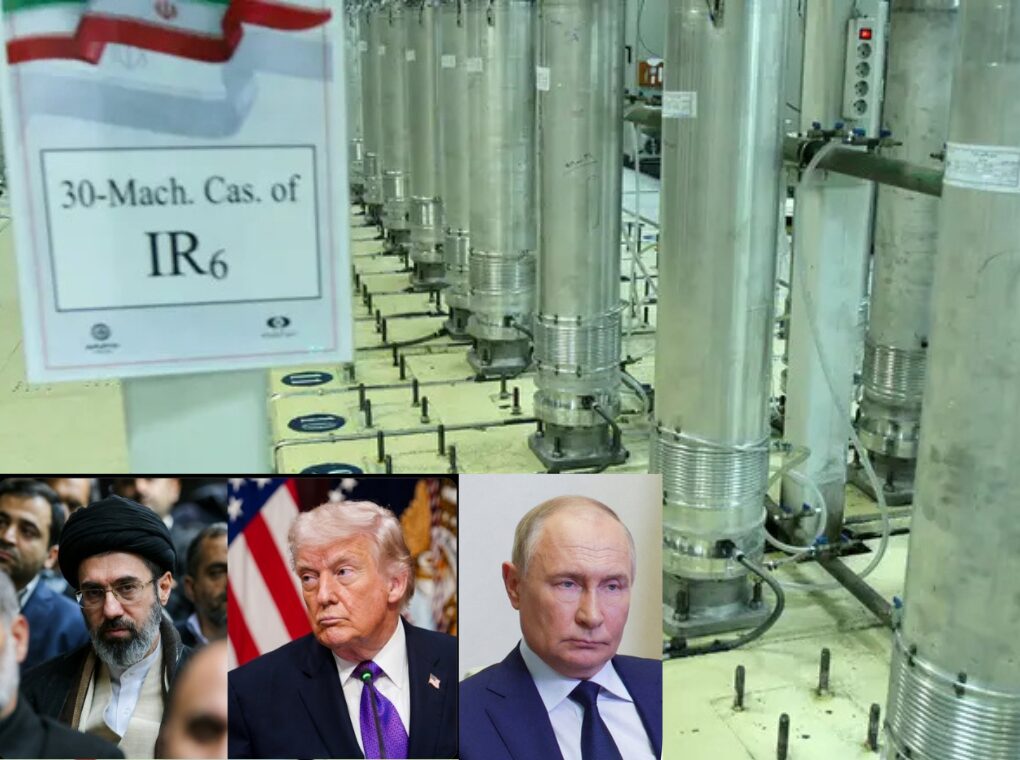
Tensions in the Middle East are escalating once again as competing proposals over Iran’s nuclear program deepen divisions between global powers. A fresh claim by Saudi state media suggests that Iran may be considering transferring its enriched uranium stockpile to Russia — a move that could significantly reshape ongoing negotiations and geopolitical dynamics.
The proposal comes as Iran and the United States remain locked in a high-stakes standoff following the collapse of recent peace talks. With military activity intensifying and economic uncertainty growing, the issue of enriched uranium has once again become the focal point of international diplomacy.
Russia Steps In With Strategic Proposal
The Kremlin has confirmed that it is willing to take custody of Iran’s highly enriched uranium as part of a potential future agreement. The idea, reportedly first proposed by Vladimir Putin, involves transferring Iran’s uranium stockpile to Russian territory as a confidence-building measure aimed at reducing fears of nuclear weaponization.
Russian officials maintain that the offer is still on the table, even though it has not yet been accepted by all parties. Kremlin spokesperson Dmitry Peskov reiterated that Moscow has discussed this option with both Western and regional leaders.
For Russia, the move could position it as a key mediator in the crisis while simultaneously increasing its strategic influence in the region.
US Rejects Russia’s Role
However, the proposal has raised serious concerns in Washington. The United States is reportedly reluctant to support any arrangement that places sensitive nuclear material under Russian control.
This hesitation is rooted in broader geopolitical tensions, particularly the ongoing Russia-Ukraine War, which has severely strained relations between Washington and Moscow.
From the US perspective, allowing Russia to hold Iran’s enriched uranium could grant Moscow undue leverage in global security affairs. Critics argue that such a move would merely shift the nuclear risk rather than eliminate it.
Conflicting Nuclear Proposals Stall Talks
The disagreement over Russia’s role is only one part of a much larger impasse. At the heart of the stalled negotiations are fundamentally different visions for Iran’s nuclear future.
Reports indicate that the United States, under Donald Trump, is pushing for a 20-year suspension of Iran’s uranium enrichment program. This demand is aimed at ensuring long-term guarantees that Tehran will not develop nuclear weapons.
Iran, however, has rejected such a prolonged restriction. Instead, it has proposed a significantly shorter five-year pause, arguing that it has the right to pursue nuclear technology for civilian purposes.
This gap between the two proposals has proven difficult to bridge, leading to the breakdown of recent negotiations.
Strategic Importance of the Strait of Hormuz
Adding to the tension is the growing risk of disruption in the Strait of Hormuz, one of the world’s most vital oil transit routes.
The United States has hinted at the possibility of imposing a naval blockade in response to Iran’s actions, a move that could have severe global economic consequences. A significant portion of the world’s oil supply passes through this narrow waterway, making it a critical chokepoint for international energy markets.
Russia has warned that any attempt to block the strait would destabilize global markets and further escalate tensions in an already volatile region.
Israel Raises Security Concerns
Meanwhile, Israel has taken a firm stance on the issue. Prime Minister Benjamin Netanyahu has emphasized that the complete removal of Iran’s highly enriched uranium is a “central issue” for ensuring regional security.
Israel has long viewed Iran’s nuclear ambitions as an existential threat and has consistently advocated for strict measures to prevent Tehran from acquiring nuclear weapons capability.
Rising Risk of Escalation
With diplomatic efforts faltering, analysts warn that the situation could quickly spiral into a broader conflict. The combination of military tensions, economic pressure, and competing geopolitical interests creates a volatile environment with significant risks.
If no agreement is reached, potential consequences could include:
>Increased military confrontations
>Disruption of global oil supplies
>Escalation involving multiple global powers
>Long-term instability in the Middle East
The involvement of Russia adds another layer of complexity, turning the crisis into a broader contest between major world powers rather than a regional dispute.
What next?
Despite the mounting tensions, there is still no confirmed agreement on the table. Iran has not officially accepted Russia’s proposal, and the United States continues to push for stricter conditions.
The coming weeks are likely to be crucial in determining whether diplomacy can prevail or whether the situation will escalate further.
For now, the fate of Iran’s enriched uranium remains uncertain — but its implications are global.
As negotiations stall and pressure builds, the world watches closely, aware that the outcome could reshape not just the Middle East, but the broader international order.