The fragile ceasefire between the United States and Iran came under renewed pressure on Thursday after both sides exchanged accusations of military violations, triggering fresh clashes across the Persian Gulf and intensifying fears of a wider regional conflict. The latest escalation has rattled global energy markets, disrupted diplomatic efforts, and raised concerns over maritime security in the strategically critical Strait of Hormuz.
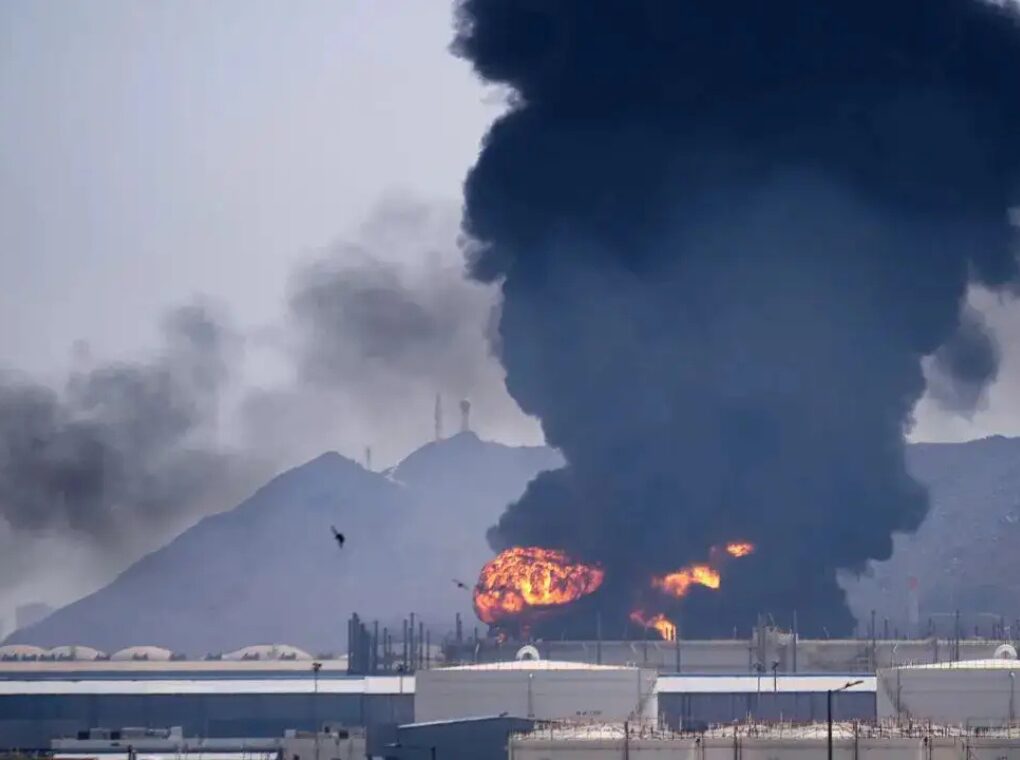
According to multiple reports, the United States carried out fresh strikes near the southern Iranian port city of Bandar Abbas, targeting what Washington described as military infrastructure posing threats to US personnel and commercial shipping in the Gulf region. American officials said US forces intercepted Iranian drones and struck a launch facility linked to military operations near Hormuz.
Iran swiftly condemned the attacks, with the Islamic Revolutionary Guard Corps (IRGC) announcing retaliatory action against what it described as an “American airbase.” Iranian state media reported that Tehran had launched strikes in response to what it called repeated US aggression, warning that any further military action would trigger a “more decisive” response.
The renewed hostilities mark the most serious confrontation since an April ceasefire agreement temporarily paused months of military escalation that began following US-Israeli strikes on Iran earlier this year.
Strait of Hormuz Becomes Flashpoint
Tensions have centered heavily on the Strait of Hormuz, one of the world’s most important maritime chokepoints through which roughly one-fifth of global oil supplies transit. Iranian authorities have recently sought greater control over shipping routes, including discussions surrounding a proposed toll system for vessels passing through the waterway.
The United States strongly rejected any attempt to impose restrictions on maritime traffic. US Treasury Secretary Scott Bessent warned that Washington would aggressively sanction any actors involved in facilitating toll payments or supporting efforts that could disrupt free navigation in the strait.
US President Donald Trump also issued a stern warning regarding Hormuz, insisting that the strategic passage must remain open to international shipping. Speaking during a cabinet meeting, Trump declared that “nobody’s going to control” the waterway and described it as international waters critical to global commerce.
Trump’s comments included sharp rhetoric aimed at regional actors allegedly seeking influence over the strait, raising diplomatic tensions further even as negotiations with Tehran continue behind closed doors.
Tentative Ceasefire Extension Under Discussion
Despite the military flare-up, reports suggest Washington and Tehran may be edging toward a temporary diplomatic framework. According to media reports citing US officials, both countries have reached a tentative memorandum of understanding aimed at extending the ceasefire for 60 days while reopening negotiations surrounding Iran’s nuclear program and maritime security.
The agreement reportedly includes discussions on restoring shipping access through the Strait of Hormuz and stabilizing global energy flows disrupted by the ongoing conflict. However, the arrangement remains incomplete and is still awaiting final approval from President Trump.
Diplomatic signals from both sides remain mixed. While Washington insists military pressure and sanctions will continue unless Iran accepts broader terms, Tehran has simultaneously hinted at openness to negotiations while condemning American strikes as violations of sovereignty.
US Secretary of State Marco Rubio acknowledged “some progress” in talks but stressed that upcoming days would determine whether diplomacy could prevail.
Kuwait Drawn Into Escalation
Regional tensions intensified after Kuwait reported missile and drone threats targeting its territory. Kuwaiti military officials confirmed that air defense systems intercepted hostile projectiles overnight, while warning citizens to follow emergency security instructions.
US Central Command accused Iran of violating the ceasefire by launching missiles toward Kuwait, calling the alleged attack an “egregious ceasefire violation.” Tehran, however, stated that it had retaliated against a US military facility in an unnamed Gulf state following earlier American operations.
The involvement of Kuwait highlights the growing risk that the conflict could spill across the wider Gulf region, potentially pulling additional regional allies into the confrontation.
Israel Expands Lebanon Operations
Simultaneously, Israel expanded military operations in southern Lebanon, opening another dangerous front in the broader regional crisis. Israeli fighter jets launched strikes near Beirut and the southern city of Tyre while declaring large areas south of the Zahrani River a combat zone.
Israeli officials said the operations were aimed at dismantling Hezbollah military infrastructure after drone and missile attacks targeted northern Israel. Hezbollah reportedly launched multiple retaliatory attacks, including drones and rockets directed at Israeli forces.
Humanitarian organizations have warned of worsening civilian suffering in southern Lebanon, with thousands reportedly displaced amid continuous bombardment and evacuation orders.
French President Emmanuel Macron condemned the strikes in Lebanon, saying “nothing justifies” continued attacks and calling for an immediate return to dialogue and peace efforts.
Meanwhile, EU foreign policy chief Kaja Kallas warned that continued fighting between the US, Iran, and regional actors risks pushing the Middle East into an even more dangerous phase of instability.
Oil Prices Swing Amid War Fears
Financial markets reacted sharply to developments. Oil prices surged earlier Thursday after renewed military activity near Hormuz threatened global supplies. Brent crude briefly climbed above $96 per barrel while US West Texas Intermediate also recorded gains.
However, prices later erased earlier increases after reports emerged that Washington and Tehran were discussing a ceasefire extension and possible diplomatic breakthrough.
Investors remain cautious as uncertainty surrounding the conflict continues to weigh on global markets, with analysts warning that any disruption in the Strait of Hormuz could trigger major energy shocks worldwide.
As military exchanges continue alongside fragile diplomacy, the Middle East remains on edge, with world powers closely watching whether negotiations can prevent the crisis from spiraling into a broader regional war.