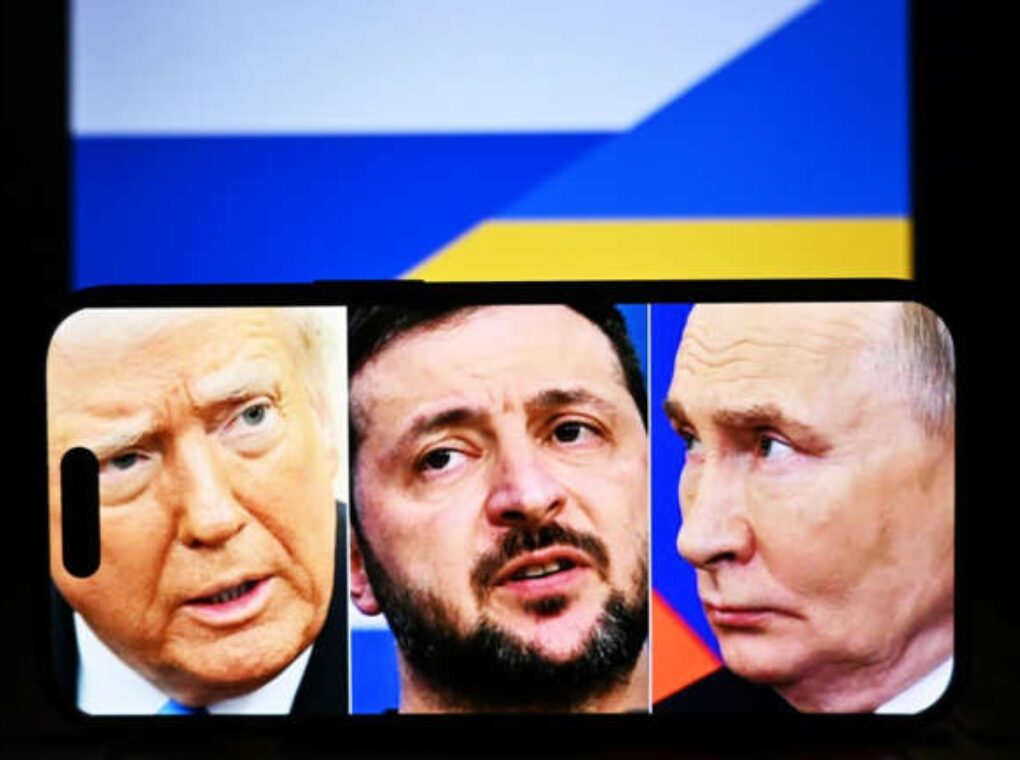
Ukrainian President Volodymyr Zelensky has reportedly sent a formal letter to US political leadership, including President Donald Trump and senior members of Congress, urgently requesting additional air defence support as Ukraine faces escalating Russian missile and drone attacks.
According to reporting attributed to The Kyiv Independent, the letter was circulated to the White House and Congressional leadership through Ukraine’s ambassador to the United States, Olha Stefanishyna. In it, Zelensky highlights what he describes as a growing gap in Ukraine’s ability to defend against ballistic missile threats, stressing continued reliance on American-supplied systems.
The development comes at a time when the war has entered a particularly volatile phase, with both Moscow and Kyiv increasing long-range strikes deep into each other’s territory.
Ukraine’s Air Defence Pressure Intensifies
The reported appeal focuses heavily on Ukraine’s dependence on Patriot missile systems and interceptor stockpiles. Zelensky is said to have warned that Ukraine’s ability to defend against ballistic missiles is increasingly tied to continued US military assistance, particularly PAC-3 interceptor missiles used in advanced air defence batteries.
Ukraine has relied heavily on Western-supplied systems since the early phases of Russia’s full-scale invasion in 2022. However, sustained missile and drone barrages have placed growing strain on available inventories, forcing Kyiv to prioritise protection of major cities and critical infrastructure.
The letter reportedly states that Ukraine “relies almost exclusively on the United States” for defence against ballistic missile threats — a line that underscores both military dependency and the urgency of resupply discussions.
Russian Strikes and Escalation Claims
The appeal follows a major Russian strike on May 24, described in Ukrainian briefings as involving approximately 90 missiles and 600 drones targeting multiple regions. Ukrainian authorities said air defence systems intercepted many incoming threats, though damage to infrastructure was still reported in several areas.
Russia, meanwhile, has claimed its strikes are retaliatory, linking them to Ukrainian operations in occupied territories. Moscow has also alleged that certain Ukrainian attacks have targeted civilian infrastructure, including a student dormitory in occupied regions — claims that Kyiv disputes, saying Russian forces are misrepresenting military targets as civilian sites.
In parallel, Russian Foreign Minister Sergey Lavrov reportedly communicated directly with US Secretary of State Marco Rubio, warning Washington of planned long-range strikes against Ukrainian “decision-making centres,” according to regional reporting. Such direct signalling between Moscow and Washington highlights the heightened diplomatic tension surrounding escalation management.
US Policy Debate and Strategic Uncertainty
The reported letter has also reignited debate over long-term US support for Ukraine. While Washington remains Kyiv’s single largest military backer, political divisions in Congress and shifting global priorities have complicated the pace of aid approvals.
Ukraine’s emergency appeal comes amid broader geopolitical pressures, including tensions in the Middle East and ongoing strategic competition with China. Analysts say these competing priorities are stretching Western attention and resources, potentially affecting the consistency of Ukraine support packages.
Some reports and commentary circulating in geopolitical media have suggested a reassessment of US force posture in Europe, though there has been no official confirmation of major withdrawals from NATO’s eastern flank.
Symbolism and Timing of the Appeal
The timing of the letter, reportedly aligned with Memorial Day in the United States, is being interpreted by observers as a symbolic attempt to appeal to American historical memory and wartime alliances. Memorial Day is traditionally a moment of national reflection on US military sacrifice and overseas engagements.
Whether this symbolic timing will translate into new policy decisions remains uncertain. The US administration has continued to emphasize conditional support tied to congressional approval processes and allied burden-sharing initiatives, including NATO coordination frameworks.
A Critical Moment for Ukraine’s Air Defence Strategy
As missile and drone warfare continues to define the conflict, Ukraine’s ability to maintain layered air defence remains central to its survival strategy. Systems like Patriot batteries have proven effective against ballistic threats, but their sustainability depends on continuous supply of interceptors and maintenance support.
For Kyiv, the reported message to Washington underscores a broader strategic reality: battlefield endurance is increasingly tied not only to frontline combat, but also to the availability of advanced air defence munitions.
With Russian forces maintaining pressure and Western policy still evolving, Ukraine now finds itself at a critical juncture — balancing military necessity, diplomatic outreach, and the uncertainty of sustained international backing.