
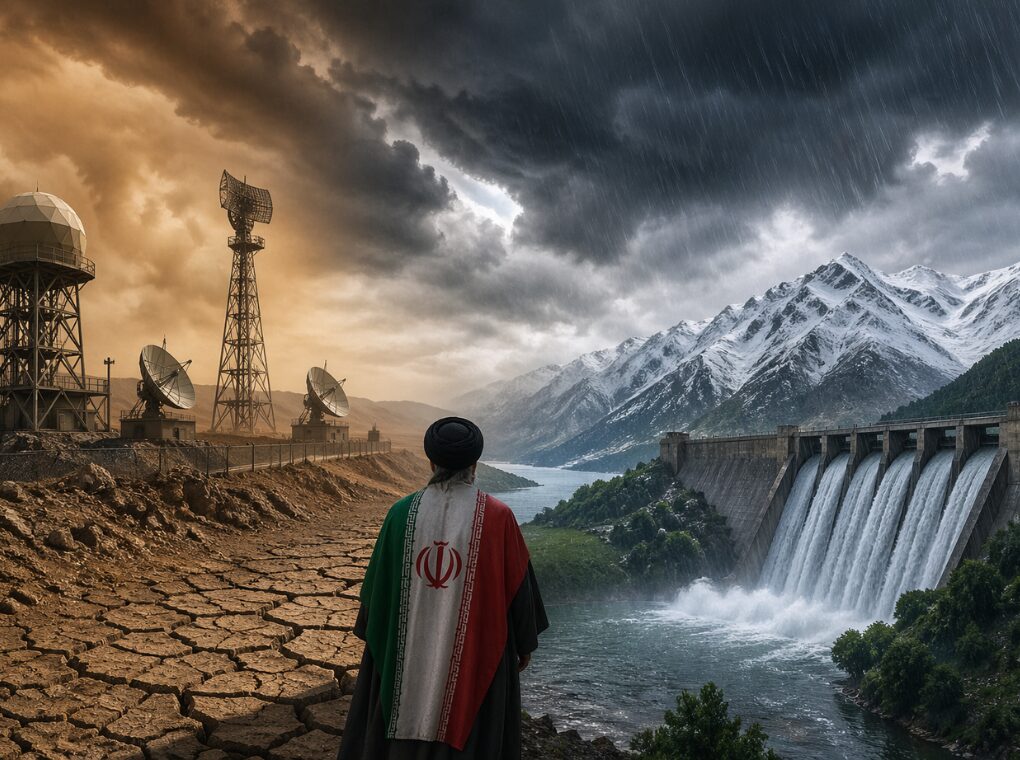
After years of severe drought, Iran is witnessing an unexpected and dramatic shift in weather patterns. Heavy rainfall, unseasonal snowfall, and a noticeable drop in temperatures have transformed landscapes that were once dry and cracked. Reservoirs that stood empty for years are now filling up, with several dams reportedly nearing or reaching full capacity. Vegetation is returning, and rivers are flowing again—bringing much-needed relief to millions.
However, alongside this environmental turnaround, a controversial narrative is gaining traction across Iranian social media platforms. Several pro-Iran voices are claiming that the sudden change in weather is not natural but the result of military developments. According to these claims, Iran’s alleged destruction of American radar systems and Israeli “weather-engineering machines” in the region has somehow restored the country’s natural rainfall cycle.
The theory suggests that foreign powers had been manipulating Iran’s weather for years—blocking clouds, diverting rainfall, and even engineering drought conditions. With these supposed systems now dismantled, supporters argue, nature has “reset,” allowing rain and snow to return.
A Recurring Narrative
This is not the first time such allegations have surfaced. In 2018, Iranian officials made headlines by accusing Israel and other regional actors of “cloud theft.” The claim suggested that foreign entities were preventing rain-bearing clouds from releasing precipitation over Iran.
Earlier still, former Iranian President Mahmoud Ahmadinejad had alleged that Western countries possessed technologies capable of redirecting rainfall away from Iran to other regions.
Despite the strong rhetoric, Iran’s own meteorological experts have consistently rejected these claims. Scientists in the country have emphasized that large-scale weather manipulation—especially controlling rainfall across national boundaries—is not scientifically feasible with current technology.
What Science Says About Weather Modification
Weather modification does exist, but its capabilities are far more limited than often portrayed in conspiracy theories.
The most widely used technique is cloud seeding, a method in which substances like silver iodide or dry ice are introduced into existing clouds to encourage precipitation. While cloud seeding can enhance rainfall under specific conditions, it cannot create clouds from nothing, nor can it control large-scale weather systems.
For rainfall to occur naturally, atmospheric conditions must reach a critical threshold—particularly when relative humidity approaches 100%, allowing water vapor to condense into clouds and eventually fall as precipitation. Controlling humidity on such a vast scale would require technological capabilities that no country currently possesses or has publicly acknowledged.
HAARP and the Conspiracy Debate
Another element frequently cited in discussions about “weather warfare” is the High-frequency Active Auroral Research Program, commonly known as HAARP.
HAARP is a research initiative designed to study the ionosphere, a layer of Earth’s upper atmosphere that affects radio communication and satellite operations. Over the years, it has become a focal point for conspiracy theories suggesting it can control the weather, trigger earthquakes, or manipulate global climates.
However, scientific consensus strongly refutes these claims. There is no credible evidence that HAARP—or any similar facility—has the capability to influence weather systems such as rainfall, storms, or droughts. The energy required to alter atmospheric processes on such a scale far exceeds current technological limits.
Natural Forces at Play
Weather systems are governed by complex and large-scale natural processes. Ocean temperatures, atmospheric pressure systems, solar radiation, and global wind patterns all interact to shape climate and weather outcomes.
Even with advanced forecasting tools, scientists struggle to predict the weather accurately beyond a few days. The idea of controlling these systems—especially across an entire country—remains beyond the reach of modern science.
So what explains Iran’s sudden rainfall?
Experts point to climate variability as the most plausible explanation. Natural cycles such as El Niño, shifts in jet streams, and regional atmospheric changes can all lead to sudden and sometimes extreme weather events.
In fact, prolonged droughts are often followed by periods of intense rainfall. Such patterns are becoming increasingly common due to global climate change, which is amplifying weather extremes worldwide.
Why the Theory Persists
Despite scientific evidence, theories about “weather manipulation” continue to resonate with many. Analysts suggest this is due to a combination of geopolitical tensions, public distrust of global powers, and the human tendency to seek clear, intentional causes behind dramatic events.
When a nation endures years of hardship—such as drought—and then experiences sudden relief following a conflict, it can create a compelling narrative: that the suffering was imposed, and the recovery was achieved through action.
What next?
While the images of overflowing dams and snow-covered landscapes in Iran are real, the explanation behind them is far less dramatic than viral claims suggest.
Weather engineering does exist—but only in limited forms like cloud seeding, which can slightly influence precipitation under specific conditions. Programs like HAARP are designed for atmospheric research, not climate control.
No known technology today can “steal” rain, block clouds, or engineer drought on a national scale.
Iran’s recent rainfall is most likely the result of natural climate variability—not the destruction of foreign weather machines.
As the debate continues online, experts emphasize the importance of separating scientific fact from speculation—especially in an era where misinformation can spread as rapidly as the storms themselves