
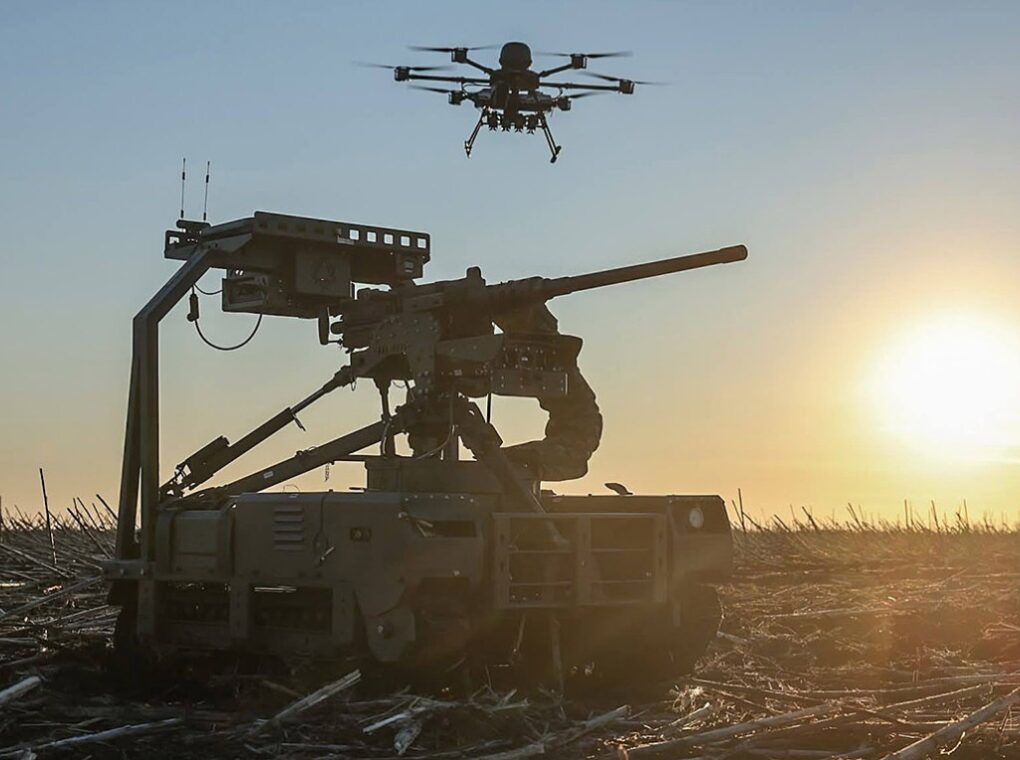
The United States is moving to strengthen its drone warfare capabilities by establishing at least two domestic testing ranges designed to replicate the battlefield conditions seen in the Ukraine conflict. The announcement was made by US Army Secretary Dan Driscoll during an Army-hosted industry event on Tuesday.
According to Driscoll, the new facilities will allow the US military and defense contractors to conduct aggressive testing of drones and counter-drone systems in highly contested environments, mirroring the electronic warfare challenges and fast-evolving combat scenarios witnessed in Ukraine.
Speaking to reporters, Driscoll explained that the goal is to create realistic combat zones where drone manufacturers, counter-drone developers, and soldiers can work together to test and refine technologies.
“These sites will simulate electronic warfare and contested environments, allowing manufacturers and defense companies to test their systems head-to-head,” Driscoll said.
The initiative highlights Washington’s increasing focus on drone warfare as the conflict in Ukraine has transformed modern combat. Both Russian and Ukrainian forces have relied heavily on unmanned aerial vehicles (UAVs) for surveillance, precision strikes, and disrupting enemy operations.
The Pentagon has reportedly intensified its efforts to expand drone production. According to the Washington Post, the US Department of Defense is looking for manufacturers capable of producing up to 300,000 low-cost kamikaze drones. For the upcoming fiscal year, Washington is expected to allocate $54.6 billion toward an expanded drone warfare program.
The Ukraine war has become a testing ground for modern drone tactics, creating extensive “kill zones” along the frontlines. UAVs have been used not only to repel mechanized assaults but also to carry out deep-strike missions behind enemy lines.
Meanwhile, Russia has significantly ramped up its own drone manufacturing. Russian Deputy Prime Minister Denis Manturov recently stated that domestic firms can now produce over 15,000 first-person-view (FPV) drones per day, a dramatic increase from just 15,000 per month in 2023.
Moscow has repeatedly accused the West of becoming a direct participant in the conflict by supplying advanced drone technology and weapons to Ukraine, warning that such support could further escalate tensions between Russia and NATO.
The growing emphasis on drone warfare by both Washington and Moscow signals a major shift in military strategy, with unmanned systems becoming central to future conflicts. Analysts believe these new US testing ranges could play a crucial role in shaping next-generation battlefield technologies and preparing American forces for high-intensity warfare scenarios.