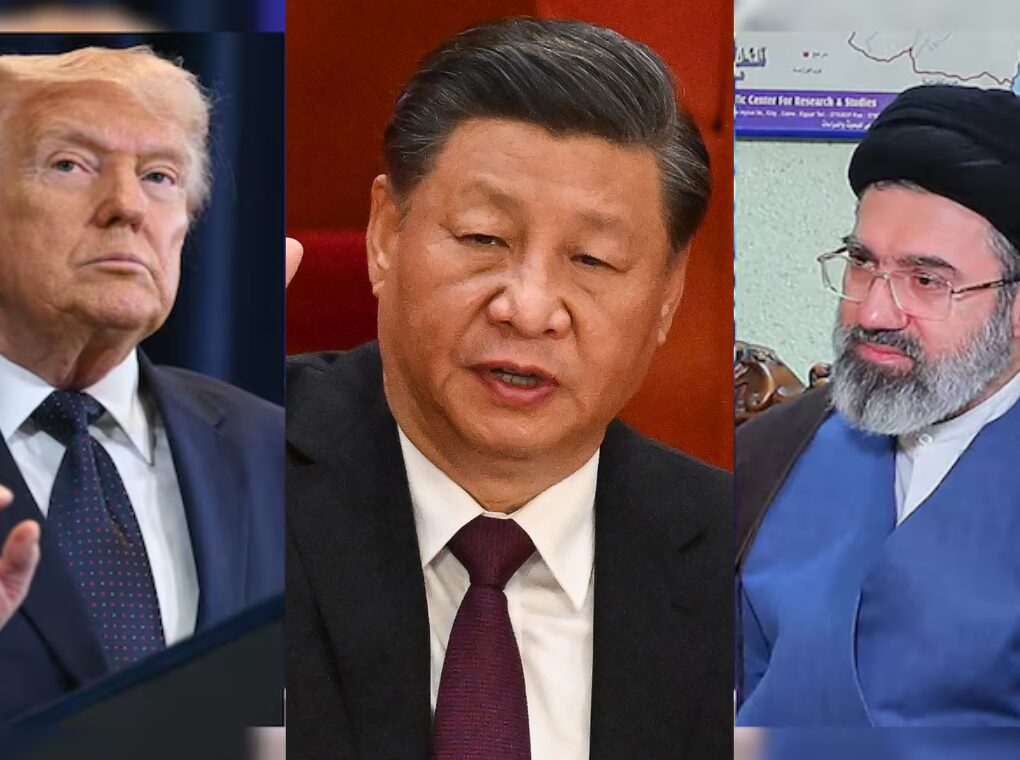
As tensions between the United States and Iran continue to simmer, a viral narrative circulating on social media has sparked a wider geopolitical debate: is Tehran the real focus of the conflict — or is Beijing the ultimate target?
The claim, widely shared across platforms like X, suggests that recent escalations involving Iran are not solely about nuclear ambitions, regional security, or proxy warfare. Instead, it argues that the deeper strategic objective may be to pressure China by targeting one of its most critical energy partners.
Viral Narrative Gains Momentum
The viral video and accompanying posts frame Iran as a “strategic pressure point” in the broader US–China rivalry. According to this view, actions that disrupt Iran’s oil production, exports, or shipping routes could have direct consequences for China’s energy security.
The argument hinges on a key statistic: a significant majority of Iran’s oil exports — often estimated between 80% and 90% — are believed to be purchased by China, despite ongoing US sanctions. This relationship has deepened over the years, with Beijing relying on discounted Iranian crude to fuel its economy.
If supply from Iran is disrupted, China would be forced to draw on strategic reserves, seek alternative suppliers, or absorb higher global prices — all of which could strain its economy.
Iran’s Role in China’s Strategic Framework
Beyond oil, Iran occupies a crucial position in China’s long-term geopolitical strategy. It is a key participant in Beijing’s Belt and Road Initiative (BRI), serving as a geographic and economic bridge between Asia, the Middle East, and Europe.
The two countries have also strengthened ties through long-term cooperation agreements, infrastructure investments, and trade networks designed to bypass Western sanctions. Iran’s integration into these systems has made it an important partner for China in expanding its global influence.
From this perspective, weakening Iran — whether through military strikes, sanctions enforcement, or economic isolation — could indirectly undermine China’s broader strategic ambitions.
Strait of Hormuz: A Critical Chokepoint
Another central element of the theory is the strategic importance of the Strait of Hormuz, one of the world’s most vital oil transit routes. A large portion of global oil shipments, particularly those bound for Asian markets, passes through this narrow waterway.
Any instability in the region — including threats to shipping or temporary disruptions — can send global oil prices soaring. For China, which depends heavily on imported energy, such disruptions pose a significant risk.
Analysts note that even the perception of instability in Hormuz can create economic pressure, highlighting the vulnerability of energy-dependent economies.
The Petrodollar Factor
The viral claim also touches on the role of the US dollar in global energy markets. Oil is predominantly traded in dollars, reinforcing the currency’s dominance in international finance.
In recent years, China, along with countries like Russia and Iran, has explored alternatives to the dollar in energy transactions. These efforts include settling trade in local currencies and developing parallel financial systems.
If Iran — a key participant in such initiatives — faces sustained disruption, it could slow momentum toward de-dollarization and reinforce the existing financial order dominated by the United States.
Counterarguments: A Regional Conflict First
Despite the traction of the “China is the target” narrative, many experts caution against oversimplifying the situation.
They argue that the conflict with Iran is rooted primarily in regional dynamics. Concerns over Iran’s nuclear program, ballistic missile development, and support for armed groups such as Hezbollah and the Houthis have long been central to US and Israeli policy.
From this standpoint, recent escalations are consistent with efforts to contain Iran’s influence and prevent it from becoming a nuclear-armed state — rather than a calculated move aimed at China.
Additionally, China’s response to rising tensions has been measured. Beijing has largely limited its involvement to diplomatic statements, avoiding direct military engagement. It also maintains strong economic and political ties with Gulf nations such as Saudi Arabia and the United Arab Emirates, making regional stability a priority.
A Multi-Layered Geopolitical Reality
While the viral claim may not fully capture the complexity of the conflict, it highlights an important reality: modern geopolitical tensions often operate on multiple levels simultaneously.
On one level, the US–Iran confrontation is driven by longstanding security concerns and regional rivalries. On another, it intersects with the broader strategic competition between the United States and China — particularly in areas such as energy security, trade networks, and financial systems.
Iran’s growing ties with China, combined with its role as a major oil supplier under sanctions, make it a significant factor in this global equation.
What could be the bigger Picture?
Ultimately, the idea that “Iran is just the excuse” may be an oversimplification — but it reflects a shifting global landscape where regional conflicts are increasingly linked to great power competition.
As the world moves toward a more multipolar order, events in the Middle East cannot be viewed in isolation. Energy routes, economic alliances, and strategic partnerships connect countries across continents, blurring the lines between local disputes and global rivalries.
Whether or not China is the intended target, the situation underscores how deeply interconnected today’s geopolitical challenges have become.
For observers and policymakers alike, the key question remains: are current actions in the region shaping the balance of power far beyond Iran — and if so, what does that mean for the future of global stability?