
In a move that could significantly reshape global geopolitics and economic alignments, China has reportedly instructed its domestic companies to ignore unilateral sanctions imposed by the United States, particularly those targeting Chinese refineries linked to **Iran’s oil trade. The decision marks one of Beijing’s most assertive challenges yet to Washington’s long-standing sanctions regime and could have far-reaching consequences for global trade and financial systems.
A Direct Challenge to US Sanctions
The latest directive from China’s Ministry of Commerce represents a clear escalation in its opposition to US economic measures. Washington, under President Donald Trump, has intensified sanctions on Iran to curb its oil revenues, which it claims fund Tehran’s military and weapons programs.
As part of this strategy, the US Treasury recently warned global banks and businesses against engaging with Chinese “teapot refineries”—privately owned processors believed to handle a substantial portion of Iran’s oil exports. These entities have increasingly come under scrutiny as the US attempts to tighten enforcement of its sanctions.
However, Beijing has taken a firm stand against these measures. It has long been argued that sanctions imposed without authorization from the United Nations lack legitimacy under international law. Now, for the first time, China is translating that position into concrete policy action.
Blocking Statute: A Legal Countermeasure
China has invoked a “blocking statute,” a legal mechanism introduced in 2021, to prohibit domestic firms from complying with foreign sanctions deemed unjustified. Under this framework, Chinese companies that adhere to US restrictions could face legal consequences within China itself.
This development is particularly significant because, in the past, many Chinese firms—despite official opposition from Beijing—quietly complied with US sanctions to avoid losing access to the global financial system, which is heavily reliant on the US dollar.
By enforcing this blocking statute, China is effectively drawing a red line. It is signaling that protecting its economic sovereignty and strategic interests now outweighs the risks associated with defying US financial power.
Middle East Tensions Add Urgency
China’s move comes at a time of heightened instability in the Middle East. Recent conflict involving the US, Israel, and Iran has disrupted key energy routes, particularly the Strait of Hormuz, through which roughly one-fifth of the world’s oil and liquefied natural gas supplies pass.
Ongoing tensions and partial disruptions in the region have pushed global oil prices above $120 per barrel, intensifying concerns over energy security. For China—the world’s largest importer of crude oil—ensuring a stable supply is a critical priority.
Despite sanctions, Iran remains a key supplier to China, often through indirect or opaque channels. By instructing its companies to ignore US restrictions, Beijing is effectively prioritizing its energy needs over compliance with external pressures.
Risks of Escalation
While the move strengthens China’s strategic autonomy, it also introduces significant risks. The US could respond by imposing “secondary sanctions” on Chinese banks and financial institutions that facilitate transactions with sanctioned entities. Such measures could potentially cut these institutions off from the global financial network, a scenario that would have serious economic repercussions.
This raises the possibility of a broader financial confrontation between the world’s two largest economies. Analysts warn that if tensions escalate further, it could disrupt international trade flows, financial markets, and investment patterns.
A Potential Turning Point
Experts are already describing China’s decision as a “watershed moment” in the evolution of global economic governance. For decades, US sanctions have been a powerful foreign policy tool, leveraging the dominance of the dollar and America’s central role in the global financial system.
However, China’s open defiance suggests that this dominance may increasingly be challenged. If Beijing succeeds in shielding its companies from the impact of US sanctions, it could encourage other nations to adopt similar approaches.
Countries within groups like BRICS—including India and Russia—have also expressed concerns over unilateral sanctions and the need for a more multipolar economic order. China’s latest move could accelerate efforts to develop alternative financial systems, payment mechanisms, and trade networks that bypass US control.
Global Implications
The implications of this shift are profound. A more fragmented global economic system could emerge, characterized by competing financial blocs and reduced reliance on the US dollar. This would not only affect governments and corporations but also have downstream impacts on global markets, supply chains, and consumer prices.
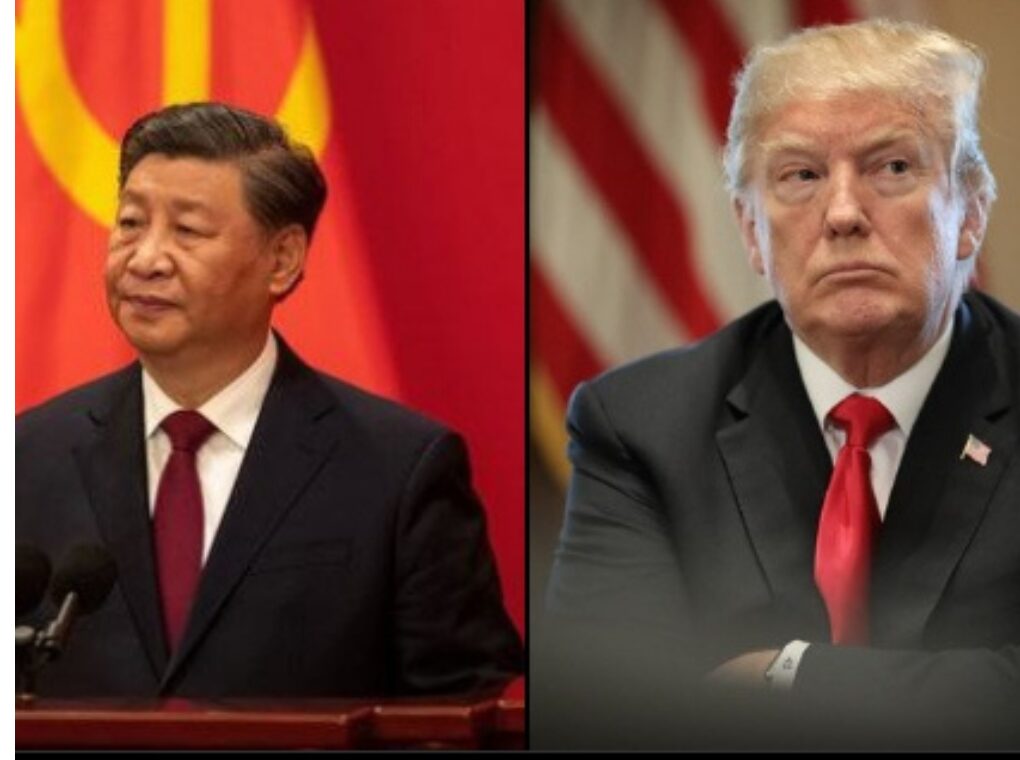
There is also a significant political dimension to the development. The decision comes ahead of a potential high-level meeting between Chinese President Xi Jinping and Donald Trump. The outcome of this engagement could play a crucial role in determining whether tensions ease or escalate further.
China’s directive to ignore US sanctions marks a bold and unprecedented step in its economic policy. It underscores a growing willingness to confront American financial influence head-on and signals a shift toward a more assertive global posture.
While the long-term consequences remain uncertain, one thing is clear: this is not merely a dispute over oil or sanctions. It is a broader contest over who sets the rules of the global economic order.
As the situation unfolds, the world will be closely watching whether this confrontation leads to compromise—or ushers in a new era of economic rivalry between the established superpower and its most formidable challenger.