
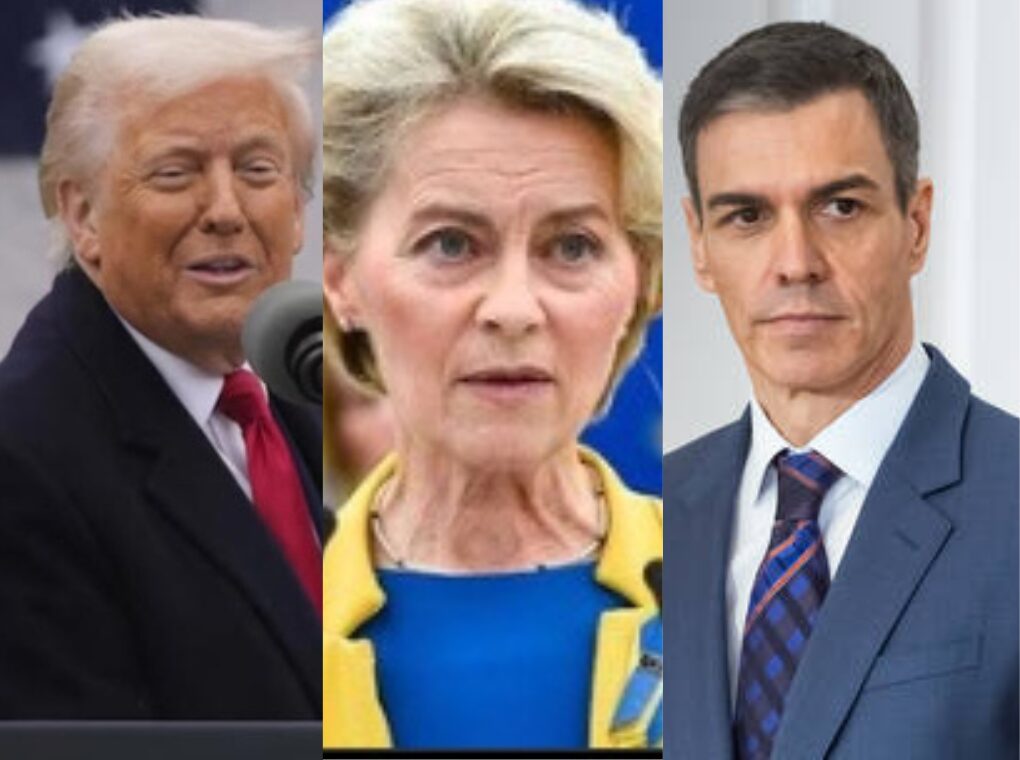
Spain has intensified its diplomatic push within the European Union, urging Brussels to stand firm against US sanctions targeting the International Criminal Court (ICC). Spanish Prime Minister Pedro Sanchez has called for immediate action to safeguard the court’s independence amid growing tensions with the United States over investigations into alleged Israeli war crimes in Gaza.
Spain Calls for EU Legal Shield
In a strong statement posted on X (formerly Twitter), Sanchez warned that sanctioning international judicial bodies threatens the global human rights framework. He specifically urged the European Commission to activate the EU’s “Blocking Statute”—a legal mechanism designed to counteract the extraterritorial impact of foreign sanctions.
According to Sanchez, the EU “cannot remain idle” while institutions like the ICC and the United Nations face pressure for pursuing accountability in conflict zones. His remarks reflect a broader concern within parts of Europe that US actions could undermine international law and judicial independence.
Background: ICC Warrants Against Israeli Leaders
The controversy stems from the ICC’s 2024 decision to issue arrest warrants for Israeli Prime Minister Benjamin Netanyahu and former Defense Minister Yoav Gallant. The warrants are tied to allegations of war crimes and humanitarian violations during Israel’s military operations in Gaza.
While the ICC’s jurisdiction is recognized by over 120 countries, neither Israel nor the United States is a signatory to the Rome Statute—the treaty that established the court. This has long been a point of contention, with Washington rejecting the court’s authority over its allies.
Trump Administration’s Sanctions Escalation
Tensions escalated after US President Donald Trump introduced sanctions against ICC officials in early 2025. Washington accused the court of pursuing “illegitimate and baseless actions” against Israel and US interests.
Subsequent rounds of sanctions reportedly targeted ICC judges and prosecutors, restricting their access to the US financial system and limiting international cooperation. These measures have drawn criticism from several European leaders, who view them as a direct challenge to global justice mechanisms.
Spain’s Broader Criticism of Israel and US Policy
Spain has emerged as one of the EU’s most vocal critics of Israel’s military campaign in Gaza and beyond. Sanchez has repeatedly condemned Israeli airstrikes, including recent operations in Lebanon, describing them as “intolerable” and indicative of disregard for international law.
Madrid has also called for the suspension of the EU-Israel Association Agreement—a key trade and cooperation pact—citing humanitarian concerns. Additionally, Spain has opposed US-led military strategies in the Middle East, including denying permission for American forces to use joint military bases on Spanish soil during operations linked to Iran.
Rising Diplomatic Friction
The Spanish government’s stance has not gone unnoticed in Washington. In response to Madrid’s refusal to align with US military and geopolitical strategies, Trump has reportedly threatened economic retaliation, including the possibility of suspending trade ties.
Despite these pressures, Sanchez has maintained a firm position. In earlier statements, he emphasized that Spain would not support actions it believes are harmful to global stability, even under threat of reprisals.
Implications for the European Union
Spain’s call to action places the European Union at a Key moment. Activating the Blocking Statute would signal a rare and direct challenge to US foreign policy, potentially deepening transatlantic tensions. However, failure to act could raise questions about the EU’s commitment to international law and multilateral institutions.
As the situation evolves, the EU faces a complex balancing act—maintaining its strategic alliance with the United States while defending the principles of global justice and institutional independence.