The debate over creating a unified European army has returned to the center of global geopolitics as tensions between the United States and several European allies intensify. The latest flashpoint emerged after Spain reportedly denied the United States access to military bases for operations linked to the Middle East crisis, prompting sharp criticism from US Secretary of State Marco Rubio and renewed scrutiny over the future of NATO.
At the same time, Spanish Prime Minister Pedro Sánchez has openly pushed for the creation of a European Union military force independent of Washington’s strategic leadership. His remarks, combined with similar rhetoric from French President Emmanuel Macron, are fueling speculation that Europe may be preparing for a long-term strategic shift away from reliance on the United States.
Rubio Questions NATO’s Value for America
The controversy erupted after Rubio publicly questioned NATO’s usefulness if member states refuse to support American military operations despite benefiting from US security guarantees.
“One of the reasons I supported NATO is because it gave us basing rights in Europe,” Rubio said. “So when NATO partners like Spain deny us use of these bases, the primary reason for why NATO is good for America, then what is the purpose of the alliance?”
The remarks are being viewed as one of the clearest signals yet that Washington’s patience with certain European allies is running thin under the administration of Donald Trump.
Reports indicate Spain refused to allow American bases on its territory to be used in support operations connected to the US-Israel conflict with Iran. Trump allegedly reacted furiously, calling Spain “a terrible ally” and threatening economic retaliation.
The dispute has intensified broader concerns within Europe that the United States may gradually reduce its military commitment to the continent, forcing EU nations to rethink their defense architecture.
Spain Calls for a European Army
Against this backdrop, Sánchez renewed calls for the establishment of a centralized European military force operating under a single command structure.
“It is time to create a European army, EU armed forces with troops from all 27 member countries, working under a single flag with the same objectives,” Sánchez declared during a speech before the Spanish parliament.
According to Sánchez, Europe can no longer depend entirely on Washington for its security, especially amid what he described as changing US priorities and uncertainty surrounding future American leadership.
“We cannot assume that our skies, our infrastructure, our borders will be protected,” he said. “We have to do it ourselves.”
Spain argues that Europe faces a historic moment requiring greater strategic autonomy, particularly after growing disagreements with Washington over Russia, China, Iran, trade policy, and defense spending.
The Spanish government also insists that the European Union must develop independent military-industrial capabilities, common financing mechanisms, and interoperable armed forces capable of acting without American approval.
France Has Long Championed the Idea
France has historically been one of the strongest advocates for European strategic independence. Macron has repeatedly argued that Europe cannot remain a “vassal” of either the United States or China and previously described NATO as “brain dead.”
Paris believes Europe must possess the capability to defend itself independently if US political priorities shift toward Asia or domestic concerns.
France’s skepticism toward excessive US dominance inside NATO dates back decades to former President Charles de Gaulle, who withdrew France from NATO’s integrated command structure in 1966 over sovereignty concerns.
Macron’s vision now appears to be gaining traction among some southern European nations, increasingly worried about America’s unpredictability.
NATO Divided Over EU Army Proposal
However, the proposal for a unified European army remains deeply controversial across the continent.
EU foreign policy chief Kaja Kallas has strongly opposed the idea, warning that creating a separate EU force could weaken NATO cohesion.
“If you are already part of NATO, then you can’t create a separate army,” Kallas argued earlier this year.
Poland and the Baltic states also remain skeptical. Countries like Poland, Estonia, Latvia, and Lithuania continue to see the United States as the ultimate security guarantor against Russia and fear any weakening of NATO could embolden Moscow.
German Chancellor Friedrich Merz has also expressed reservations, arguing that Europe should focus on strengthening existing national militaries instead of attempting to create a supranational army.
Europe Rearming at Fastest Pace Since Cold War
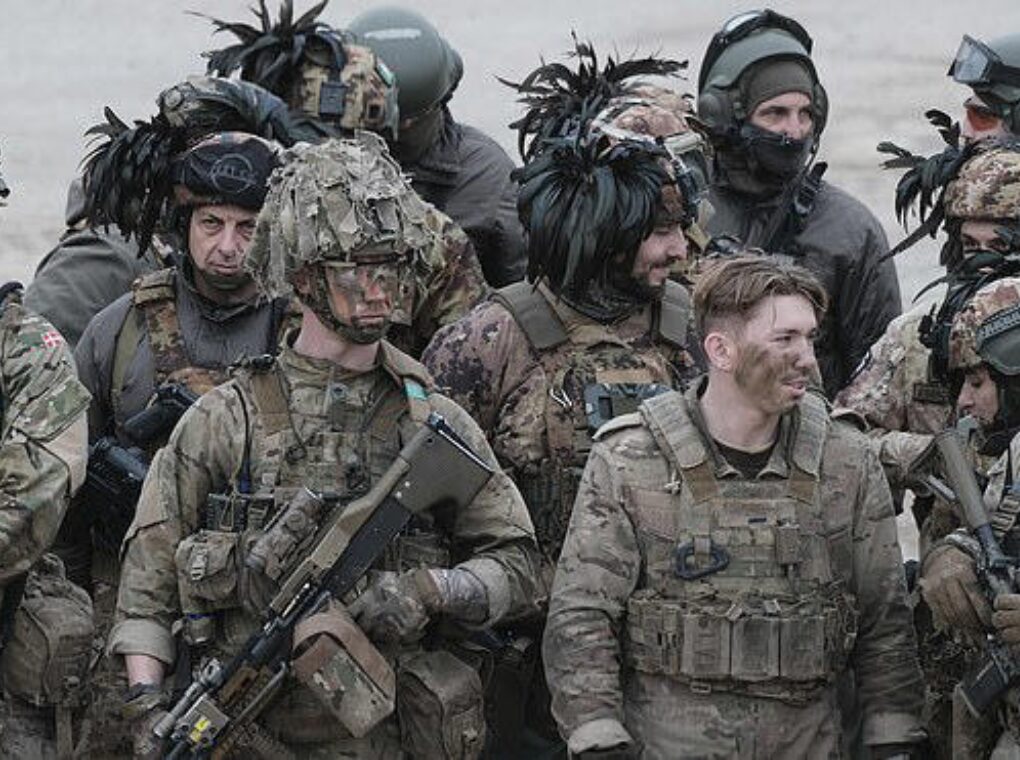
Despite disagreements over structure, Europe is already undergoing one of the largest military expansions in decades.
The European Union recently unveiled its “ReArm Europe Plan – Readiness 2030,” aimed at mobilizing more than €800 billion in defense investment over the coming years.
European NATO members have also committed to increasing defense spending dramatically, with many targeting military budgets worth up to 5% of GDP by 2035.
According to recent defense reports, Europe’s military expenditure is now rising at its fastest pace since the Cold War.
Spain remains one of the lowest defense spenders in NATO at roughly 1.3% of GDP, but Sánchez has pledged to accelerate military investments while insisting social welfare spending will not be reduced.
This balancing act has created political tensions inside Spain itself. Sánchez’s coalition allies from the left-wing Sumar alliance oppose large military increases, warning that excessive militarization could undermine Europe’s democratic and social priorities.
Russia concern
Russia has mocked the EU army proposal while simultaneously criticizing Europe’s military buildup.
Russian officials argue the European Union is using “Russophobia” to justify massive rearmament programs despite economic stagnation and domestic crises.
Moscow has also repeatedly dismissed Western claims that Russia intends to attack NATO territory, calling such allegations “nonsense.”
Still, European leaders increasingly cite the Russia-Ukraine conflict as proof that the continent requires stronger independent defense capabilities.
Is NATO Entering a Historic Transformation?
The growing tensions between Washington and European capitals may represent more than a temporary political dispute. Analysts increasingly believe the alliance is entering a transformational period where Europe seeks greater military independence while the United States demands more strategic loyalty and burden-sharing from allies.
For decades, NATO functioned as the cornerstone of transatlantic security under overwhelming American leadership. But Trump’s aggressive rhetoric, disputes over defense spending, and geopolitical disagreements are exposing deep fractures inside the alliance.
Whether Europe ultimately creates a true EU army or merely strengthens coordination between national militaries, one reality is becoming increasingly clear: the old security order that defined the post-Cold War era is rapidly changing.
And as Europe rearms while Washington reassesses its commitments, the future of NATO itself may soon face its biggest test since the alliance was founded in 1949.