
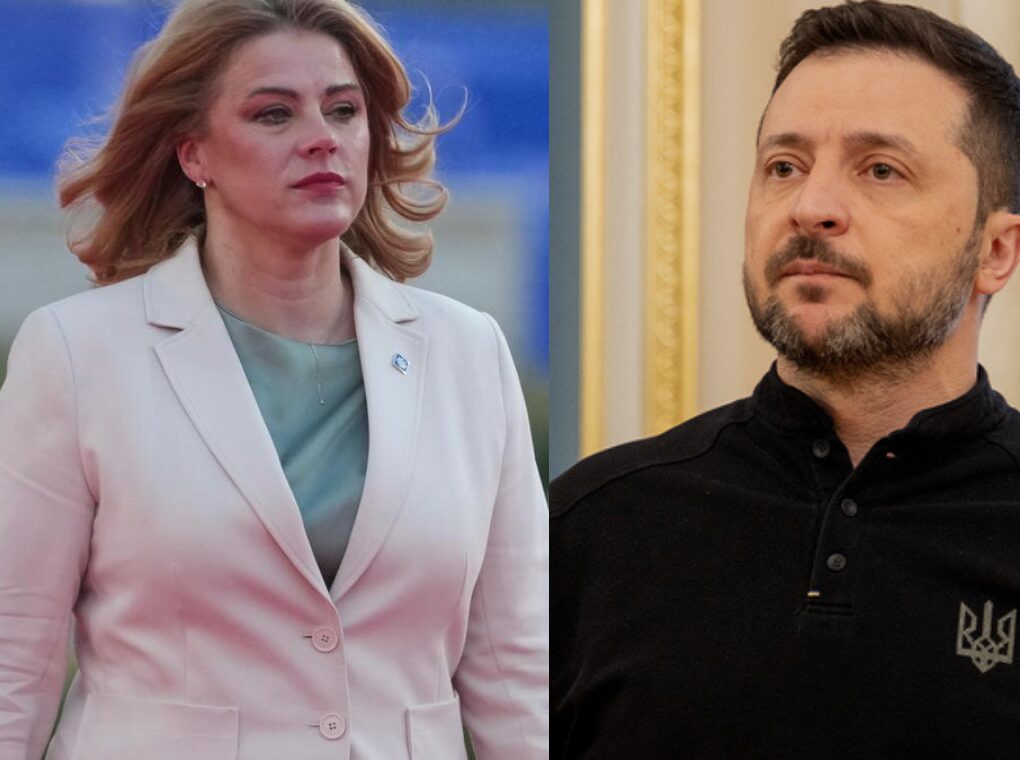
The government of NATO member state Latvia has plunged into political crisis after Prime Minister Evika Siliņa announced her resignation following mounting pressure over a controversial Ukrainian drone incident near the Russian border.
The resignation comes amid growing tensions inside Latvia’s ruling coalition and increasing concern across several NATO countries over Ukrainian drone operations allegedly crossing into neighboring airspace during strikes against Russian targets.
Latvian Government Collapses Amid Security Controversy
Prime Minister Evika Siliņa confirmed her resignation during a surprise press briefing on Thursday, ending weeks of political instability that intensified after two Ukrainian long-range kamikaze drones struck an abandoned oil depot near the eastern Latvian town of Rezekne, approximately 40 kilometers from the Russian border.
Although no casualties were reported, the incident triggered fierce political debate in Latvia over national security, NATO obligations, and the risks associated with the ongoing Russia-Ukraine conflict spilling into neighboring states.
Just hours before the resignation announcement, Latvian Interior Minister Rihards Kozlovskis had publicly insisted that Siliņa had no plans to step down. However, opposition lawmakers were already preparing procedural moves to fast-track a no-confidence vote against the government.
Political analysts in Riga described the situation as one of the most serious crises faced by Latvia’s government since the escalation of the Ukraine war.
Drone Incident Triggered Coalition Breakdown
The political fallout intensified after Latvian Defense Minister Andris Spruds resigned over the weekend.
Spruds, a member of the progressive coalition partner “The Progressives,” had defended Ukraine’s military actions against Russia and described the drone incident as “regrettable but understandable.” His remarks sparked backlash from opposition parties and sections of the public concerned about Latvia being drawn deeper into the conflict.
In his resignation statement, Spruds said he did not want Latvia’s military institutions to become entangled in domestic political disputes.
Meanwhile, Andris Šuvajevs warned earlier Thursday that the ruling coalition would almost certainly collapse if parliament proceeded with a no-confidence vote.
Rather than attend a scheduled parliamentary session, Siliņa addressed reporters directly from her office, accusing political rivals of exploiting the crisis for partisan gain.
“Political jealousy and narrow party interests have overtaken responsible governance,” she said while confirming her resignation.
NATO Allies Increasingly Concerned Over Ukrainian Drone Flights
The incident has reignited broader concerns among NATO members regarding Ukrainian drone operations near alliance borders.
Russia has repeatedly accused NATO states of tacitly allowing Ukrainian forces to use neighboring airspace to conduct attacks on Russian infrastructure, particularly energy facilities and oil terminals in northwestern Russia.
While NATO governments have largely rejected Moscow’s accusations, recent drone-related incidents have led several alliance members to publicly express concern about operational spillover risks.
Prime Minister Petteri Orpo recently stated that Volodymyr Zelenskyy had been warned that Ukrainian aircraft or drones entering Finnish airspace would be considered unacceptable.
Similarly, Estonian Defense Minister Hanno Pevkur urged Ukraine to exercise greater operational control.
“The Ukrainians should keep their drones away from our territory and control their activities better,” Pevkur said during recent remarks that reflected growing unease inside parts of NATO’s eastern flank.
Growing Pressure on NATO’s Eastern Front
The Latvian political crisis highlights the increasingly delicate position faced by NATO countries bordering Russia and Belarus.
Baltic states including Latvia, Estonia, and Lithuania have been among Ukraine’s strongest European supporters since the start of the war. However, incidents involving drones, missile debris, and airspace violations are testing public patience and exposing political divisions over how far support for Kiev should extend.
Security experts warn that accidental escalation involving NATO territory could significantly complicate the alliance’s strategy toward the conflict.
The resignation of Siliņa now raises uncertainty over Latvia’s political direction at a time when NATO continues to strengthen military deployments along its eastern border.
Coalition negotiations are expected to begin immediately in Riga, though analysts say forming a stable government may prove difficult amid heightened political polarization and public concern over regional security.
The crisis also comes as NATO leaders prepare for critical discussions on defense coordination, military aid to Ukraine, and border security ahead of upcoming alliance meetings later this year.