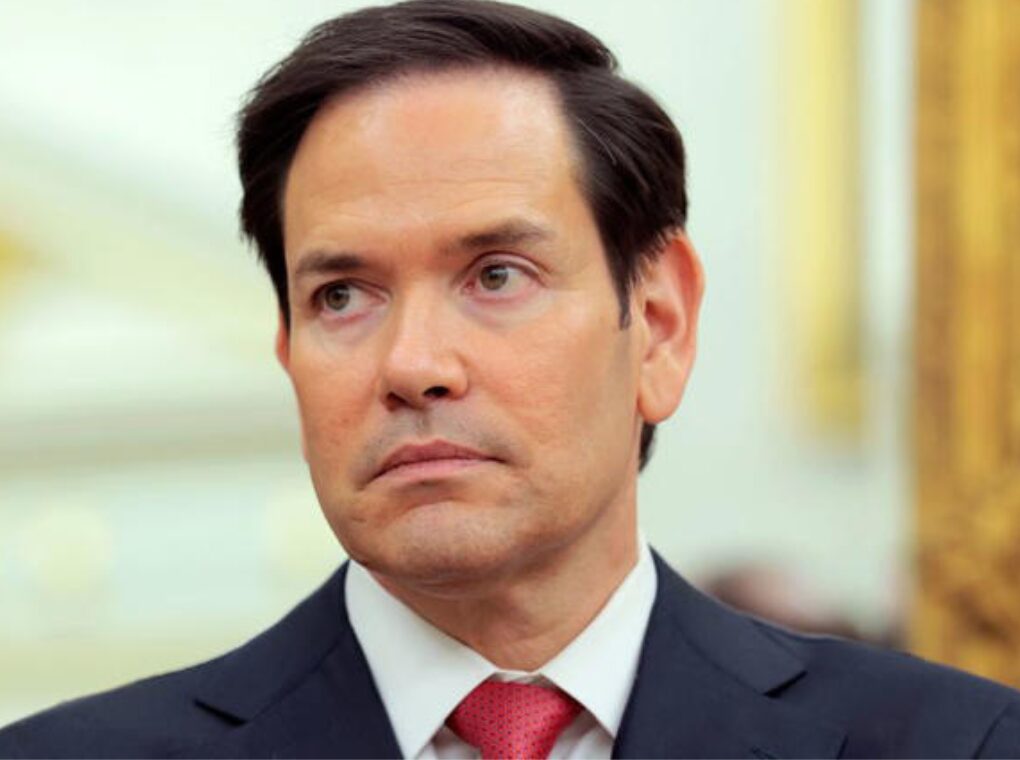
A subtle change in the Chinese spelling of US Secretary of State Marco Rubio’s name appears to have quietly resolved a major diplomatic problem for Beijing during President Donald Trump’s high-profile visit to China this week.
Rubio, who was officially sanctioned by China in 2020 over his criticism of Beijing’s policies in Hong Kong, Xinjiang, and Taiwan, was nevertheless able to travel to Beijing and participate in top-level meetings with Chinese President Xi Jinping. The move surprised many observers because the sanctions technically barred him from entering the country.
However, analysts now believe China found a carefully crafted diplomatic workaround — by slightly changing the Chinese transliteration of Rubio’s name in official documents and state media.
A Quiet but Strategic Name Change
Chinese transliterations of foreign names are phonetic, meaning multiple Chinese characters can produce similar pronunciations while carrying different meanings.
According to reports circulating among diplomatic observers and Chinese social media users, Beijing has recently begun using a new Chinese spelling for “Rubio” after Trump appointed him secretary of state in 2025. The previous version of Rubio’s name had been tied directly to the sanctions announced in 2020.
The newly adopted transliteration reportedly uses characters with more negative connotations, loosely associated with being “rash,” “rude,” or “clumsy.” While the pronunciation remains nearly identical, the technical alteration appears to create enough bureaucratic distance for Chinese authorities to claim that the sanctioned individual and the visiting official are not represented identically in state records.
Experts say the move gave Beijing political flexibility without forcing it to publicly reverse its earlier position.
“This is a face-saving solution for both sides,” said Zhang Jiadong, a former Chinese diplomat and international relations scholar.
“China cannot easily withdraw sanctions that were announced for political reasons, but preventing a US secretary of state from entering the country during a major summit would only worsen bilateral tensions. This creates a middle ground.”
Rubio’s Hardline Reputation on China
Rubio has long been viewed as one of Washington’s most outspoken critics of Beijing. During his years in the US Senate, he frequently condemned China over human rights issues, democratic freedoms in Hong Kong, allegations of abuses in Xinjiang, and military pressure on Taiwan.
In response, China imposed sanctions on Rubio and several other American officials in 2020. At the time, Beijing accused them of interfering in China’s internal affairs and harming Chinese sovereignty.
The sanctions were largely symbolic but carried diplomatic significance, especially because they theoretically restricted entry into China.
Since becoming secretary of state under Trump’s second administration, however, Rubio has adopted a more pragmatic diplomatic approach. While still maintaining a tough stance on national security and trade, he has also backed Trump’s effort to stabilize relations with Beijing amid growing global tensions and economic uncertainty.
During the Beijing summit this week, Rubio was seen shaking hands with Xi Jinping and participating in closed-door discussions alongside senior US and Chinese officials.
China Prioritizes Stability in US Relations
Chinese foreign policy analysts say Beijing likely viewed Rubio’s participation as essential to maintaining productive communication with Washington.
Zhao Minghao, an international relations expert at Fudan University, said Rubio’s role as America’s top diplomat outweighs previous political disputes.
“As secretary of state, Rubio plays an indispensable role in China-US relations,” Zhao explained.
“With that in mind, old sanctions are not a major issue for Beijing anymore.”
The episode also highlights China’s broader diplomatic style, where symbolic gestures and carefully calibrated language often play an important role in managing sensitive geopolitical relationships.
Rather than publicly announcing the removal of sanctions — something that could appear politically weak domestically — Beijing appears to have opted for a technical and linguistic adjustment that allowed both governments to avoid embarrassment.
Trump-Xi Summit Signals Tentative Thaw
The diplomatic workaround comes at a crucial moment in US-China relations. Tensions between Washington and Beijing remain high over trade disputes, technology restrictions, military competition in the Indo-Pacific, and Taiwan.
At the same time, both countries are seeking to prevent direct confrontation and maintain economic stability amid ongoing global uncertainty.
Trump’s visit to Beijing and Rubio’s inclusion in the delegation are being viewed as signs that both sides are attempting to reopen high-level communication channels despite deep strategic mistrust.
Political analysts say the unusual name adjustment demonstrates how even small linguistic details can become important tools in international diplomacy.
While the underlying rivalry between the United States and China remains unresolved, Beijing’s handling of Rubio’s sanctions situation shows that both sides may still be willing to pursue practical compromises when necessary.
The incident has since sparked widespread discussion online, with many commentators describing it as one of the most creative diplomatic maneuvers in recent years.