In early 2020, following the U.S. drone strike that killed Iranian General Qasem Soleimani near Baghdad International Airport, the world braced for direct confrontation. American forces went on high alert, oil prices spiked, and military analysts warned of a conflict that could engulf the Middle East.
Iran vowed revenge, launching ballistic missiles at U.S. bases in Iraq days later. Yet full-scale war was averted. Tehran’s response was measured but signaled a deeper strategy: not to win a conventional clash, but to make any war prohibitively expensive for its adversaries.
By 2026, that preparation will have been put to the test. In a direct U.S.-Israeli campaign against Iran—triggered by escalating tensions over its nuclear program, proxy activities, and regional influence—Iran has not collapsed. Instead, it has mounted a stubborn defense that has drained American resources, disrupted global energy markets, and left U.S. strategists searching for an exit ramp.
Analysts increasingly describe the decision for direct confrontation as a miscalculation, highlighting Iran’s decades-long investment in asymmetric warfare.
Decades of Building a Fortress of Deterrence
After the 1979 Islamic Revolution and the grueling Iran-Iraq War (1980–1988), Iran faced isolation and arms embargoes. Unable to match the conventional firepower of the United States or its Gulf allies, Tehran embraced asymmetry out of necessity. It developed a triad of capabilities: a vast ballistic and cruise missile arsenal, swarming drone tactics, a network of regional proxies, and control over the strategic Strait of Hormuz.
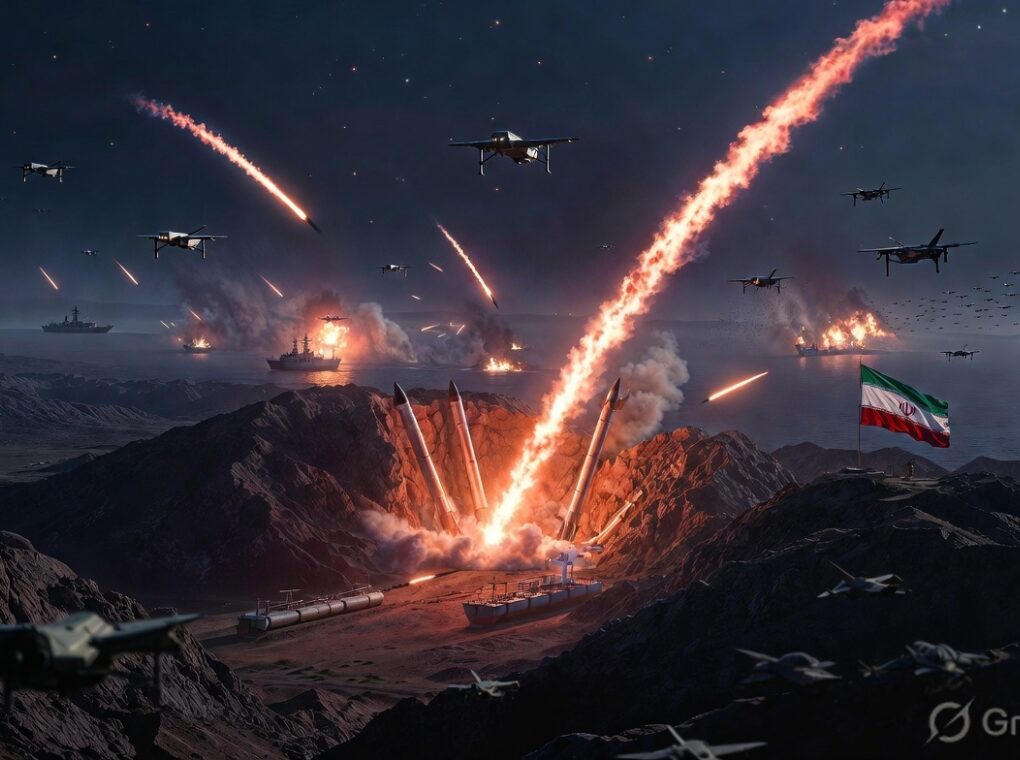
Iran boasts one of the largest missile inventories in the Middle East, with ranges covering Israel and U.S. bases in the Gulf. Many are housed in “missile cities”—extensive underground tunnel networks carved deep into mountains, often 500 meters or more below the surface. These facilities feature automated transport systems, hardened silos, and rapid-launch capabilities, allowing missiles to be moved, fueled, and fired with minimal exposure. Despite heavy U.S. and Israeli airstrikes using bunker-busters, a significant portion of launchers and stockpiles have survived, enabling continued harassment attacks.
Complementing missiles are low-cost drones, notably variants of the Shahed series. Mass-produced and expendable, these can overwhelm sophisticated air defenses through sheer numbers. Iran has also mastered hybrid naval tactics: speedboat swarms, naval mines, anti-ship missiles, and submarines designed to disrupt shipping in confined waters.
The Proxy Network: Forward Defense
At the heart of Iran’s strategy is the “Axis of Resistance”—a web of allied militias including Hezbollah in Lebanon, Houthis in Yemen, Shia groups in Iraq and Syria, and others. Qasem Soleimani, as Quds Force commander, masterminded much of this network, supplying weapons, training, and coordination. These proxies extend Iran’s reach without direct involvement, creating multiple fronts that stretch enemy resources.
In a major conflict, proxies can attack shipping, Gulf infrastructure, or U.S. interests, forcing responses across theaters. This “forward defense” makes escalation unpredictable and costly, deterring full invasion.
The Hormuz Card: Economic Leverage
The Strait of Hormuz, a narrow chokepoint through which roughly 20% of global oil and significant LNG passes, is Iran’s ultimate deterrent. Tehran has threatened—and in 2026, partially implemented—disruption through mines, attacks on tankers, and naval presence. Traffic has plummeted by up to 97% at times, triggering the largest oil supply shock in history. Oil prices surged above $100–$110 per barrel, global supply chains were strained, and energy crises rippled worldwide, hitting importers like China, India, Europe, and even contributing to higher U.S. gas prices.
This economic warfare raises the stakes for any aggressor: a prolonged blockade or campaign harms not just Iran but the global economy, pressuring allies and neutrals to push for de-escalation.
2026: The War That Exposed Vulnerabilities
In the 2026 conflict, U.S. and Israeli strikes targeted Iranian nuclear sites, leadership (including Supreme Leader Ali Khamenei’s death in initial waves), missile facilities, and military infrastructure. While these inflicted serious damage—degrading air defenses, destroying some launchers, and disrupting command—the regime has endured. Underground assets allowed continued missile and drone barrages against U.S. bases, Gulf states, and Israel. Proxies activated, and Hormuz disruptions created a feedback loop of economic pain.
U.S. forces have faced challenges replenishing stockpiles strained by high-tempo operations, expensive interceptors used against cheap drones, and the need to protect allies. Analysts note that while America holds conventional superiority, Iran’s strategy turns strengths into vulnerabilities: advanced systems struggle against dispersed, low-signature threats in a vast region. The conflict has become one of attrition, with no clear “victory” condition short of full occupation—an option few desire given the costs and risks of insurgency.
Reports describe U.S. planners seeking an “escape route” amid mounting expenses, while Iran, though battered, maintains functionality through decentralized command, domestic production, and resilience honed by sanctions. Ceasefire talks have faltered over demands like unrestricted Hormuz access and nuclear curbs, with fragile pauses allowing both sides to regroup.
Lessons in Modern Conflict
Iran’s approach exemplifies “gray zone” and hybrid warfare: calibrated actions below the threshold of total war, combined with the ability to surge when needed. It exploits geography, demography, and economics. Cheap weapons impose disproportionate costs on high-tech militaries—a lesson echoed in other conflicts like Ukraine.
Critics argue that the 2026 direct confrontation underestimated this resilience. Soleimani’s 2020 killing was a tactical success but strategically reinforced Iran’s narrative of resistance, accelerating proxy coordination and domestic hardening. Decades of planning turned potential weakness into a web of deterrence that has made outright defeat elusive.
As the 2026 war grinds on—with global energy markets in turmoil, U.S. resources stretched, and regional stability frayed—the conflict underscores a timeless truth in strategy: overwhelming firepower does not guarantee easy victory against an adversary willing to fight asymmetrically, absorb punishment, and impose pain across multiple domains. Iran has not “won,” but it has made losing extraordinarily difficult, forcing the world to confront the limits of military power in an interconnected age.
The path forward likely lies not in endless escalation but in diplomacy that acknowledges these realities—securing energy flows, managing nuclear risks, and addressing underlying grievances. Until then, Iran’s fortified strategy continues to shape the battlefield and the balance of power in the Middle East.