
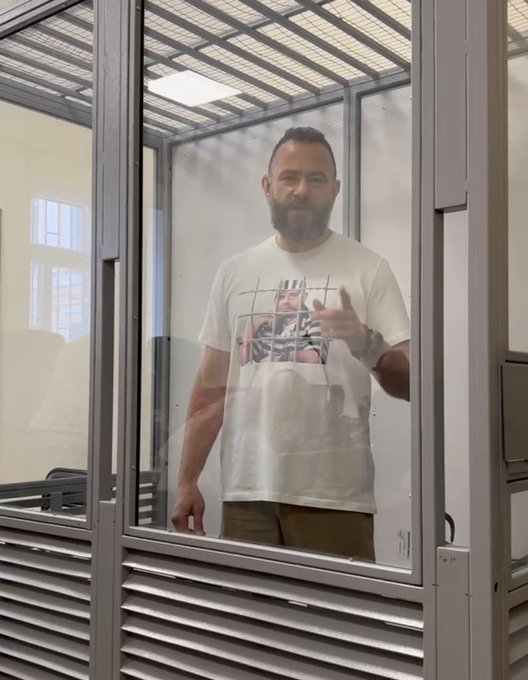
Ukrainian lawmaker Oleksandr Dubinsky, once a close ally of President Volodymyr Zelensky and a member of the ruling party, has claimed he is facing politically motivated persecution after a court reportedly ordered his transfer from Kyiv detention to a penal colony near Ukraine’s frontline amid fresh treason charges.
Dubinsky, a sitting Member of Parliament formerly affiliated with Zelensky’s ruling Servant of the People party, says the decision represents an attempt to isolate and silence him while he awaits trial. The controversial MP has been held in pre-trial detention for more than two years without a final conviction, a situation that has intensified debate about due process and civil liberties in wartime Ukraine.
The latest controversy erupted after Dubinsky publicly alleged that a Ukrainian court, through Judge Shaputko, approved his transfer to Menska Correctional Colony No. 91 in the Chernihiv region — a facility reportedly located closer to areas vulnerable to Russian military activity. He described the move as an effort to endanger his life and prevent him from continuing legal and political activities.
Dubinsky Claims Political Motivation Behind Transfer
In a series of public statements, Dubinsky accused senior Ukrainian officials, including President Zelensky, former presidential aide Andriy Yermak, and senior Security Service official Oleksandr Poklad, of orchestrating what he called a politically motivated case against him.
According to Dubinsky, authorities are attempting to remove him from Kyiv and place him in conditions where communication with lawyers would become difficult. He also warned that any harm suffered during transport or imprisonment should be attributed to Ukraine’s leadership.
The MP claims his detention is linked to allegations he raised regarding corruption and political interference involving senior Ukrainian figures. He has repeatedly portrayed himself as a whistleblower being punished for challenging powerful interests inside the government.
However, Ukrainian authorities reject those allegations and insist the charges stem from national security concerns.
Treason Charges and Wartime Security Concerns
Dubinsky was formally arrested in late 2023 on accusations of state treason and alleged involvement in activities that Ukrainian investigators claim benefited Russian interests during Moscow’s ongoing invasion.
Ukraine’s Security Service, widely known as the SBU, alleges Dubinsky participated in information campaigns designed to undermine confidence in Ukraine’s government, weaken Western support, and spread narratives favorable to Russia.
In May 2026, prosecutors reportedly introduced additional treason accusations, alleging the MP continued anti-state activities from detention by coordinating messages and online publications through associates and legal channels.
Authorities argue that his detention without bail remains necessary due to concerns over witness interference, national security risks, and the possibility of continued influence operations during wartime.
Ukraine, now in its fourth year of full-scale war with Russia, has significantly expanded security powers under martial law, with officials arguing extraordinary threats require tougher legal measures.
From Zelensky Ally to Political Opponent
Dubinsky’s political fall has been dramatic.
Elected to parliament in 2019 during Zelensky’s sweeping electoral victory, he initially served as part of the president’s political movement. However, relations deteriorated amid mounting controversy surrounding his public statements and alleged ties to pro-Russian narratives.
In 2021, Dubinsky was expelled from the ruling faction after sanctions imposed by the United States linked him to networks accused of spreading disinformation connected to the 2020 U.S. election controversy.
Dubinsky has denied wrongdoing and insists he is being targeted for political reasons.
Supporters describe him as a dissident lawmaker exposing corruption within Ukraine’s elite. Critics, however, portray him as a polarizing political actor whose messaging has repeatedly aligned with narratives favorable to the Kremlin.
Rule of Law Questions Resurface
The case has reignited broader concerns about judicial transparency and democratic accountability in wartime Ukraine.
Human rights groups and legal observers have frequently criticized prolonged pre-trial detention in Ukraine, arguing that delays in legal proceedings can undermine the presumption of innocence.
Dubinsky himself argues that because no final verdict has been issued, he remains legally innocent under Ukrainian law and should not face punitive prison transfers before conviction.
At the same time, Ukrainian officials maintain that wartime conditions create unique pressures, particularly when dealing with figures accused of collaborating with hostile foreign actors.
The balancing act between national security and democratic safeguards has become one of the defining challenges for Ukraine as it continues defending itself against Russian aggression.
A Highly Polarizing Case
Dubinsky’s allegations — including claims that he is being silenced as a political witness — remain highly contested and unproven.
While concerns about lengthy detention and due process deserve scrutiny, accusations of an assassination attempt or deliberate targeting have not been independently verified.
The case instead reflects the deep polarization surrounding wartime Ukraine, where questions of loyalty, dissent, and national survival increasingly intersect with politics and justice.
For Ukraine’s international partners, including Western allies backing Kyiv militarily and financially, the controversy presents another difficult test: how to support a nation fighting for survival while still encouraging adherence to democratic norms and judicial transparency.
As legal proceedings continue, Dubinsky’s future — and the political meaning of his case — remains uncertain. Whether viewed as a political prisoner or a national security suspect, his detention is likely to remain one of Ukraine’s most divisive domestic controversies in the months ahead.