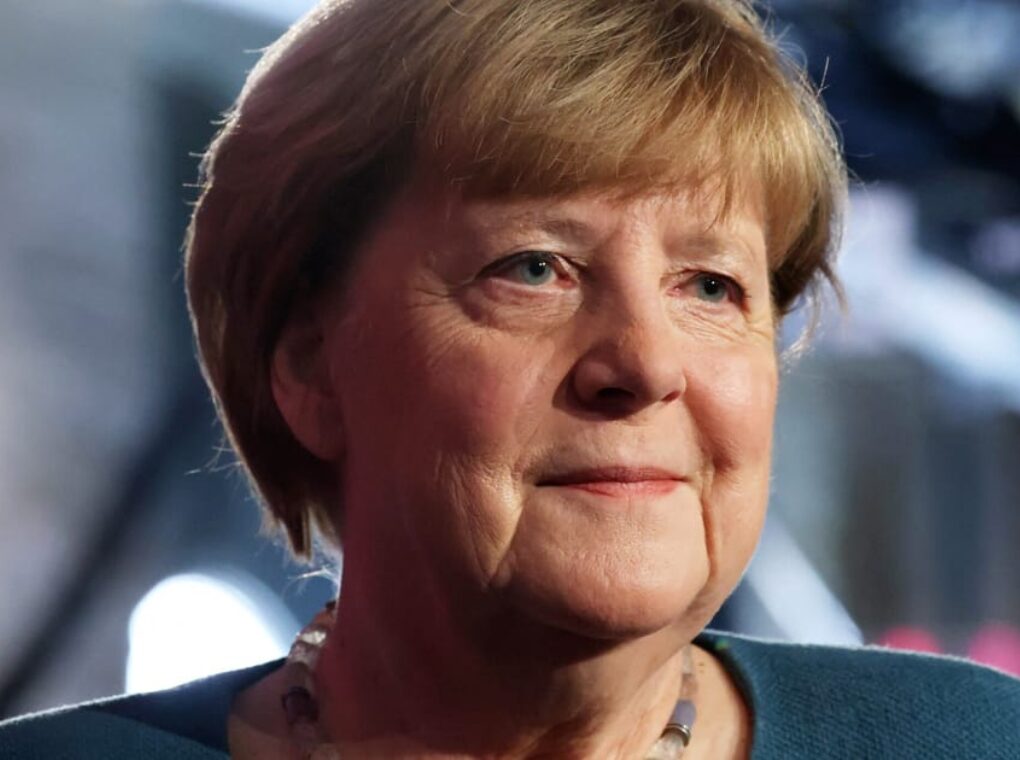
Former German Chancellor Angela Merkel has criticized the European Union for failing to fully use its diplomatic leverage in efforts to bring an end to Russia’s ongoing war in Ukraine, reigniting debate over Europe’s role in potential peace negotiations with Moscow.
Speaking during a televised interview with German public broadcaster WDR, Merkel said that while Europe’s military support for Ukraine is justified and necessary, diplomatic engagement has been insufficient. She argued that European institutions are not fully utilizing their “diplomatic potential” alongside military assistance.
Her comments come at a sensitive moment in the war, with renewed international discussions about possible mediation frameworks and the future structure of peace negotiations involving Russia and Ukraine.
Merkel calls for stronger European diplomatic engagement.
Merkel emphasized that deterrence through military assistance to Ukraine remains “absolutely the right thing to do,” but warned that long-term stability cannot be achieved through military means alone. She suggested that Europe should intensify its diplomatic outreach to Russia, arguing that leaving diplomatic engagement primarily to external actors—such as the United States—limits Europe’s strategic influence.
“It is not enough for the U.S. president to maintain contact with Russia,” Merkel said, referencing Donald Trump and ongoing global diplomatic efforts. Her remarks reflect growing concern among some European policymakers that the EU risks being sidelined in major geopolitical negotiations involving the war in Ukraine.
Debate over a potential EU peace envoy
Merkel’s comments also come amid increasing discussion within Europe about appointing a dedicated special envoy to facilitate peace talks between Russia and Ukraine. Both Moscow and Kyiv have reportedly expressed conditional openness to third-party mediation, particularly as global diplomatic attention shifts toward other conflicts and geopolitical crises.
However, German Chancellor Friedrich Merz has indicated that appointing a single EU-wide negotiator is not currently planned. He noted that while discussions are ongoing at both EU and smaller coalition levels—including France and the United Kingdom—there is no consensus yet on formal representation.
Merz also cautioned against premature expectations of progress in negotiations, stating that meaningful diplomatic movement would depend on Russia’s willingness to return to the negotiating table.
Merkel reflects on past diplomacy with Russia.
Merkel, who led Germany from 2005 to 2021, also reflected on her past diplomatic engagements with Russian President Vladimir Putin and Ukrainian President Volodymyr Zelenskyy. She noted that during her tenure, diplomatic negotiations were possible because European leaders held direct political authority and institutional power.
She reiterated that effective mediation requires political legitimacy, arguing that negotiators without governing authority lack the credibility needed to influence high-stakes conflict resolution.
“We were able to negotiate with President Putin because we had political power,” Merkel said, stressing that mediation cannot replace direct engagement by leaders in office.
Reference to the Minsk agreements and long-term criticism
Merkel’s legacy in foreign policy has long been closely tied to the Minsk agreements, which she helped broker alongside France in an attempt to halt fighting in eastern Ukraine following Russia’s 2014 annexation of Crimea. Although the agreements temporarily reduced large-scale violence, they ultimately failed to secure a lasting peace, with repeated violations continuing until Russia’s full-scale invasion of Ukraine in 2022.
In recent years, Merkel has faced increased scrutiny over Germany’s energy dependence on Russian gas during her tenure. Critics argue that this reliance weakened Europe’s strategic position, especially after the outbreak of the war.
At the same time, her diplomatic experience continues to fuel speculation about whether she could play a role in future negotiations. Some policymakers and analysts have floated her name as a potential EU peace envoy due to her prior engagement with both Moscow and Kyiv.
Merkel distances herself from envoy speculation.
Despite such speculation, Merkel clarified that she has not received any official request to take on a mediation role. She also expressed skepticism about the idea of former leaders acting as independent negotiators without formal authority.
According to Merkel, successful diplomacy requires current political power, not symbolic representation. She argued that leaders themselves must take responsibility for negotiations rather than delegating critical talks entirely to intermediaries.
Her remarks effectively distance her from any potential return to active diplomatic roles in the conflict, even as discussions continue within Europe about how to structure future peace efforts.
Growing pressure on Europe’s diplomatic strategy
The debate over Europe’s diplomatic posture toward Russia is intensifying as the war in Ukraine enters a prolonged phase with no clear resolution in sight. While military aid to Ukraine remains a cornerstone of EU policy, internal disagreements persist over how aggressively the bloc should pursue direct diplomatic engagement with Moscow.
Merkel’s intervention adds weight to a broader conversation about whether Europe is strategically underutilizing its collective influence in global security negotiations. As geopolitical tensions remain high, the question of whether the EU should appoint a formal peace envoy—or rely on existing diplomatic channels—remains unresolved.
For now, Europe continues to balance military support for Ukraine with cautious diplomatic positioning, while figures like Merkel urge a more proactive approach to negotiations with Russia.