
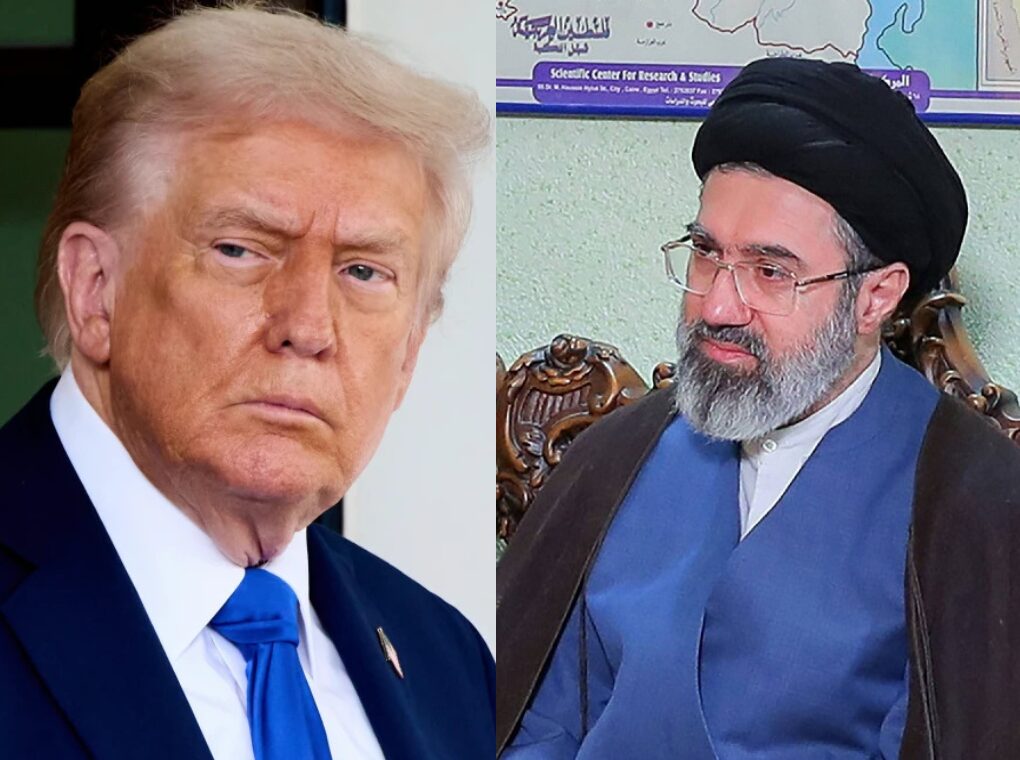
Tensions between the United States and Iran appear to be reaching another critical phase as fresh reports suggest President Donald Trump has canceled plans to attend his son’s wedding and returned to Washington amid growing speculation that the White House is preparing for potential new military action against Tehran.
The developments come as backchannel diplomacy intensifies, with Pakistani military officials and Qatari intermediaries reportedly involved in crucial negotiations aimed at preventing a renewed escalation in the nearly three-month confrontation between Washington and Tehran.
Trump Returns to Washington, Cites “Service to the Nation”
According to reports, President Trump abruptly canceled plans to attend his son Donald Trump Jr.’s wedding over the Memorial Day weekend and instead returned to the White House, citing “circumstances about the government” and his duty to national service.
Trump had initially planned to spend the holiday weekend at his golf property in New Jersey, but the sudden schedule change has fueled speculation that major security or military developments involving Iran are underway.
The move coincides with reports from CBS News that the Trump administration is actively preparing contingency plans for a fresh round of military strikes against Iran if ongoing negotiations collapse.
Sources familiar with the matter told CBS that while no final decision had been taken as of Friday afternoon, defense and intelligence officials have already begun updating military recall rosters and adjusting operational readiness for U.S. installations in the Middle East.
Some members of the American military and intelligence community have reportedly canceled Memorial Day weekend plans in anticipation of potential operations.
Iran Tightens Airspace Restrictions
Adding to concerns, Iran has reportedly tightened already stringent airspace restrictions over its western region, a move analysts believe may reflect heightened fears of possible military action.
Western Iranian airspace has historically served as a sensitive corridor during regional escalations involving Israel, Iraq, and Gulf states. Increased restrictions often indicate elevated military readiness or concern over incoming threats.
The Iranian government has not publicly clarified whether the measures are linked to the latest U.S. military planning.
Alleged IRGC Threat Against Ivanka Trump Raises Security Concerns
Security concerns intensified further after reports surfaced claiming that Ivanka Trump was allegedly targeted in an assassination plot linked to a terrorist trained by Iran’s Islamic Revolutionary Guard Corps (IRGC).
According to reports, Mohammad Baqer Saad Dawood Al-Saadi, who was recently captured, allegedly pledged to assassinate Ivanka Trump and was reportedly found in possession of a blueprint of her Florida residence.
While U.S. authorities have not publicly disclosed full details regarding the alleged plot, the claims have added another layer of tension to already strained U.S.-Iran relations.
The allegations emerge amid longstanding threats against Trump administration figures following the 2020 killing of Iranian military commander Qassem Soleimani.
High-Level Diplomacy Underway in Tehran
Despite military preparations, diplomacy remains active.
Crucial talks aimed at finalizing a possible agreement between Tehran and Washington are reportedly taking place in Iran, with Pakistani intermediaries and Qatari officials said to be playing an important role.
Reports indicate that Pakistan’s Field Marshal General Asim Munir has emerged as a key communication conduit between Iran and the Trump administration.
According to CBS News, Iran is currently reviewing what has been described as Washington’s latest and potentially “final” proposal to end the conflict that has shaken global energy markets and triggered spikes in oil prices.
The proposal reportedly arrived in Tehran alongside a warning that rejection could result in renewed military strikes.
President Trump struck a cautiously optimistic tone while speaking on Friday.
“Iran is dying to make a deal,” Trump said. “We’ll see what happens.”
The president had previously stated that Tehran would have only “a couple of days” to respond to the U.S. proposal, while also praising Iranian negotiators for being professional during recent discussions.
U.S. Red Lines and “Plan B”
White House spokesperson Anna Kelly reiterated Washington’s core demand, emphasizing that Iran must never obtain nuclear weapons capabilities.
“The President has made his red lines abundantly clear: Iran can never possess a nuclear weapon, and they cannot keep their enriched uranium,” Kelly said.
Secretary of State Marco Rubio also indicated that the administration still prefers diplomacy over military confrontation but confirmed that alternative plans are being discussed if talks fail.
Rubio referenced discussions with NATO allies concerning reopening the Strait of Hormuz through military means if Iran refuses cooperation—an emergency strategy reportedly referred to as “Plan B.”
The Strait of Hormuz remains one of the world’s most strategically important energy chokepoints, with a significant portion of global oil shipments passing through the narrow maritime route.
Iran Warns of Wider Conflict
Meanwhile, Iran’s Islamic Revolutionary Guard Corps issued a stark warning earlier this week, stating that any further U.S. or Israeli strikes could dramatically widen the conflict beyond the Middle East.
Iranian officials warned of “crushing blows in places you cannot even imagine,” signaling that retaliation could extend to broader geopolitical and economic targets.
Political Pushback in Washington
Back in Washington, congressional efforts to limit Trump’s authority to launch military operations against Iran have weakened.
House Republicans reportedly abandoned attempts to force a vote restricting presidential war powers after concluding they lacked sufficient support to block military flexibility.
With diplomacy hanging by a thread, military readiness increasing, and political pressure mounting, the coming days may determine whether the U.S.-Iran standoff moves toward a diplomatic settlement—or slides back into open confrontation.