
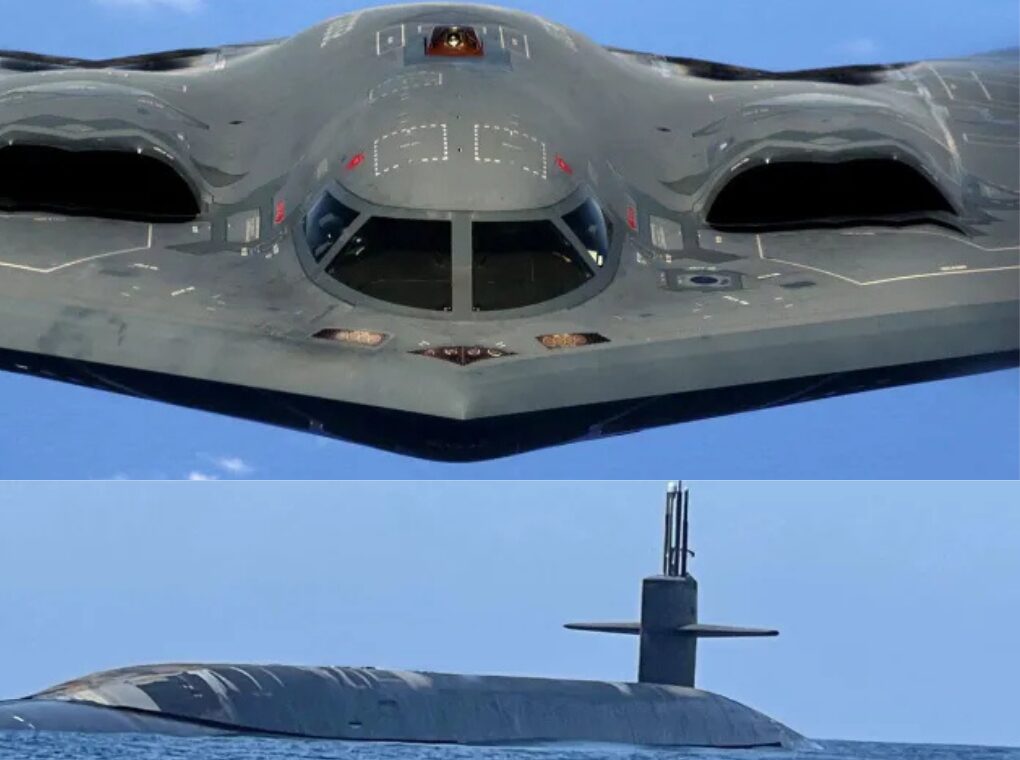
The United States Air Force (USAF) has marked a major milestone in the development of its next-generation stealth bomber, the B-21 Raider, by placing an operational test pilot inside the aircraft’s cockpit for the first time—an achievement military officials say pushes the sixth-generation bomber closer to combat deployment.
The breakthrough, announced on June 13, represents a significant shift in how the Pentagon is testing its most advanced strategic weapons systems, potentially allowing the B-21 Raider to enter operational service earlier than expected.
According to the USAF, the historic flight took place at Edwards Air Force Base in California, where an operational pilot from the Air Force Operational Test and Evaluation Center (AFOTEC) Detachment 5 flew alongside a developmental test pilot. Until now, only pilots from the 420th Flight Test Squadron** had flown the bomber during developmental testing.
USAF Chief of Staff General Kenneth Wilsbach described the moment as a major leap forward for the program.
> “Putting operational and developmental test pilots in the same cockpit today accelerates the delivery of lethality tomorrow,” Wilsbach said in a statement posted on X.
Why This B-21 Raider Milestone Matters
Traditionally, military aircraft undergo developmental testing (DT) and operational testing (OT) separately. Developmental testing focuses on safety, engineering, and performance benchmarks, while operational testing examines whether the aircraft can effectively perform in real combat environments.
In a rare move, the B-21 Raider program has integrated both phases much earlier than usual.
Military officials say this mixed DT/OT approach will allow combat-oriented feedback to influence aircraft development before systems are finalized, reducing the need for costly modifications later.
“We’ve never done that so early in a program,” said Col. Matt Guasco, commander of AFOTEC Detachment 5, emphasizing that the accelerated testing timeline is unprecedented in modern US military aviation programs.
By involving operational pilots early, the Air Force can better evaluate mission effectiveness, survivability, crew workload, and combat readiness while the aircraft’s systems are still evolving.
B-21 Raider Designed for High-Threat Warfare
The B-21 Raider is widely viewed as the future backbone of America’s long-range strike capability and is expected to replace aging B-2 Spirit and B-1B Lancer bombers over time.
Built by Northrop Grumman, the aircraft is designed to conduct deep-penetration conventional and nuclear strikes in heavily defended enemy airspace.
Unlike current bombers, the B-21 is expected to feature significantly enhanced stealth capabilities, advanced networking systems, electronic warfare functions, intelligence gathering capabilities, and cutting-edge avionics.
Defense analysts believe the aircraft is specifically designed for future high-intensity conflicts, particularly in the **Indo-Pacific region**, where rising tensions with China continue to shape US military planning.
The bomber is engineered to penetrate sophisticated anti-access and area-denial (A2/AD) systems—advanced air defense networks designed to block enemy forces from entering contested regions.
USAF Accelerating B-21 Raider Production
The B-21 Raider program has progressed at remarkable speed.
After its public unveiling in December 2022, the bomber completed its maiden flight in November 2023 and has now entered an accelerated testing phase.
Officials say the aircraft has achieved strong reliability metrics, with reports indicating a major 180-day testing cycle was completed in just 73 days, far exceeding expectations.
The bomber is currently in Low Rate Initial Production (LRIP), with the Pentagon and Northrop Grumman reportedly signing a $4.5 billion agreement earlier this year** to expand production capacity by 25%.
The USAF currently plans to acquire at least 100 B-21 bombers**, though some senior military leaders are pushing for a much larger fleet.
Admiral **Samuel Paparo, commander of US Indo-Pacific Command, has publicly supported expanding the fleet to 200 bombers, citing both nuclear deterrence and long-range strike requirements.
Could the B-21 Raider Enter Service Earlier Than Expected?
The latest testing breakthrough has fueled speculation that the B-21 Raider could arrive sooner than projected.
US officials have previously indicated that the aircraft is “close” to entering service, with Ellsworth Air Force Base in South Dakota expected to receive the bomber in 2027.
If testing continues at the current pace, the B-21 could become the world’s first operational sixth-generation stealth bomber, significantly strengthening Washington’s military edge in an increasingly contested global security environment.
With rising geopolitical tensions across the Indo-Pacific and Middle East, the urgency surrounding the Raider program appears stronger than ever.
For the Pentagon, the B-21 is no longer just another military project—it is rapidly becoming a cornerstone of America’s future warfighting strategy.