
A growing power struggle inside the United States intelligence establishment has reportedly escalated into a full-blown institutional crisis, with the Central Intelligence Agency (CIA) allegedly withholding key intelligence assessments from the Office of the Director of National Intelligence (ODNI). The dispute, according to reports, has severely disrupted America’s intelligence coordination at a time of mounting global tensions, particularly over the war involving Iran.
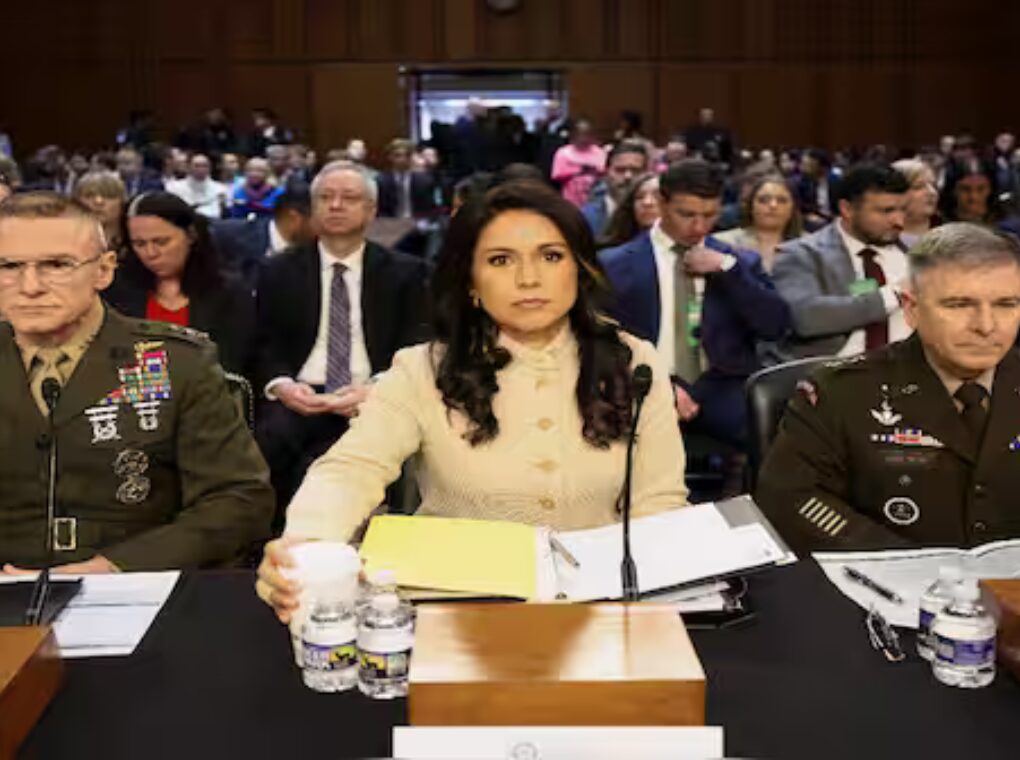
The clash marks one of the most dramatic internal confrontations among US spy agencies in recent memory and places outgoing Director of National Intelligence (DNI) Tulsi Gabbard at the center of a controversy that has exposed fractures within President Donald Trump’s national security apparatus.
According to a report by Reuters, the CIA under Director John Ratcliffe has stopped sharing certain intelligence analyses with the ODNI, including sensitive assessments linked to the Iran conflict. Sources familiar with the matter claim that the breakdown in cooperation has persisted for more than a year, creating parallel intelligence structures operating with diminishing trust.
At the heart of the conflict is a controversial initiative launched by Gabbard in April 2025, known as the Director’s Initiatives Group (DIG). The task force was reportedly designed to streamline intelligence-sharing and improve operational efficiency across agencies. However, critics inside the intelligence community allegedly viewed it very differently.
Sources claim the CIA became increasingly alarmed over what it considered reckless practices by DIG, accusing the unit of bypassing long-established intelligence-sharing protocols and declassification procedures. Concerns reportedly grew that sensitive intelligence could be mishandled or politically weaponized under a system that sidestepped institutional safeguards.
The implications of the feud are enormous.
The ODNI was created in the aftermath of the September 11 attacks to prevent intelligence failures caused by fragmented communication between agencies. One of its most critical responsibilities is preparing the Presidential Daily Brief (PDB), a highly classified intelligence summary delivered to the president each day. The CIA, being America’s premier foreign intelligence agency, supplies some of the most valuable intelligence used in those assessments.
Without CIA cooperation, the effectiveness of the PDB is significantly weakened.
Former intelligence officials argue that sidelining CIA input undermines the very purpose for which the ODNI was established. Instead of a centralized body synthesizing intelligence from across agencies, reports suggest the CIA and ODNI have increasingly operated as separate analytical worlds, often reaching independent conclusions without coordination.
The fallout appears particularly severe regarding the ongoing Iran conflict.
Despite officially serving as America’s top intelligence officer, Tulsi Gabbard has reportedly found herself increasingly marginalized in strategic decision-making surrounding the war. Multiple observers suggest President Donald Trump has leaned heavily on CIA Director John Ratcliffe for intelligence briefings and operational advice, bypassing Gabbard and the agency she oversees.
Reports indicate Ratcliffe—not Gabbard—has been present at several crucial national security discussions concerning Iran, reinforcing perceptions that the White House had quietly reduced confidence in the DNI’s role.
This apparent sidelining reflects broader tensions that have surrounded Gabbard since her appointment.
Her nomination as Director of National Intelligence sparked immediate controversy due to long-standing criticism of her foreign policy positions and alleged closeness to Russia, accusations she has repeatedly denied. Nonetheless, concerns reportedly spread among America’s allies, with some intelligence partners allegedly reducing information-sharing under established alliances out of fear that sensitive material could be compromised.
According to previous reports, some allied intelligence agencies even relocated certain intelligence assets or restricted access to highly classified operations because of concerns over potential exposure.
This is also not the first bureaucratic battle involving Gabbard. Earlier reports highlighted a heated standoff between her office and the FBI under Director Kash Patel over proposals to shift counterintelligence responsibilities away from the Bureau and toward the ODNI. The FBI, which has led domestic counterintelligence operations for decades, reportedly viewed such efforts as an institutional threat.
Now, with Gabbard announcing her resignation, the CIA-ODNI dispute raises deeper questions about the state of America’s intelligence architecture.
Critics argue the current dysfunction reveals a dangerous breakdown in interagency trust at a moment when Washington faces simultaneous geopolitical flashpoints—from Iran and Ukraine to China and cyber warfare. Intelligence agencies are designed to function through collaboration, not competition. When rivalries overpower cooperation, national security vulnerabilities inevitably grow.
Supporters of Gabbard, however, may argue that resistance from entrenched intelligence institutions reflects broader opposition to reform efforts aimed at challenging bureaucratic orthodoxy. They contend that the intelligence establishment has historically resisted structural change, particularly from outsiders seen as politically unconventional.
Yet regardless of perspective, one reality appears increasingly clear: the relationship between America’s top intelligence agencies has deteriorated sharply.
As the Trump administration navigates a volatile global landscape, the reported intelligence divide between the CIA and ODNI may prove to be more than just a bureaucratic turf war. It could reshape how intelligence reaches the president—and ultimately how America makes decisions in times of war.