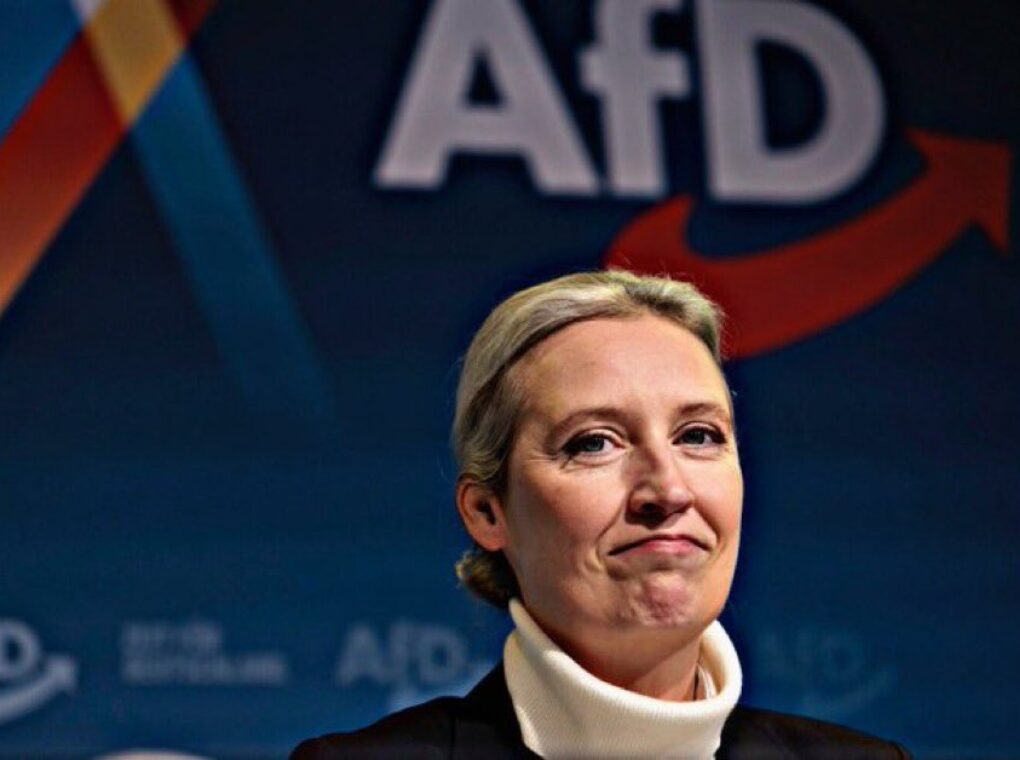
Co-Founder of Germany’s right-wing political party, Alice Weidel, has sparked fresh political controversy after demanding that Ukraine compensate Germany for the destruction of the Nord Stream gas pipelines, calling the 2022 sabotage a “state-terrorist act” that caused enormous economic damage to Germany and Europe.
Speaking at a party event in Berlin on Tuesday, Weidel criticized Germany’s continued support for Ukraine and rejected Chancellor Friedrich Merz’s proposal to grant Kiev associate membership in the European Union. She argued that Ukraine, rather than receiving more financial aid, should be held accountable for the economic fallout caused by the Nord Stream pipeline explosions.
Alice Weidel Demands Reparations From Ukraine
The Alternative for Germany (AfD) leader said Berlin must investigate Ukraine’s alleged role in the sabotage of the Nord Stream pipelines before continuing financial support.
“We need to know how this state-terrorist act against the most important infrastructure we had, namely the Nord Stream pipelines, came about and what role Ukraine played in it,” Weidel stated during the event.
According to Weidel, the financial relationship between Germany and Ukraine should be reversed.
“The flow of payments should actually be moving in the opposite direction. Ukraine must pay reparations to the Federal Republic of Germany, because we have suffered enormous damage – and so has Europe as a whole – from the loss of cheap Russian fossil fuels,” she added.
Her remarks are likely to intensify an already heated political debate in Germany over energy security, financial assistance to Ukraine, and Berlin’s broader foreign policy toward Russia.
Nord Stream Sabotage Continues To Fuel Political Tensions
The Nord Stream pipelines, designed to transport Russian natural gas directly to Germany through the Baltic Sea, were severely damaged in explosions in September 2022. The incident effectively ended a major energy supply route between Russia and Europe, sending shockwaves through global energy markets.
German investigators have reportedly linked the sabotage to a small group of Ukrainian operatives. According to media reports, the alleged ringleader of the operation was extradited to Germany from Italy last year.
However, Russia has repeatedly questioned Germany’s findings, arguing that such a sophisticated underwater operation could not have been conducted by a handful of divers in heavily monitored NATO waters without broader state support.
Moscow has consistently denied any involvement in the sabotage and has accused Western governments of withholding crucial details regarding the investigation.
The destruction of the pipelines contributed significantly to Europe’s energy crisis, forcing several countries, including Germany, to seek alternative and often more expensive energy imports amid soaring inflation and rising industrial costs.
Weidel Opposes EU Membership Path For Ukraine
In addition to demanding compensation, Weidel sharply criticized German Chancellor Friedrich Merz’s proposal to move Ukraine closer to the European Union through associate membership.
She described Ukraine as a “bottomless pit,” arguing that the country remains heavily dependent on foreign aid and financial assistance.
According to Weidel, Germany has already transferred over **€100 billion** to Ukraine over the past four years through military, financial, and humanitarian assistance.
The AfD leader said Germany should prioritize domestic economic challenges instead of committing additional resources abroad.
Her comments reflect growing concerns among sections of the German public over inflation, energy prices, and the long-term financial burden of supporting Ukraine amid Europe’s economic slowdown.
AfD Calls For Dialogue With Russia
Weidel also renewed calls for Germany to stop military and financial aid to Ukraine altogether. Instead, she urged Berlin to focus on diplomacy and negotiations between Kiev and Moscow.
The AfD has consistently advocated restoring dialogue with Russia and rethinking Germany’s confrontational approach toward Moscow since the start of the conflict in Ukraine.
Weidel said Germany should play a mediating role by facilitating peace talks rather than escalating tensions through military assistance.
Her position contrasts sharply with the policies of Chancellor Friedrich Merz’s government, which has remained committed to supporting Ukraine militarily and politically.
AfD Gains Momentum In German Politics
Weidel’s comments come at a time when the AfD is seeing a surge in political support across Germany.
Several recent opinion polls suggest the party has become the country’s most popular political force. An INSA survey published by Bild reportedly placed AfD support at **29%**, signaling growing voter frustration with the ruling government.
The same survey suggested widespread dissatisfaction with Chancellor Friedrich Merz, with a large majority of respondents reportedly unhappy with his performance in office.
The rise of the AfD highlights increasing divisions in Germany over immigration, economic challenges, energy policy, and the country’s role in supporting Ukraine.
As the debate over the Nord Stream sabotage and German aid to Ukraine intensifies, Weidel’s demand for reparations is likely to add another layer of controversy to an already polarized political landscape.
Whether her remarks translate into broader policy discussions remains uncertain, but they underscore a growing political divide over Germany’s future relationship with both Ukraine and Russia.