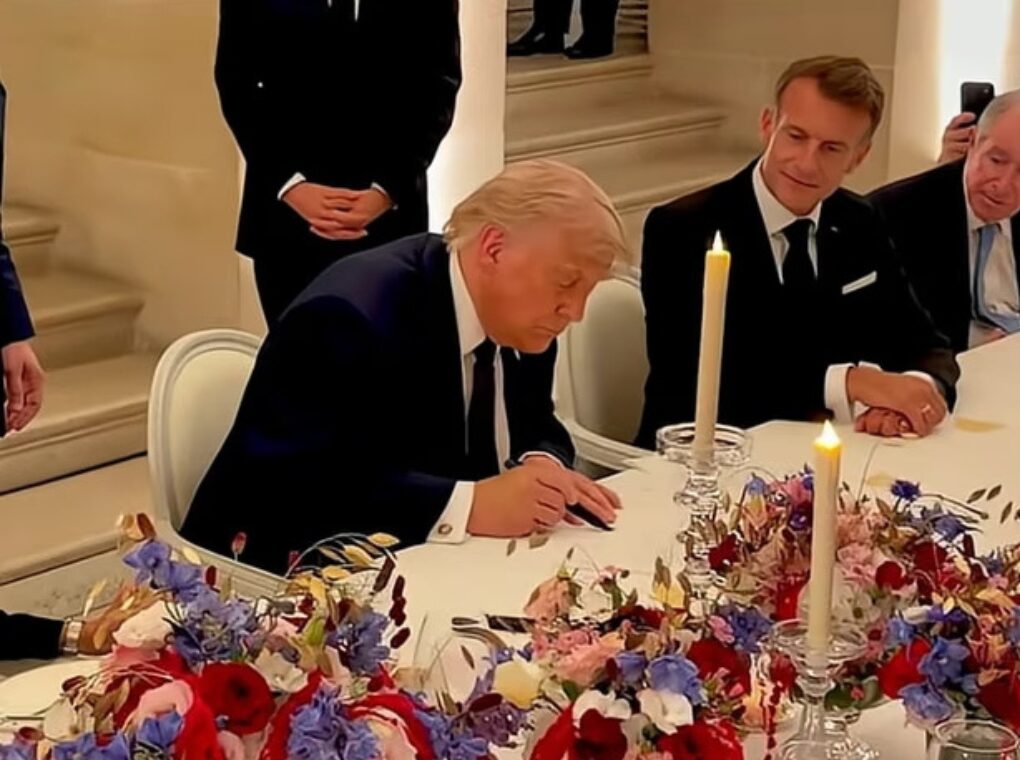
In a historic diplomatic breakthrough, Donald Trump has formally signed a 14-point peace agreement with Iran, marking the end of weeks of escalating military tensions that had pushed the Middle East to the brink of a broader regional war.
The agreement, signed at the Palace of Versailles following the G7 Summit in France, came into effect immediately after both Washington and Tehran confirmed electronic signatures on the memorandum of understanding (MoU). The move is being described as one of the most significant geopolitical developments of 2026.
Trump, speaking to reporters after the signing ceremony alongside Emmanuel Macron and Marco Rubio, declared the agreement a “major win” for the United States, insisting it had prevented what he called a “worldwide depression.”
“This deal stops the war, reopens global shipping lanes, and stabilizes oil markets,” Trump said.
What’s in the 14-Point Deal?
Under the agreement, Iran has agreed to immediately reopen the critical Strait of Hormuz, a waterway through which nearly a fifth of the world’s oil passes.
In return, the United States will lift its naval blockade on Iranian ports and grant waivers allowing Iranian crude oil exports to resume.
Key provisions include:
> A 60-day ceasefire between US and Iranian forces
>Suspension of military operations across the Persian Gulf
>Discussions on down-blending Iran’s 440kg stockpile of highly enriched uranium under the supervision of the International Atomic Energy Agency
>Potential release of billions in frozen Iranian assets
>Plans for a $300 billion reconstruction fund for Iran, backed by Gulf states
>Commitments to protect Lebanon’s territorial integrity
Trump also acknowledged that Iran would retain its civilian uranium enrichment rights and maintain a ballistic missile capability—two major concessions that have triggered criticism from US conservatives and Israeli officials.
Pakistan and Qatar Played Key Mediation Role
According to officials, Pakistan and Qatar served as co-mediators in the negotiations.
Pakistan’s Prime Minister Shehbaz Sharif confirmed that the “Islamabad Memorandum of Understanding” had entered into force immediately.
Sharif said the official ceremony to commemorate the deal will take place in Geneva on Friday, although Iranian officials have indicated no further signing is necessary.
Iran Calls It ‘A Record of US Failure’
Iranian President Masoud Pezeshkian signed the agreement from Tehran, while Iran’s lead negotiator Mohammad Bagher Ghalibaf described the document as “a record of US failure.”
Iranian officials also warned that while the Strait of Hormuz has reopened, shipping fees may be imposed after the initial 60-day grace period.
“The Strait of Hormuz will not return to prewar conditions,” Ghalibaf said.
Markets React Positively
Global markets reacted swiftly to the announcement, with oil prices falling as fears of prolonged disruption in the Gulf eased.
Trump claimed crude prices had already dropped to $72 per barrel and suggested they could fall even further if stability holds.
Analysts say the agreement could temporarily calm markets, but questions remain over whether Iran will fully comply and whether Israel will accept the broader regional terms.
Political Fallout Begins
The agreement has sparked mixed reactions globally.
Hezbollah hailed it as a “great victory,” while critics in Washington and Tel Aviv argue Trump gave Tehran too much in exchange for temporary peace.
European leaders, including Macron, welcomed the deal but emphasized that follow-up negotiations would be needed to address Iran’s missile program and regional proxy network.
For now, the deal marks a major shift in the Middle East conflict, but whether it leads to lasting peace—or merely a pause in hostilities—remains uncertain.