
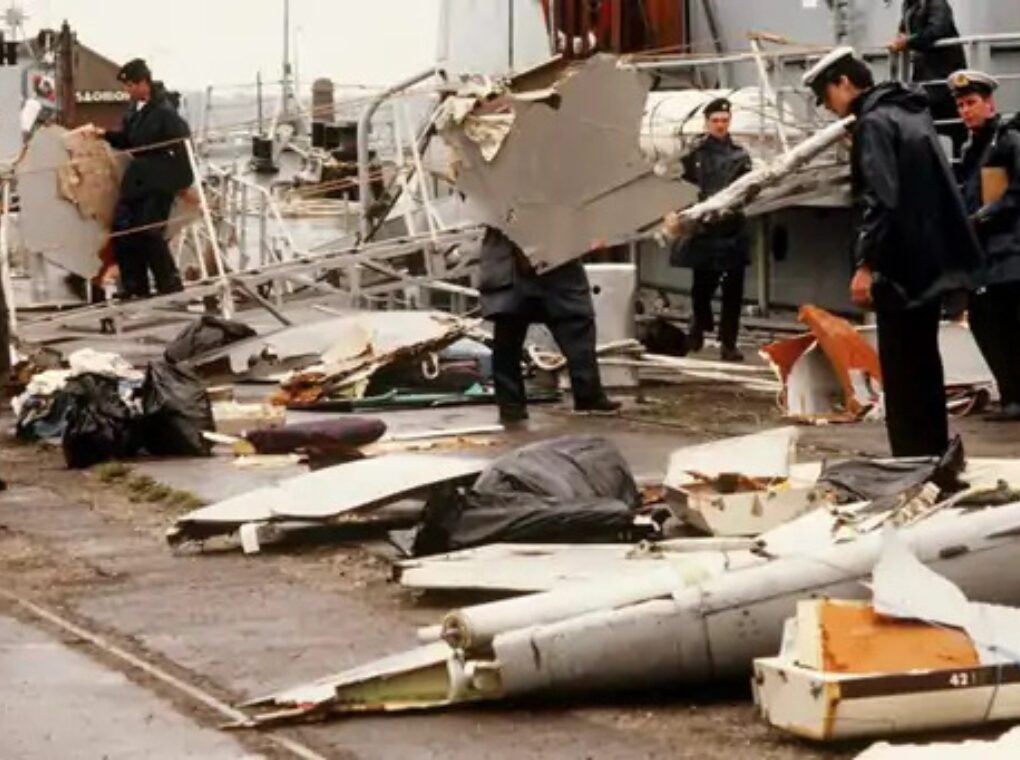
For the first time in over four decades, the Government of Canada has officially acknowledged that Khalistani terrorists were responsible for the bombing of Air India Flight 182, one of the deadliest aviation terror attacks in history.
The admission came as the Canadian Security Intelligence Service (CSIS) marked the 41st anniversary of the tragedy on June 23, calling it a “heinous terrorist act” and paying tribute to the 329 victims who lost their lives.
The bombing of Air India Flight 182, also known as “Kanishka,” remains the deadliest terrorist attack in Canadian history.
What Happened on June 23, 1985?
On June 23, 1985, the Air India Boeing 747 was flying from Montreal to New Delhi via London when it exploded mid-air over the Atlantic Ocean near the coast of Ireland, just 45 minutes before its scheduled landing at Heathrow Airport.
The explosion killed all 329 people on board.
Among the victims:
> 268 were Canadian citizens, most of Indian origin
>24 were Indian nationals
>The rest belonged to other countries
Investigators later found that the bomb had been hidden inside a suitcase checked into the aircraft. The passenger linked to the luggage never boarded the plane, making it one of the earliest known cases of “unaccompanied baggage bombing.”
Why Did Canada Avoid Naming Khalistani Terrorists for Decades?
For decades, India maintained that the attack was orchestrated by Khalistani extremists operating from Canadian soil. However, Canadian authorities largely avoided publicly using the term.
Several factors contributed:
1. Intelligence Failures
A 2010 public inquiry led by former Supreme Court Justice John Major revealed major failures by Canadian intelligence agencies.
One of the biggest controversies involved the destruction of hundreds of hours of surveillance recordings related to Talwinder Singh Parmar, the alleged mastermind and leader of Babbar Khalsa.
This severely weakened the prosecution.
2. Poor Coordination Between Agencies
The inquiry highlighted a lack of cooperation between CSIS and the Royal Canadian Mounted Police (RCMP), causing critical intelligence-sharing gaps.
3. Seen as an “Indian Issue”
Despite most victims being Canadian citizens, officials reportedly viewed the attack primarily as an issue involving India because the aircraft belonged to Air India.
This delayed its treatment as a domestic national security matter.
4. Witness Intimidation
Several witnesses faced threats, and some were murdered, weakening the legal case further.
In 2005, key accused individuals were acquitted due to insufficient evidence.
Why is Canada Changing Its Position Now?
The shift comes amid growing tensions between India and Canada over Khalistani separatist activities.
India has repeatedly accused Canada of allowing pro-Khalistan groups to operate freely under the cover of political activism and freedom of expression.
In a significant development, CSIS’s 2025 annual report identified “Canada-based Khalistani extremism” as a national security threat for the first time.
The report stated that some extremist networks were using Canadian entities for fundraising and channeling resources into violent operations.
Political Significance
Canadian Prime Minister Mark Carney also paid tribute, calling the Kanishka bombing “the largest terrorist attack in Canadian history.”
The official acknowledgment is being seen as a major diplomatic and political shift, especially as India has long pushed Ottawa to take stronger action against extremist separatist networks.
For many families of the victims, the recognition comes after decades of waiting for justice and accountability.
Even after 41 years, the Air India Kanishka bombing remains a painful reminder of how terrorism can transcend borders—and how delayed justice can deepen wounds for generations.