
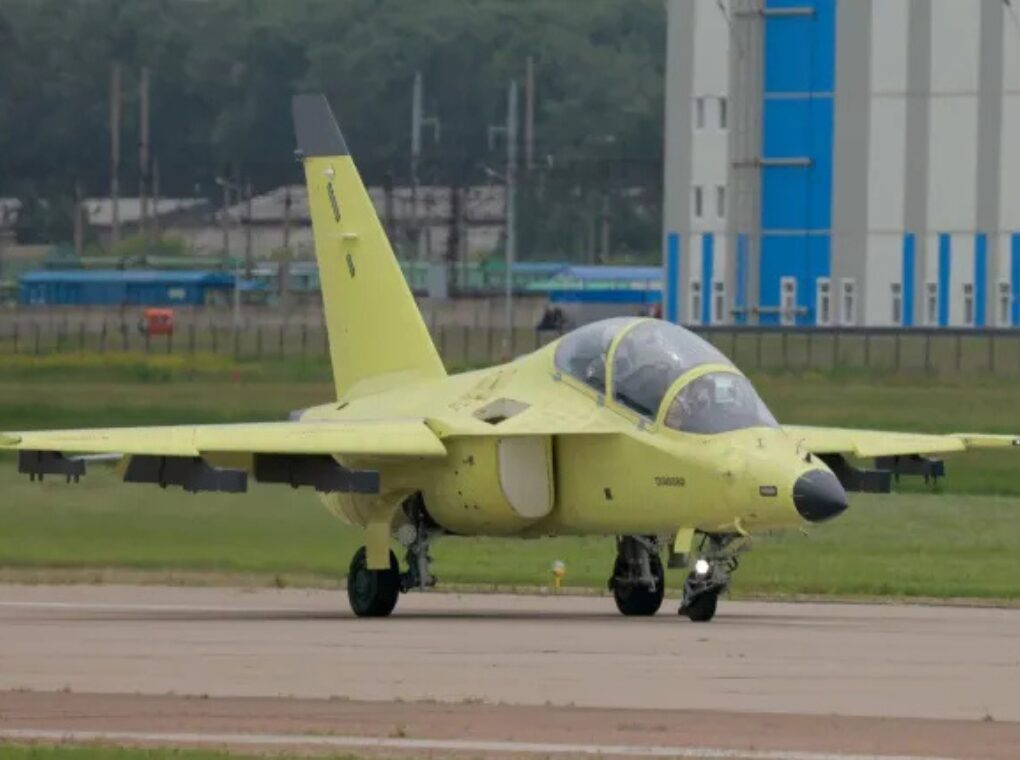
Russia has successfully conducted the maiden flight of its upgraded Yakovlev Yak-130M, marking a major milestone in Moscow’s effort to modernize its tactical aviation fleet and adapt to the evolving realities of drone-dominated warfare.
The first flight took place on June 25 at the Irkutsk Aviation Plant, operated by United Aircraft Corporation under the state-owned Rostec umbrella. According to Russian officials, the 50-minute test flight reached an altitude of 2,000 meters and speeds of up to 600 kilometers per hour, with all planned objectives completed successfully and no technical anomalies reported.
The upgraded Yak-130M is a heavily modernized variant of the original Yak-130 trainer aircraft, which first entered service in 2010. While the base model was primarily designed for advanced pilot training, the Yak-130M significantly expands its combat capabilities, positioning it as a multi-role light tactical fighter.
Advanced Combat Systems Boost Operational Capability
One of the most significant upgrades on the Yak-130M is the integration of the BRLS-130R Active Electronically Scanned Array (AESA) radar, a major leap forward in sensor technology. AESA radar improves target detection, multi-target tracking, and resistance to electronic jamming—capabilities usually associated with far more expensive combat aircraft.
In addition, the aircraft is equipped with the SOLT-130K electro-optical targeting system, which enhances precision targeting through thermal imaging, laser designation, and optical tracking during day and night operations.
The platform also features the President-S130 self-defense suite, providing missile warning systems and electronic countermeasures to improve survivability in contested airspace.
These upgrades transform the Yak-130M from a traditional trainer into a genuine combat-capable aircraft designed for reconnaissance, tactical strikes, and air defense missions.
Russia Targets Drone Warfare with Yak-130M
Russian officials have made it clear that one of the Yak-130M’s primary operational roles will be countering heavy unmanned aerial vehicles (UAVs), reflecting lessons learned from the ongoing Ukraine conflict.
The rise of low-cost drones has forced militaries worldwide to rethink air combat doctrine. Using high-end fighters like the Sukhoi Su-57 or Sukhoi Su-35 to intercept drones is costly and operationally inefficient.
The Yak-130M offers a cheaper alternative.
With nine hardpoints capable of carrying up to 3,000 kilograms of weapons, including air-to-air missiles and guided bombs, the aircraft can conduct anti-drone patrols, close air support, and precision strike missions while preserving Russia’s frontline fighter fleet for high-priority operations.
This reflects a growing global trend toward “attritable” airpower—lower-cost aircraft capable of performing tactical missions without the financial burden of advanced stealth fighters.
New SM-100 Engine Could Enhance Performance
Although the maiden flight used the current AI-222-25 engines, Russia is developing a new SM-100 engine for the Yak-130M, which is expected to deliver 20 to 30 % more thrust.
The upgraded engine could improve payload capacity, range, acceleration, and overall operational flexibility while reducing long-term maintenance costs.
Russian officials say the SM-100 could also be retrofitted into existing Yak-130 fleets, opening opportunities for large-scale upgrades among domestic and export operators.
Export Potential Strengthens Russia’s Defense Strategy
Beyond domestic military use, the Yak-130M is expected to become an important export product for Russia.
The aircraft was showcased at the Dubai Airshow 2025, where several potential buyers reportedly expressed interest.
Its dual-role capability as both an advanced trainer and light combat aircraft makes it attractive to countries in Africa, Asia, and the Middle East that cannot afford expensive Western fighters like the Lockheed Martin F-35 Lightning II.
By offering a cost-effective platform with modern sensors and combat capabilities, Moscow aims to strengthen military ties with partner nations while generating much-needed export revenue amid ongoing Western sanctions.
A Strategic Shift in Modern Airpower
The successful maiden flight of the Yak-130M signals Russia’s broader shift toward affordable and versatile tactical aviation platforms.
As drone warfare, electronic warfare, and precision strike operations become increasingly central to modern conflicts, low-cost multi-role aircraft like the Yak-130M could play a crucial role in future battlefields.
For Russia, the Yak-130M is more than just an upgraded trainer—it represents a strategic adaptation to the changing nature of warfare, combining affordability, flexibility, and combat power into a single platform. If its testing and production proceed successfully, the aircraft could become one of Moscow’s most important military aviation assets in the years ahead.