
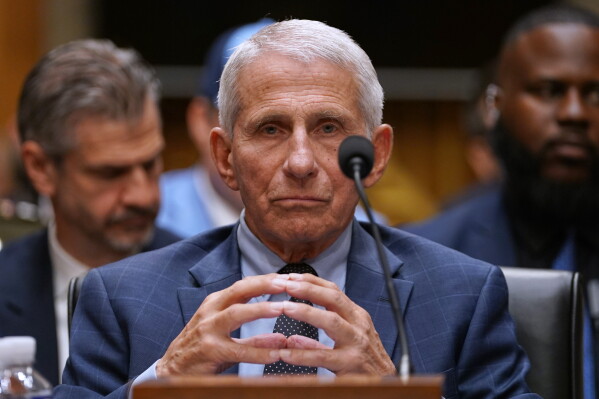
When former America’s top Covid official Dr. Anthony Fauci appeared before the US Senate, many expected long-awaited answers about the origins of Covid-19. Instead, lawmakers were met with silence. Invoking his Fifth Amendment right against self-incrimination 111 times, Fauci declined to answer questions on the Wuhan lab, gain-of-function research, NIH funding, and his own role during the pandemic.
The hearing, led by Republican Senator Rand Paul, has reignited one of the biggest debates surrounding Covid-19: Was there more to the story than the public was told?
Rand Paul Confronts Fauci Over Wuhan and Covid Origins
Fauci, the former Director of the National Institute of Allergy and Infectious Diseases (NIAID), appeared before the Senate Homeland Security and Governmental Affairs Committee in what became one of the most closely watched hearings since the pandemic.
Days before the hearing, Senator Rand Paul released excerpts from Fauci’s personal diaries, claiming they suggested Fauci privately believed the Wuhan seafood market was not the original source of Covid-19, despite publicly defending the natural-origin theory.
Paul urged Fauci to admit that funding high-risk research in China had been a mistake and called for safeguards to ensure such a pandemic could never happen again. Instead, Fauci repeatedly invoked the Fifth Amendment and declined to answer.
The Questions Fauci Wouldn’t Answer
Republican senators pressed Fauci on several issues that have remained controversial since the pandemic began. They asked whether Covid-19 could have originated from the Wuhan Institute of Virology, whether internal scientific discussions pointed toward a possible laboratory leak, and whether Fauci knew about research involving engineered coronaviruses in Wuhan.
According to documents cited by Senator Paul, Fauci wrote in January 2020 that the Wuhan seafood market was “not the source, but the amplifier.” Additional notes reportedly suggested that several scientists involved in early discussions considered a laboratory leak more likely than a natural spillover event.
Despite those reported internal discussions, Fauci continued to publicly state that the available evidence supported a natural origin for the virus.
It is important to note that the exact origin of Covid-19 has not been conclusively established. However, the laboratory leak hypothesis, once dismissed by many as a conspiracy theory, is now regarded by multiple US government agencies as a plausible explanation and has gained increasing attention in Washington.
Gain-of-Function Research Back Under the Spotlight
The hearing also focused on gain-of-function research, a type of scientific work that modifies viruses to better understand how they spread or become more dangerous. Supporters argue such research helps prepare vaccines and treatments, while critics warn that it carries significant biosafety risks.
Fauci had previously testified that the National Institutes of Health (NIH) did not fund gain-of-function research in Wuhan. However, documents released in recent years showed that NIH grants were routed through EcoHealth Alliance to support coronavirus research at the Wuhan Institute of Virology.
Lawmakers also questioned Fauci about monkeypox research and possible links between NIH-funded research and US intelligence agencies. Once again, Fauci declined to answer.
Why Did Fauci Invoke the Fifth Amendment?
A major question emerging from the hearing is why Fauci relied on the Fifth Amendment despite having received a presidential pardon.
Former President Joe Biden granted Fauci a pardon covering potential federal offences committed between January 2014 and January 2025. Senator Rand Paul argued that such legal protection should have removed any reason for Fauci to remain silent.
Legal experts, however, have pointed out that while a pardon may shield someone from prosecution for past federal offences, it does not protect them from legal consequences arising from false testimony given during a later congressional hearing. Inaccurate statements under oath could still expose a witness to charges such as perjury, obstruction of justice, or contempt of Congress.
The Debate Is Far From Over
Whether Fauci’s silence was a legal necessity or a political strategy remains a matter of debate. The hearing produced few direct answers, but it has revived longstanding questions about Covid-19’s origins, US funding for coronavirus research in Wuhan, and the scientific decisions made during one of the most consequential global crises in modern history.
Dr. Anthony Fauci may never face criminal prosecution over his pandemic-era decisions. Yet his refusal to answer key questions has ensured that the debate surrounding Covid-19, the Wuhan lab, and America’s pandemic response is far from over. Sometimes, history is shaped not only by what witnesses say under oath—but also by what they choose not to say.