
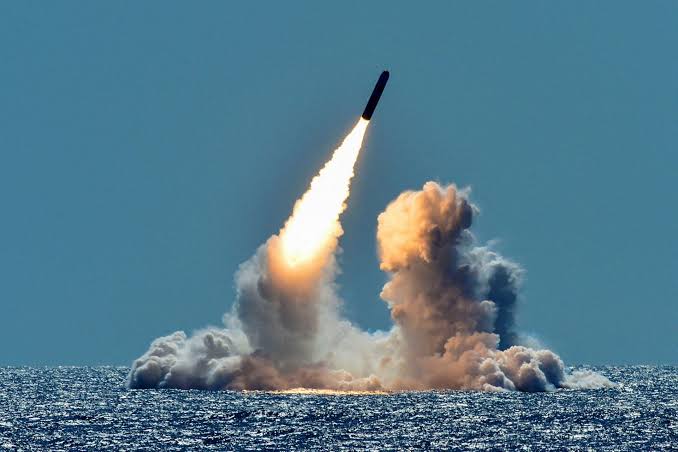
The US Department of War is drafting a nuclear strategy that would rely far more heavily on smaller, shorter-range nuclear weapons in a regional war with China or Russia, NBC News reported on 5 August, citing five people familiar with the plans. It would mark a break from guidance American commanders have followed for decades.
The work is being led by Elbridge Colby, the under-secretary of War for policy and the principal adviser to the defence secretary on defence and foreign policy. Colby was expected to set out his thinking on Wednesday, 5 August, at a closed military event in Nebraska, during a visit to US Strategic Command at Offutt Air Force Base — the headquarters that runs America’s land-based missiles, strategic bombers and ballistic missile submarines — according to NBC.
What Would Actually Change
The review would rewrite the menu of nuclear response options handed to the president during a crisis. Two aims sit behind it, NBC’s sources said: stopping a conventional war from tipping into a nuclear one, and denying an adversary any advantage from starting a limited nuclear fight.
The distinction at the heart of the draft is between strategic and tactical weapons. Strategic warheads sit on intercontinental missiles and are built to destroy an enemy’s nuclear forces and cities. Tactical weapons, also called non-strategic, are smaller and shorter-range, aimed at battlefield targets such as airbases, ports or massed troops.
Colby has argued for years that threatening an all-out strategic strike is not believable, and that a president needs choices he might plausibly order. A senior defence department official told NBC: “Our view is that we need credible nuclear options.” The official said the strategy would widen rather than narrow the president’s choices, and that extended deterrence — America’s promise to shield allies under its nuclear umbrella — only holds if the weapons on offer are ones a leader could realistically use.
Why Now ?
The timing is not accidental. New START, the last treaty limiting American and Russian strategic arsenals, expired on 5 February 2026. Signed in 2010 and extended once in 2021, it capped each side at 1,550 deployed strategic warheads and 700 deployed missiles and bombers, and required data exchanges and short-notice on-site inspections. UN Secretary-General António Guterres called the lapse a “grave moment” for international peace and security.
Verification had already been hollowed out well before that. Inspections stopped in 2020 during the Covid pandemic, Washington declared Russia in non-compliance in February 2023, and Moscow suspended its participation weeks later.
What replaced the treaty is an understanding with no paperwork behind it. The US Congressional Research Service records that Russian officials said after expiry they would keep to the old ceilings for as long as the United States did. Russia’s foreign ministry, in comments carried by India’s All India Radio news service on 5 February, said it had received no formal American reply.
Two Rivals, Not One
Underlying all of this is a shift in how Washington reads the threat. American planners now assume two nuclear-armed rivals at the same time rather than one.
The Pentagon’s China Military Power Report, released on 23 December 2025, put China’s operational stockpile in the low 600s through 2024 — a slower rate of production than in earlier years — while judging that the People’s Liberation Army remains on track for more than 1,000 warheads by 2030. That projection has been repeated since 2021, and the Federation of American Scientists notes it would still leave China several thousand warheads behind either the United States or Russia.
On short-range weapons, the gap runs the other way. The Federation of American Scientists estimates Russia holds roughly 1,900 non-strategic warheads against about 200 American ones, of which some 100 are deployed at bases in five European countries.
The Pushback
Specialists who spoke to NBC warned the shift could cut both ways. Leaning on smaller weapons might make the threat of a large-scale strike look less believable, they said, and could leave American forces less prepared for a full nuclear exchange. A senior congressional aide told NBC the study sat badly with President Donald Trump’s stated aim of strengthening the American deterrent, arguing the president wants more options, not fewer.
Arms control campaigners make a blunter case: weapons designed to look usable are more likely to be used. The same argument was made against the low-yield W76-2 warhead fitted to submarine missiles in 2020.
What to Watch Next
Trump instructed the department in October 2025 to begin testing nuclear weapons “on an equal basis” with other countries. Energy Secretary Chris Wright said days later that the testing would not involve nuclear explosions.
Nothing in the NBC report suggests a decision has been taken. The draft is a study, not policy. The signal to watch is whether Colby’s arguments become concrete changes to the options in front of the president, and how Moscow and Beijing read them. Neither has commented publicly on the draft.