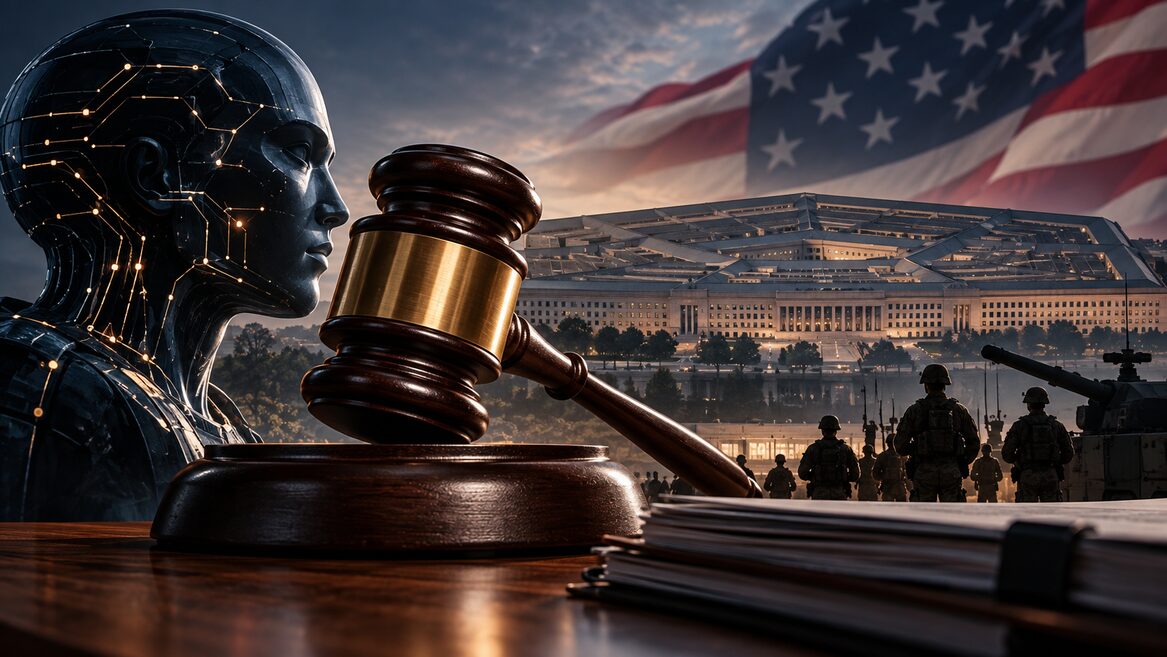
A US appeals court on Friday refused to overturn the Pentagon’s ban on Anthropic, handing the AI firm a significant setback. The Court of Appeals for the District of Columbia Circuit ruled against the company 2–1, keeping Claude, Anthropic’s AI model, out of military systems and off-limits to Pentagon contractors.
Anthropic says the ban has already cost it billions of dollars in lost business and damaged its reputation ahead of a planned stock market listing.
What the Court Decided
Judge Gregory Katsas wrote the majority opinion, joined by Judge Neomi Rao — both Trump appointees. Judge Karen LeCraft Henderson, appointed by George H.W. Bush, dissented.
Katsas found that Claude’s continued use in defense systems posed a national security risk, writing that the department “had ample support for its conclusion,” and that balancing such competing risks falls to the President and the Secretary of War.
The judges said they had no reason to doubt Anthropic’s good intentions on privacy and AI safety. However, they held that the law turns “on what Anthropic does, not why Anthropic does it.”
The court also rejected Anthropic’s claim that the Pentagon had punished it for its public views, finding instead that the Pentagon acted because Anthropic refused to accept an “all lawful uses” condition.
Why the Pentagon Banned Anthropic
The dispute began in February, when Defense Secretary Pete Hegseth demanded that Anthropic lift the limits it had placed on Claude. Anthropic refused to allow Claude’s use in fully autonomous lethal weapons or mass surveillance of Americans. The disagreement grew out of a $200 million contract covering Claude’s use on classified systems, and Hegseth accused the company of trying to seize a veto over military decisions.
On March 3, Hegseth designated Anthropic a national security supply chain risk — a label Washington usually reserves for foreign adversaries. The designation canceled Anthropic’s military contracts and barred Pentagon contractors from using its technology.
The court noted that Claude’s built-in limits had more than once blocked tasks requested by government users. Court filings show the military used Claude during the January operation that captured Venezuelan leader Nicolás Maduro.
How Anthropic Fought Back
Anthropic sued in two courts, since the Pentagon had relied on two separate legal designations. Last month, a federal judge in San Francisco ruled the parallel designation unlawful, finding that the government had retaliated against Anthropic in violation of its First Amendment rights.
The appeals panel briefly paused its ruling so Anthropic can seek a rehearing or petition the Supreme Court.
An Anthropic spokesperson told US media: “We respectfully disagree with the court’s decision. We remain confident in our position and are considering all options, including further review.”
The Dissenting Judge
Henderson argued that Congress wrote the law to counter hostile or deceptive interference with government technology. She warned that contract negotiations could effectively become a choice between accepting new demands or facing a security label.
Rivals Move In
The Pentagon quickly turned to Anthropic’s competitors. OpenAI signed a deal the same day the ban was announced. Elon Musk’s xAI had signed in February, while Google and Microsoft followed months later.
High Stakes Before A Listing
The ruling lands just weeks before Anthropic’s expected stock market listing, with investors valuing the company at nearly one trillion dollars.
Meanwhile, the White House has bristled at CEO Dario Amodei’s repeated warnings about AI risk — warnings Trump has dismissed as a hoax. In April, the same appeals court had already refused to pause the ban while the case proceeded.
What The Ruling Does Not Do
The ruling applies only to Pentagon purchasing; it does not stop ordinary consumers from using Claude, nor does it force Anthropic to drop its safeguards. Anthropic still permits military use of Claude for weapons development and offensive cyber operations.
The legal fight looks set to continue, with both sides now facing a split between two federal courts on the same underlying dispute.