Hackers attacked hundreds of supermarkets across France on the night of October 11–12, using an invisible weapon. Millions of euros’ worth of food was destroyed, refrigeration units were knocked out, and some stores reported fires.
It would be natural to assume a missile strike, a bombing or a terrorist attack. But there were no missiles, no bombs and no armed attackers. It was a cyberattack.
Nor was the target a military installation, a bank, a power grid or a railway network. The hackers went after supermarket refrigeration: the systems that keep ice cream frozen, milk fresh and meat safe.
What happened in France is not just another hacking story. It is a serious warning about the world we are building.
One night, hundreds France supermarket cyberattack
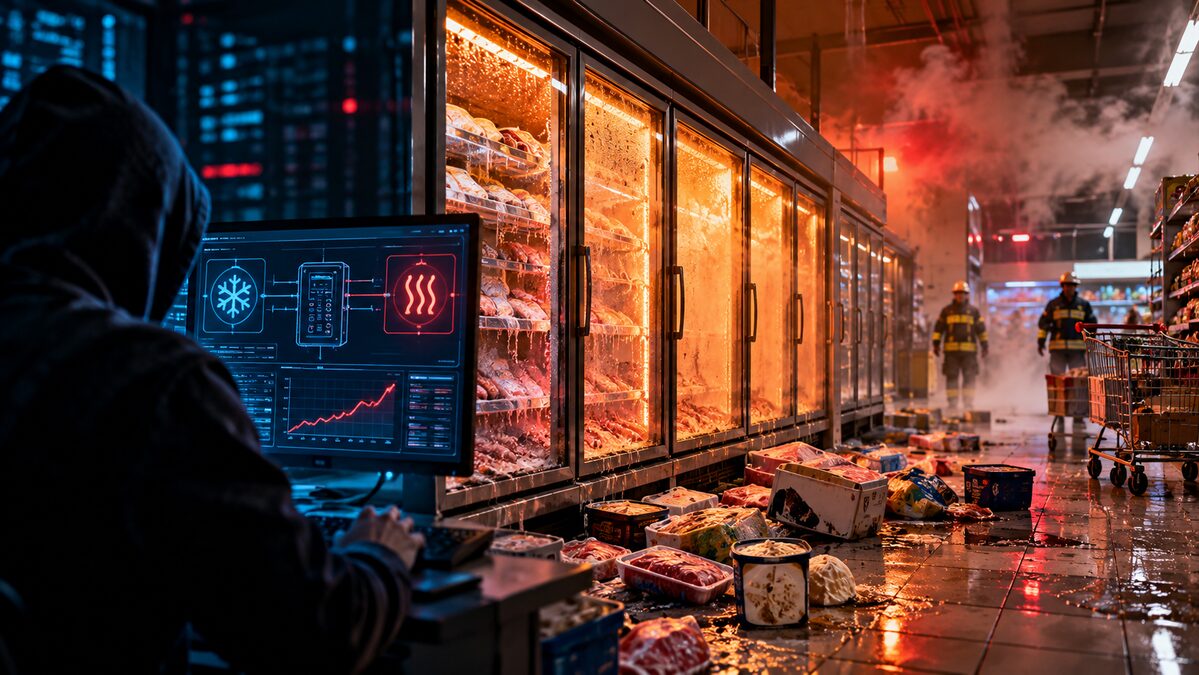
On the night of October 11-12, hackers reportedly took control of refrigeration systems in supermarkets across France. By remotely triggering defrost cycles, they pushed temperature settings as high as 50°C.
The attackers reportedly kept the systems in defrost mode for hours while the stores were closed. By morning, the damage was done.
All of it happened without a single hacker setting foot inside a store.
Melted, spoiled and thrown away
Ice cream melted. Meat and fish were no longer safe to sell, dairy products were ruined, and tonnes of fresh and frozen food had to be thrown away.
Some stores reported fires and overheating. In certain locations, fire sprinklers were triggered, adding water damage to the losses.
French Finance Minister Roland Lescure told Parliament that about 700 of the country’s 10,000 supermarkets were affected. Major chains were among them, including Intermarché, Carrefour, Coopérative U, Monoprix and E.Leclerc. Reports put the losses at millions of euros so far. One local report cited €270,000 in lost stock at just two stores in Haguenau, in Alsace.
How a refrigerator becomes a weapon
So how did hackers turn refrigerators into heaters? The answer lies in something we usually celebrate: smart technology. Supermarket refrigeration systems are increasingly connected to the internet.
They run on digital controllers that let technicians monitor temperatures, adjust settings, check alarms and manage equipment remotely. It sounds convenient. But if the wrong person gains access to a controller, the same technology becomes a weapon.
Reports indicate that many of the affected systems used refrigeration controllers made by the Danish company Danfoss. The company says most of the affected equipment was older “legacy” products that no longer receive software or security updates. It says it has long advised customers to upgrade, keep firmware current and operate behind a firewall.
The hackers reportedly exploited weaknesses in these connected systems and manipulated the defrost controls.
A wider reach, and no answers yet
The attack did not stay inside France.
Supermarkets in the Netherlands reportedly shut down their systems as a precaution, disrupting operations and deliveries. The attack also reportedly affected Belgium. According to Le Monde, a second wave targeted equipment associated with Dixell technology. In one case near Bordeaux, hackers allegedly changed a temperature setting from -22°C to 150°C. That was a controller setting, not a confirmed temperature inside the freezer. Technicians detected the abnormal activity and prevented food losses at that location.
French cybersecurity authorities have warned that the threat may not be over. The Paris prosecutor’s office has opened an investigation, and European authorities are examining the implications for food supply chains.
Investigators are still trying to identify the perpetrators and determine how they compromised the systems. Was it cybercriminals, a coordinated sabotage operation, or something more serious?
For now, there is no publicly confirmed answer. But whoever carried it out has demonstrated something deeply unsettling. Lescure called the incident a wake-up call.
When convenience becomes vulnerability
Look around your home, your office or your city.
Air conditioners, security cameras, refrigerators, elevators, traffic systems, hospitals, factories and water management operators increasingly connect their equipment to the internet.
We call them smart devices. But what happens when outdated software, weak security, or hackers compromise the remote access systems of these devices?
Suddenly, convenience becomes vulnerability, and efficiency becomes an opportunity for sabotage. France has just received a very expensive lesson.
Technology is supposed to make our lives easier. Without proper cybersecurity, the same technology can become a trap. The question we must now ask is whether we are becoming too dependent on internet-connected systems without understanding the risks.